
Your cart
There are no more items in your cart
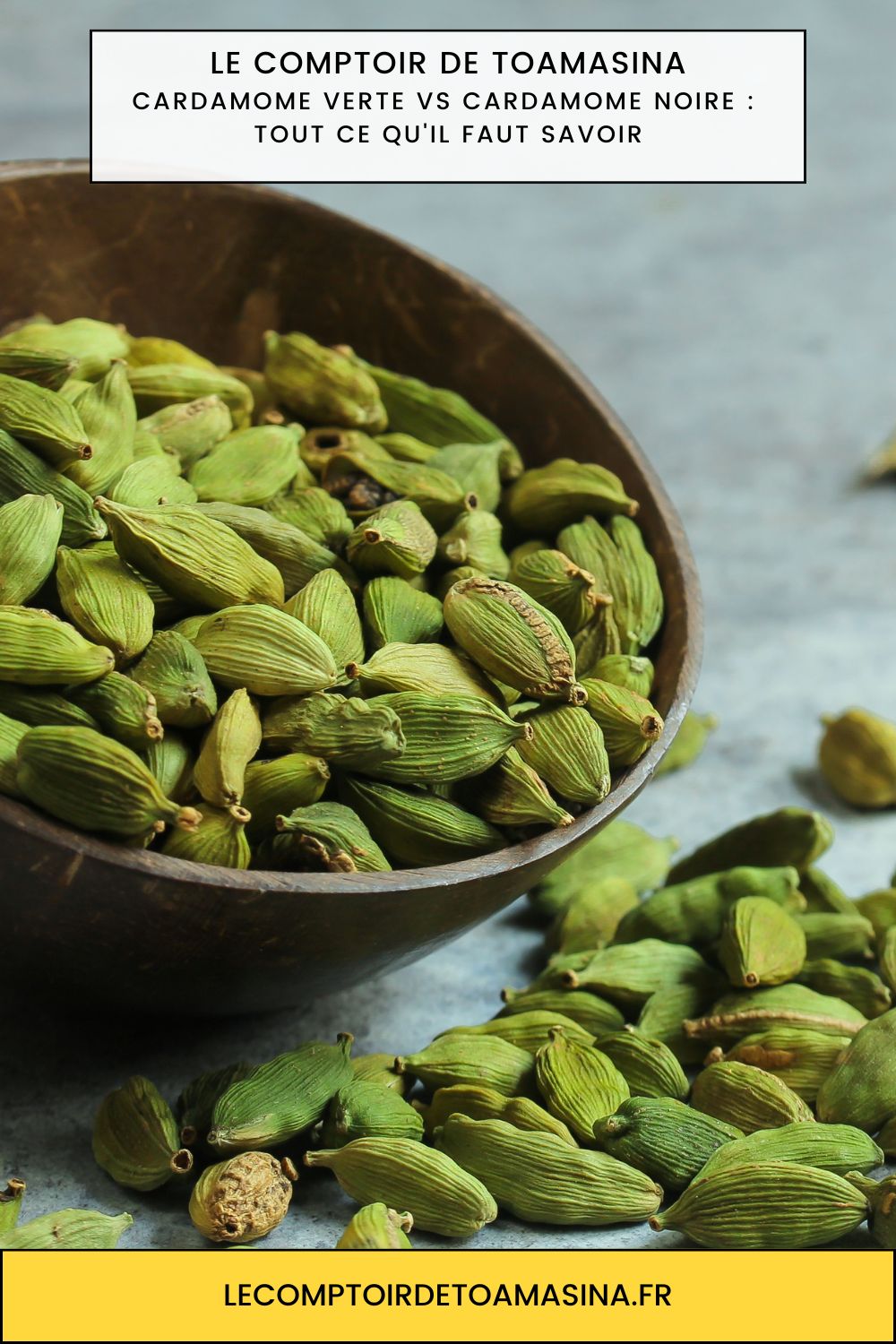
Table of contents
I remember the first time I cracked open a green cardamom pod between my fingers in a small spice stall where the air was thick with a thousand scents. It wasn't just an aroma—it was an aromatic wake-up call, a blend of eucalyptus, lemon, and floral notes so bright it woke me up better than an espresso. Since then, cardamom has never left my side. At my shop, it is one of the spices I invite customers to smell most often, because a single crushed pod instantly explains why it is called the queen of spices, second only to saffron. But whenever cardamom comes up, one common question surfaces: green or black? Are they cousins, twins, or two entirely different stories? Let me share what I've learned, pod by pod, tasting by tasting.
Green or black, what is the real difference?
The first thing I always explain is that they are not the same spice at two different harvest stages. They come from two distinct plants, closely related botanically but fundamentally separate. Green cardamom comes from Elettaria cardamomum, native to the rainforests of Southern India and widely grown today in Guatemala. Black cardamom belongs to the Amomum genus and is harvested primarily in the Himalayas, Nepal, and parts of China. Two origins, two climates, and above all, two processing methods that change everything.
Green cardamom is gently dried, often in the sun or heat kilns, to preserve its volatile essential oils. Black cardamom undergoes a very different process: it is smoke-dried over open wood fires. That smoke infusion imparts a deep, resinous, almost camphoraceous note that shares nothing with the fresh, mentholated brightness of its green cousin. When tasted side by side, green brings a fresh smile, while black sparks curiosity. One evokes a garden after rain; the other, a campfire at dusk.
Arnaud's Take
Never try to substitute one for the other in a recipe. It would be like swapping lime zest for smoked wood. They tell completely different stories, and that is precisely what makes them such a captivating duo in the kitchen.
Why does green cardamom go everywhere with me?
Green cardamom is the one I've packed in my luggage from day one. Its pod is small, tender green when high in quality, holding tiny, sticky black seeds rich in essential oils. That's where all the aroma lives. A pale, yellowish, washed-out pod is usually a sign of age or poor drying—the aroma evaporated along with the color.
On the palate, green cardamom brings immediate cooling freshness, followed by floral sweetness and a hint of citrus zest. It is the star of fragrant global cuisines: essential in Indian chai, beloved in Scandinavian baking, and brewed into traditional Middle Eastern coffee. Personally, I love using it in desserts. A single pod crushed into a custard elevates a simple cream into an unforgettable trip. It pairs wonderfully with orange, pear, dark chocolate, and of course, single-origin Madagascar vanilla.

A freshly crushed green cardamom pod releases far more aroma than store-bought pre-ground powder.
What makes black cardamom so unique?
Black cardamom is something you appreciate as your palate evolves, much like discovering complex, smoky wines. Its pod is large, dark brown or black, with a wrinkled skin. Its aroma doesn't offer bright citrus notes; instead, it delivers rich smoke, earthiness, and resin. It is a bold spice designed for long-simmered stews, rich curries, fragrant North Indian biryanis, and slow-cooked meat dishes.
I always recommend using black cardamom as a whole pod, lightly cracked, and removing it before serving—much like a bay leaf. This allows it to infuse its smoky depth without leaving harsh bitterness. Black cardamom thrives during long, slow cooking, whereas green cardamom prefers gentle infusions or baking.
| Criterion | Green Cardamom | Black Cardamom |
|---|---|---|
| Plant Species | Elettaria cardamomum | Amomum genus |
| Origin | Southern India, Guatemala | Himalayas, Nepal, China |
| Drying Method | Gentle sun/kiln drying | Open wood-fire smoking |
| Flavor Profile | Fresh, floral, sweet, citrusy | Smoky, resinous, earthy |
| Best Uses | Baking, chai, coffee, desserts | Curries, stews, rice, savory meats |
How to choose high-quality cardamom?
My advice remains the same regardless of color: buy whole pods, never pre-ground powder. Ground cardamom oxidizes within weeks and loses its essential oils. Whole pods act as natural protective capsules. For green cardamom, look for vibrant color and firm pods that crack under pressure. Shake a pod near your ear—you should hear the seeds rattling inside, indicating they are well-cured. For black cardamom, trust your nose: it should smell clean, intensely smoky, and free of dust or moldy notes.
I always caution against overly cheap cardamom, which often consists of old, faded stock where essential oils have dried up. High-grade cardamom costs a bit more, but you use far less because the flavor is concentrated. A small amount of fresh, vibrant spice beats a large bag of stale powder every single time.
The Pod Test
Squeeze the pod between two fingers. If firm and fragrant, it's fresh. If it crumbles into odorless dust, pass on it.
The Seed Test
Crack open a pod: seeds should be dark black, glossy, and slightly sticky. Dry, gray seeds indicate age.
How to store it to keep all its flavor?
Cardamom is delicate, especially the green variety. Essential oils easily escape when exposed to light, heat, and air. I store my pods in an airtight glass jar in a dark, cool pantry away from stove heat. Most importantly, I only crush or grind pods immediately before cooking. Pre-ground cardamom simply cannot compete with fresh seed crush.
Stored whole in an airtight jar, green cardamom holds its fragrance for months, often over a year. Black cardamom, owing to its smoke-curing process, lasts even longer. Buy in reasonable quantities and enjoy it fresh.
What are its traditional uses?
For centuries, cardamom has been valued beyond the kitchen. Traditionally, whole seeds were chewed after meals to freshen breath and comfort digestion—a ritual still practiced today across Asian and Middle Eastern cultures. It has also long featured in evening herbal infusions paired with fresh ginger and cinnamon bark.
I always prefer being straightforward: I share cardamom as a culinary treasure meant for culinary enjoyment, not as a medical cure. Traditional heritage is wonderful, but it does not replace medical advice. Enjoy it for its aroma and taste.
Key Takeaway
Green for freshness and floral sweetness; black for smoky depth and savory richness. Buy whole pods, grind at the last second, store away from light. Two spices, two distinct purposes, endless culinary pleasure.
Ready to taste true single-origin quality?
Explore my selection of hand-picked whole pod spices sourced directly from growers at Le Comptoir de Toamasina.
Visit the ShopSpice Counter Tip
If you are new to cardamom, start with green. Crack a single pod into your next batch of rice pudding or morning coffee. Once you fall in love with that freshness, try a whole black cardamom pod in a winter stew. You'll instantly see how two spices sharing the same name can take your taste buds on two entirely different journeys.
Frequently Asked Questions
Can I substitute green cardamom for black cardamom?
It is not recommended. Their flavor profiles are opposites: green is fresh, floral, and zesty; black is smoky, woody, and earthy. Use each according to what the recipe specifies.
How many pods should I use per recipe?
2 to 4 green pods are plenty for a dessert or beverage serving 4 people. For black cardamom, 1 cracked pod in a slow-simmered stew is usually sufficient.
Should I use the seeds or the whole pod?
For green cardamom in baking, crush the pod, extract the seeds, and discard the husk (or steep it). For black cardamom in slow-cooked stews, leave the pod whole and remove it before serving.