Sale of the finest quality Iranian saffron
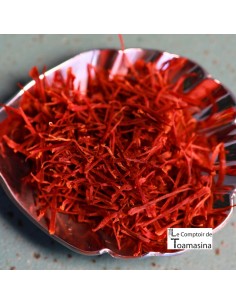
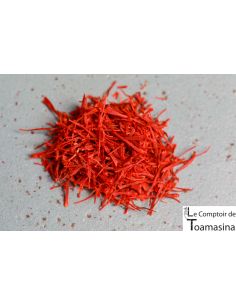
"Buy your Iranian saffron at Comptoir de Toamasina. Arnaud has selected a blood-red pistil for you, the mark of a great Grade A saffron."
I am Arnaud Sion
Spice hunter, founder of Comptoir de Toamasina
I wanted to offer you Iranian saffron with the same high standard as my Madagascar vanilla beans: a blood-red pistil, the mark of a great Grade A saffron. On my blog and YouTube channel, I document everything I have learned about this exceptional spice — its history, harvest, purity criteria, and tested culinary recipes.
Grade A Quality
A blood-red pistil, the mark of a great saffron selected with the utmost rigor to elevate your culinary creations.
Symphony of flavors
Opening our jar of saffron threads unleashes a unique aromatic signature that awakens the senses and harmonizes your dishes.
Accessible price
We are committed to offering you the finest saffron threads at the best price, from small trial jars to bulk kilo packs.
Iranian saffron is renowned for its exceptional aromatic profile. To preserve its incomparable scent, we designed custom airtight packaging. Our saffron is a culinary treasure that transforms every dish into a work of art, blending deep metallic notes with the enveloping sweetness of honey.
Buy our saffron threads online for a refined sensory journey. With just a few threads, your kitchen lights up with a golden hue and a captivating scent recalling the richness of Persian lands.
Saffron Premium Threads 10G
Buy the finest saffron threads: a blood-red treasure
At Comptoir de Toamasina, we offer Grade A Iranian saffron. A blood-red pistil, the mark of a great saffron with remarkable aromatic power. It is the second most expensive spice in the world after Madagascar vanilla beans.
A blood-red pistil, the mark of a great saffron containing the highest level of crocin and aromatic compounds.
An enveloping sweetness punctuated by honeyed notes and a unique metallic touch—a true aromatic signature.
Iran is the world's leading producer of saffron, perpetuating ancestral cultivation and meticulous agricultural expertise.
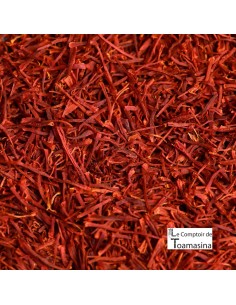
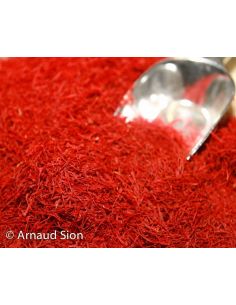
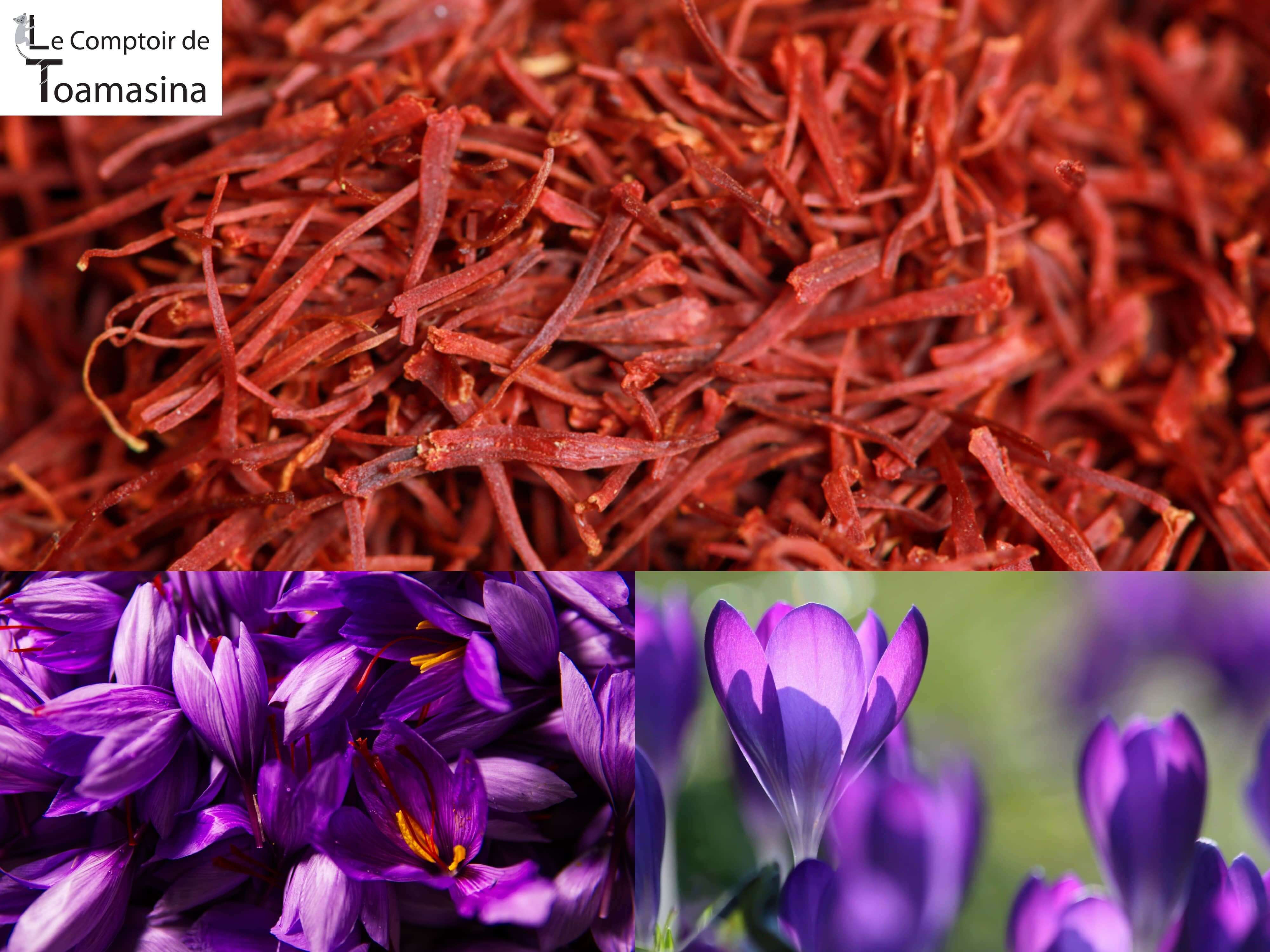
Our saffron threads present delicate filaments. Offering a blood-red pistil, the mark of a great saffron, attests to the excellence and absolute purity of our selection. As soon as you open the jar, you will discover a suave, spicy, and complex fragrance.
Ancient and contemporary history of Iranian saffron
Iranian saffron (Crocus sativus) is nicknamed "red gold". Its history spans thousands of years across civilizations:
The word "saffron" stems from ancient Persia and derives from Persian za'faran, meaning "yellow".
Ancient writings and the Bible praise saffron. It symbolized purity among Assyrians and was spread by the Phoenicians.
Emperor Nero had saffron scattered along his path in Rome. Later, Michelangelo used it as a pigment for the Sistine Chapel.
In the Indian Ocean, the local term "saffron" often refers to turmeric, a spice distinct from true Crocus sativus.
What is Iranian saffron and how is it produced?
Saffron is extracted from the flower of Crocus sativus. Each flower contains three bright red threads called stigmas. Iran benefits from ideal climatic conditions (hot summers, cold winters), particularly in Khorasan province.
Planting takes place between June and July for autumn blooming. Harvesting is done manually at dawn before flowers open under the sun. Stigmas are then delicately separated and dried.
Are required to yield just 1 kg of dry saffron. Every flower is hand-picked to preserve stigma integrity.
How to properly choose your saffron threads?
To guarantee complete purity, always favor a blood-red pistil, the mark of a great saffron, and avoid powder. Quality is evaluated by three active components: crocin (coloring power), safranal (aroma), and picrocrocin (bitterness).
This rigorous standard governs chemical analyses, prevents fraud, and certifies saffron purity.
The 3 categories of Iranian saffron
Superior category. A blood-red pistil, the mark of a great saffron, composed solely of the noble top portion.
Intermediate quality where the lower yellow-orange part of the thread is trimmed off.
The whole stigma with its yellow base. Contains less crocin and is less potent.
How to use saffron in cooking?
The key to successful saffron cooking is prior infusion. Steep your threads in warm liquid (water, broth, milk, or cream) for at least 2 to 4 hours before cooking, then add the infusion at the end of preparation.
Per person for savory dishes (paella, risotto, bouillabaisse)
Per person for sweet dishes or desserts
8 recipe ideas by Arnaud Sion
Steep threads in warm water and use it to steam your rice.
Marinate poultry with olive oil, lemon juice, and saffron infusion.
Infuse saffron into warm cream to make the tart filling.
Brush salmon fillets with an olive oil, lemon, and saffron marinade.
Coat arborio rice with warm Grade A saffron broth.
Infuse saffron into heavy cream for a refined dessert.
Prepare an emulsified sauce with saffron and fish stock.
Gradually pour saffron broth over rice for a golden color.
Discover detailed recipes on the blog
Properties and appearance
Spice renowned for promoting relaxation and emotional balance.
Very fine filaments. A blood-red pistil, the mark of a great saffron with flared tips.
Subtle bitterness, honeyed, warm notes, and a characteristic metallic touch.