
Your cart
There are no more items in your cart

Table of contents
I am often asked at the counter how to master cardamom. Many people bought it once, charmed by its fragrance, and then left it sitting at the back of a cupboard, intimidated. That is a shame, because few spices offer so much pleasure for so little effort. Cardamom is not difficult—it is simply potent, and all the subtlety lies in the preparation and dosage. I will share with you what twenty years of tasting and cooking have taught me: how to prepare it, how much to use, and when to let it shine in both sweet and savory cooking. Once you pick up the right reflexes, you won't want to cook without it.
How to prepare cardamom before cooking?
The first rule I repeat constantly is to start with the whole pod rather than pre-ground powder. Store-bought ground cardamom has often lost its soul before it even reaches your kitchen. Take your green pods, place them on a board, and crush them firmly with the flat side of a chef's knife, just as you would crush a garlic clove. The pod splits open, allowing you to collect the tiny, sticky black seeds inside. You can use these seeds whole or crush them in a mortar to release even more essential oil.
For black cardamom, the technique is different. Since it is intended for long, slow cooking, I usually leave it whole, simply splitting one side, and remove the pod before serving. Here is a secret tip: lightly dry-roast your seeds in a hot skillet before grinding. This quick roasting wakes up essential oils and adds incredible depth. Be careful not to burn them—a few seconds are enough as soon as the aroma rises.
Arnaud's Take
A pestle and mortar remains my best friend. An electric spice grinder heats seeds and drives off volatile top notes. Taking thirty seconds to crush seeds by hand gets you into the spirit of cooking, and the flavor in your dish is incomparable.
What dosage should you use to avoid mistakes?
This is the question I hear most, and the answer comes down to one word: moderation. Cardamom is generous; a little goes a very long way. A common mistake is using too much, ending up with a soapy, overly perfumed dish. For a dessert serving four people, two to four green pods are plenty. For a slow-cooked stew, a single black pod flavors an entire pot.
My advice is to always start with slightly less than you think you need, taste, and then adjust. You can always add more, but you can never remove excess. Over time, your hand will instinctively find the right balance. Keep in mind that freshly crushed cardamom is far more intense than old ground powder: if switching to fresh seeds, cut the recipe amount in half to start.
| Preparation | Suggested Dosage (Serves 4) | Recommended Form |
|---|---|---|
| Custard, flan, rice pudding | 3 to 4 green pods | Crushed seeds |
| Cakes, sweet breads | 2 to 3 green pods | Finely ground seeds |
| Curry, tajine, stews | 1 black pod (cracked) | Whole pod |
| Chai, coffee, herbal tea | 2 to 3 green pods | Crushed pods |
How to use it in baking and desserts?
This is my favorite playground. In pastry and baking, green cardamom works wonders. It elevates milk and cream desserts: a crème anglaise infused with cardamom elevates fruit tarts, while rice pudding becomes restaurant-worthy. I love pairing it with orange, poached pears, dark chocolate (where it balances bitterness), and naturally with Madagascar vanilla. Cardamom and vanilla together is a pairing I've championed since my early days—a harmony between fresh floral notes and warm, velvety comfort.
In Nordic countries, cardamom flavors iconic twisted buns, and for good reason: it fills the whole house with a comforting aroma as it bakes. Try it in gingerbread, apple compote, or shortbread cookies: a pinch of cardamom makes classic recipes unforgettable. The secret is always gentle infusion or adding it near the end of preparation to preserve delicate top notes.
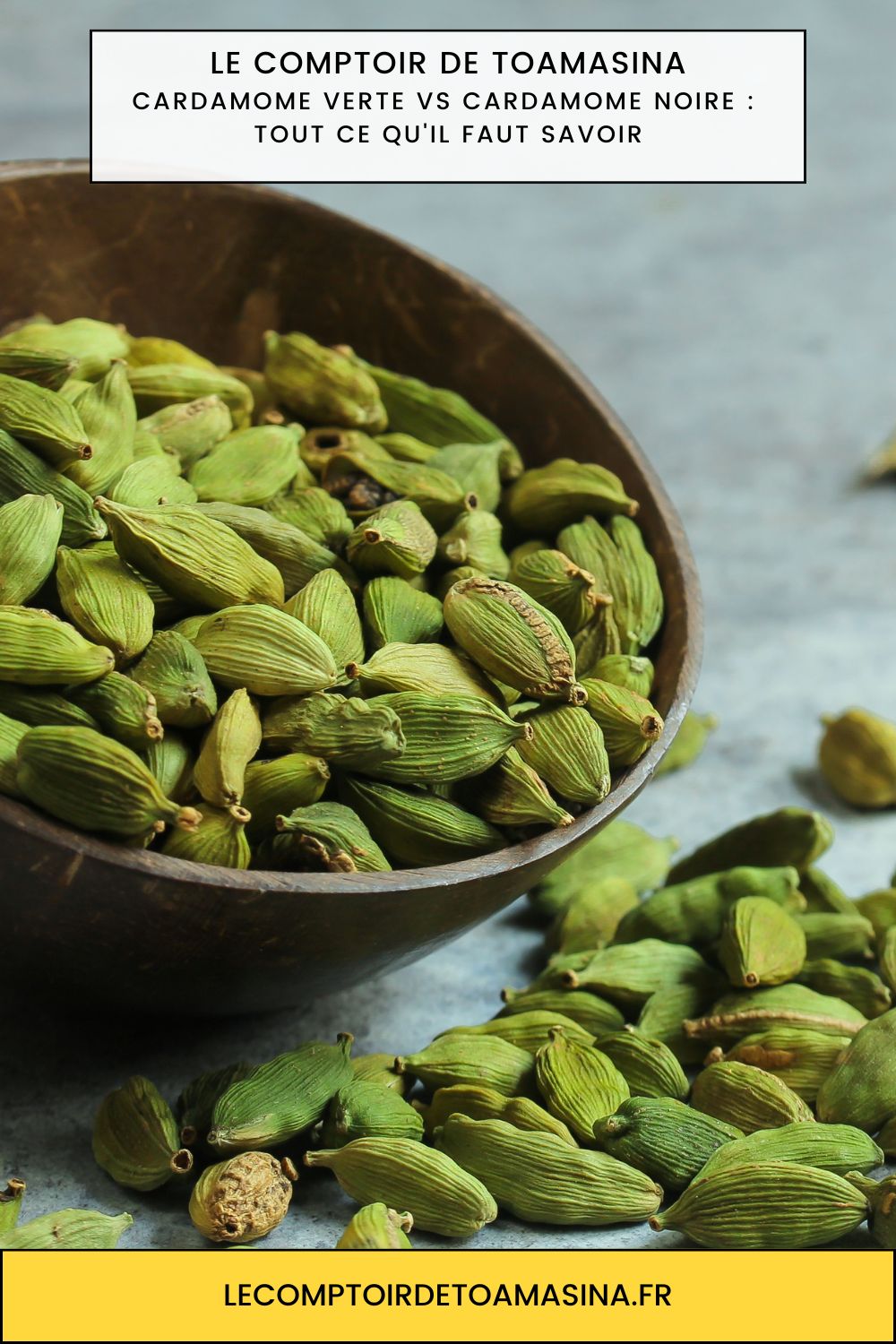
Green for desserts and drinks, black for slow-cooked savory dishes: each cardamom has its purpose.
Does it really pair well with savory dishes?
Absolutely, and this is where black cardamom shines. In curries, lentil dals, fragrant basmati rice, or lamb tajines, it delivers a smoky depth that structures the entire dish. I often combine it with cumin, coriander, cloves, and cinnamon bark in the style of North Indian masalas. Green cardamom also holds its ground in savory cooking: a touch in a poultry marinade, carrot-ginger juice, or a fresh yogurt sauce brings elegant brightness.
Here again, dosing is key. In savory dishes, cardamom should support without dominating. It should be a harmony in the background, not a soloist. When used correctly, people might not even pinpoint the spice—they will simply notice that the dish has soul and subtle warmth. That is the exact role I love giving it.
Sweet Pairings
Orange, pear, dark chocolate, coffee, vanilla, apple, honey. Green cardamom unfolds its fresh floral notes here.
Savory Pairings
Lamb, poultry, lentils, basmati rice, carrots, sweet potatoes. Black cardamom brings smoky depth.
Which drinks can you flavor with cardamom?
Beverages are perhaps the easiest and most delightful way to enjoy cardamom. Indian chai tea wouldn't exist without it. I crush a few green pods and simmer them with black tea, fresh ginger, a cinnamon stick, and milk. In Gulf countries, a crushed pod is added directly into the coffee pot: cardamom coffee served to guests is an art of hospitality in itself.
I also encourage you to try cardamom in rich hot chocolate, golden turmeric milk, or a simple evening honey infusion. It is comforting, aromatic, and transforms a daily drink into a special moment. In summer, cold water infused with green cardamom and lime zest makes a surprisingly refreshing drink for guests.
What mistakes should you absolutely avoid?
The main mistake, as mentioned, is overdosing. The second is using old pre-ground powder that has lost its essential oils. The third is pre-grinding large quantities: ground cardamom loses its vibrancy within days. Grind or crush right when you cook.
Finally, avoid boiling green cardamom for extended periods, as delicate floral aromas evaporate under high heat. Reserve long cooking for robust black cardamom, and save green cardamom for finishing touches and gentle infusions. Follow these basic guidelines and your cardamom dishes will turn out wonderful every time.
Key Takeaway
Crush seeds at the last moment, dose with restraint, reserve green for sweet dishes and drinks, and black for long-simmered stews. Taste, adjust, and let cardamom enhance your dish without overwhelming it.
Put it into practice
Choose whole cardamom pods, carefully dried and sourced directly from the field, to experience these authentic flavors in your home kitchen.
Explore Spice CounterMy Starter Recipe Suggestion
Warm one liter of milk with four crushed green cardamom pods and a split vanilla bean. Steep over low heat for ten minutes without boiling, then remove from heat and let sit. Strain, sweeten lightly, and serve warm or chilled. This fragrant base can be turned into rice pudding, custards, or enjoyed as a comforting warm drink. Simple gestures like this are how most of my customers fall in love with cardamom before exploring the rest of our spice range.
Frequently Asked Questions
Should whole pods be removed before serving?
For black cardamom used whole in stews, yes, remove it like a bay leaf. For green cardamom where seeds were extracted and crushed, everything stays in the dish.
Can I use store-bought ground cardamom?
It can work in a pinch, but reduce the dosage and check that it is still fragrant. Nothing compares to freshly crushed seeds prepared at home.
Is cardamom suitable for everyday cooking?
Absolutely. A pinch in rice, fruit compote, or morning coffee instantly transforms simple dishes. Start small and let your palate enjoy this generous spice.