
Your cart
There are no more items in your cart
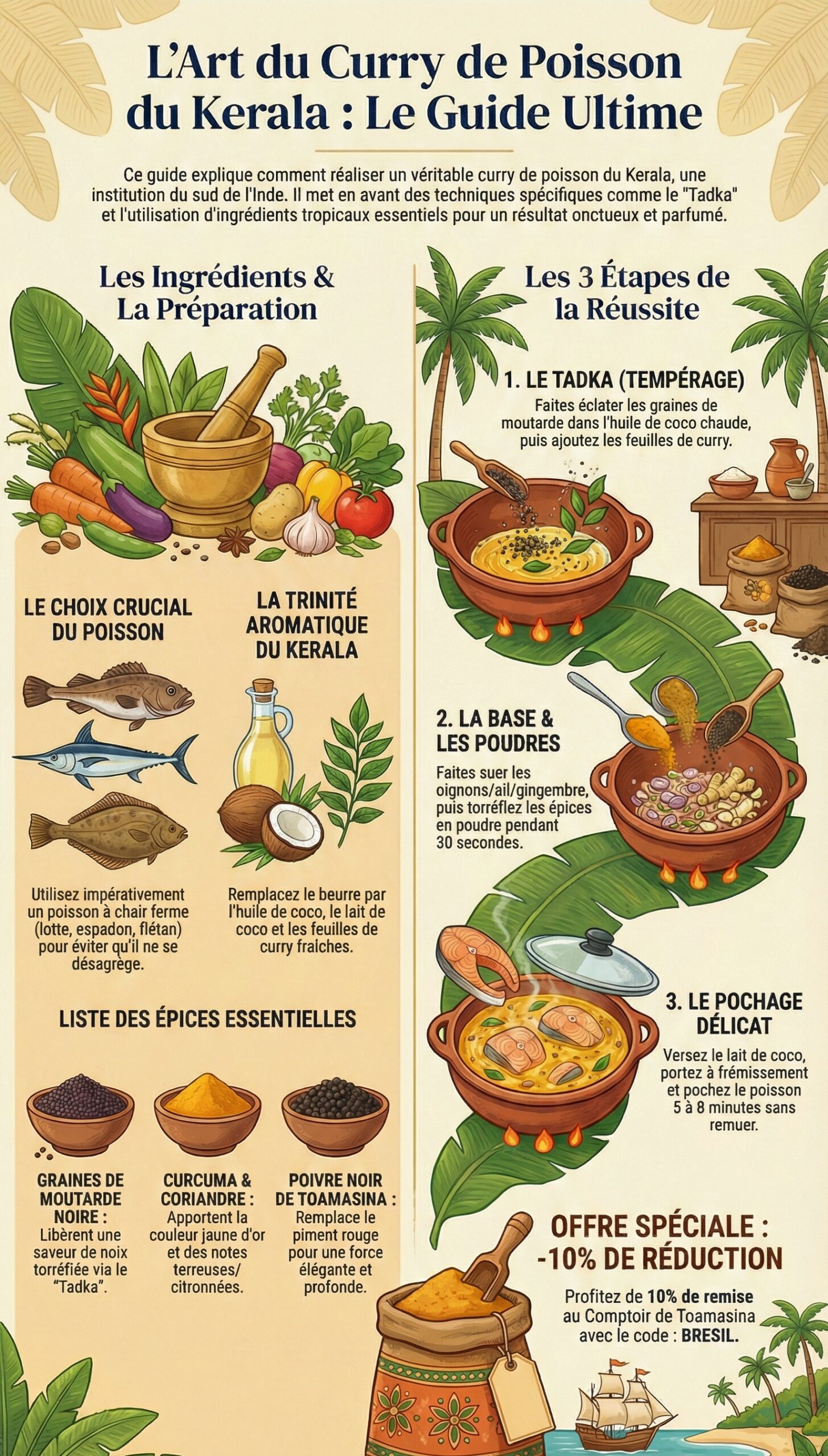
How to make a perfect curry every single time?
If my travels to Madagascar taught me one thing, it’s that the secret to a great curry isn't a complicated recipe, but a few precise techniques. The first step I emphasize constantly is "awakening" the spices. Before anything else, heat oil or fat, sweat the onions, garlic, and ginger, and crucially add your curry powder at that exact moment to bloom its essential oils into the base of the pan.
The second technique is patience. A great curry loves to simmer gently, allowing flavors to meld and sauce to thicken. Finally, I finish many curries off the heat with a pinch of garam masala—an aromatic signature that makes all the difference. With this technique mastered, you can adapt virtually any curry recipe.
Steps to a Perfect Curry
1. Heat oil/fat and sweat the onion, garlic, and ginger.
2. Add curry powder and sauté briefly to bloom aromatics.
3. Add main ingredient (fish, vegetables, poultry) and coat thoroughly.
4. Pour in liquids (coconut milk, tomatoes, broth) and simmer gently.
5. Adjust seasoning and finish with a pinch of garam masala off the heat.
Which fish curry to make?
Fish curry is one of my personal favorites. In the Indian Ocean, fresh local fish pairs beautifully with warm spices without being overpowered. I choose firm white fish like sea bream or cod, cut into thick chunks. After blooming curry powder with onion, garlic, ginger, and a extra pinch of turmeric, I pour in coconut milk and crushed tomatoes.
I simmer the sauce for a few minutes before gently placing the fish fillets inside, poaching them softly until tender and flaky. A squeeze of fresh lime juice and freshly chopped coriander at the end transforms this into a vibrant, island-inspired dish. Served over fluffy basmati rice, it represents peak spice cooking.

Potato and cauliflower dry curry: an unmissable vegetarian classic.
How to cook a vegetable curry?
A vegetable curry is the ideal recipe for beginners because it is forgiving and puts high-quality spices front and center. My favorite variation is a dry potato and cauliflower curry inspired by home cooks across India. First, sizzle cumin seeds in hot oil, then add onions, a generous measure of curry powder, and turmeric.
Toss in diced potatoes and cauliflower florets, coating them well in the spiced oil before covering to steam gently over low heat with a tiny splash of water. The vegetables soften as they absorb the spices without drowning in liquid. A final pinch of garam masala and fresh coriander turns this humble dish into an aromatic feast.
Arnaud's Take
Don't overcrowd your curry with ten different spices thinking it will improve the dish. A quality curry powder, extra turmeric, and a garam masala finish are often all you need. Quality always beats quantity.
Which chicken curry recipe to choose?
Chicken curry is universally loved. I prefer using chicken thighs cut into bite-sized pieces for their rich moisture. Sear the chicken pieces first and set aside. In the same pot, sweat onions, garlic, and ginger, stir in curry powder to release its fragrance, then return the chicken to coat in the spices.
Pour in coconut milk and crushed tomatoes, cover, and simmer slowly until the meat is tender and the sauce coats the back of a spoon. This dish tastes even better the next day after flavors have had time to rest and deepen.
Texture Tip
For a rich, velvety sauce, blend part of the cooked onions or stir in a tablespoon of almond butter or coconut cream. It creates a beautiful glaze over the ingredients.
Flavor Tip
Always bloom your spices in hot oil or ghee before adding liquids. This simple, often overlooked step multiplies aromatic depth immensely.
Why coconut milk changes everything?
Coconut milk is a classic partner for curry, providing luscious texture and balancing chili heat. Throughout the Indian Ocean and Southeast Asia, it forms the foundation for rich, silky sauces that soften sharp spices without masking aromas. I like adding it in two stages: half early during simmering and half right at the end for freshness.
If you prefer a lighter curry, tomato puree or vegetable broth make excellent alternatives. Each liquid base gives the dish a unique personality. Curry is a flexible framework you can adapt to taste, season, and available ingredients.
| Recipe | Key Ingredient | Sauce Base | Finishing Touch |
|---|---|---|---|
| Fish Curry | Firm white fish | Coconut milk & tomato | Fresh lime, coriander |
| Dry Vegetable Curry | Potatoes & cauliflower | Minimal water, covered steam | Garam masala, coriander |
| Chicken Curry | Chicken thighs | Coconut milk & tomato | Garam masala |
| Lentil Curry | Red lentils | Broth & tomato | Fresh lemon, coriander |
What are the secrets to a memorable curry?
Over years of cooking and sharing meals, I have learned a few simple rules that elevate an ordinary curry into something extraordinary. They rely on attentive technique and fresh spices rather than rare ingredients.
- Use freshly ground spices: it is the single most important factor for flavor.
- Always bloom curry powder in hot fat before adding liquids.
- Simmer gently on low heat rather than rushing the process.
- Add garam masala off the heat at the very end to protect its delicate aromatics.
- Balance richness with acidity (lemon juice, tomatoes) and fresh herbs (coriander).
Key Takeaway
A great curry rests on three pillars: quality spices, blooming spices in hot oil, and patient simmering. Everything else is open to personal variation.
Get Cooking
Explore our single-origin curry powders and single spices to bring deep flavor to your homemade recipes.
Explore the Spice ShopA Dish That Brings People Together
What I love most about curry is its communal nature. In the markets of Toamasina, a pot of curry simmers slowly as people gather around. Cooking curry is about sharing a warm, inviting moment as much as serving a meal.
Whenever I share a recipe, my goal is simple: to help you experience the joy of cooking with pure spices and take your guests on a flavor journey along the spice route.
Frequently Asked Questions
Can I make curry ahead of time?
Yes, and it is highly recommended for meat and vegetable curries. As it rests overnight, flavors develop and meld. Reheat gently over low heat before serving.
How can I tone down a curry that's too spicy?
Stir in coconut milk, a spoonful of plain yogurt, or add diced potatoes which absorb heat. A squeeze of lemon juice and a tiny pinch of sugar also help restore balance.
What side dishes work best with curry?
Steamed basmati rice is the classic pairing, but curries also pair wonderfully with flatbreads (naan/roti), lentils, or steamed greens to soak up the sauce.