
Your cart
There are no more items in your cart
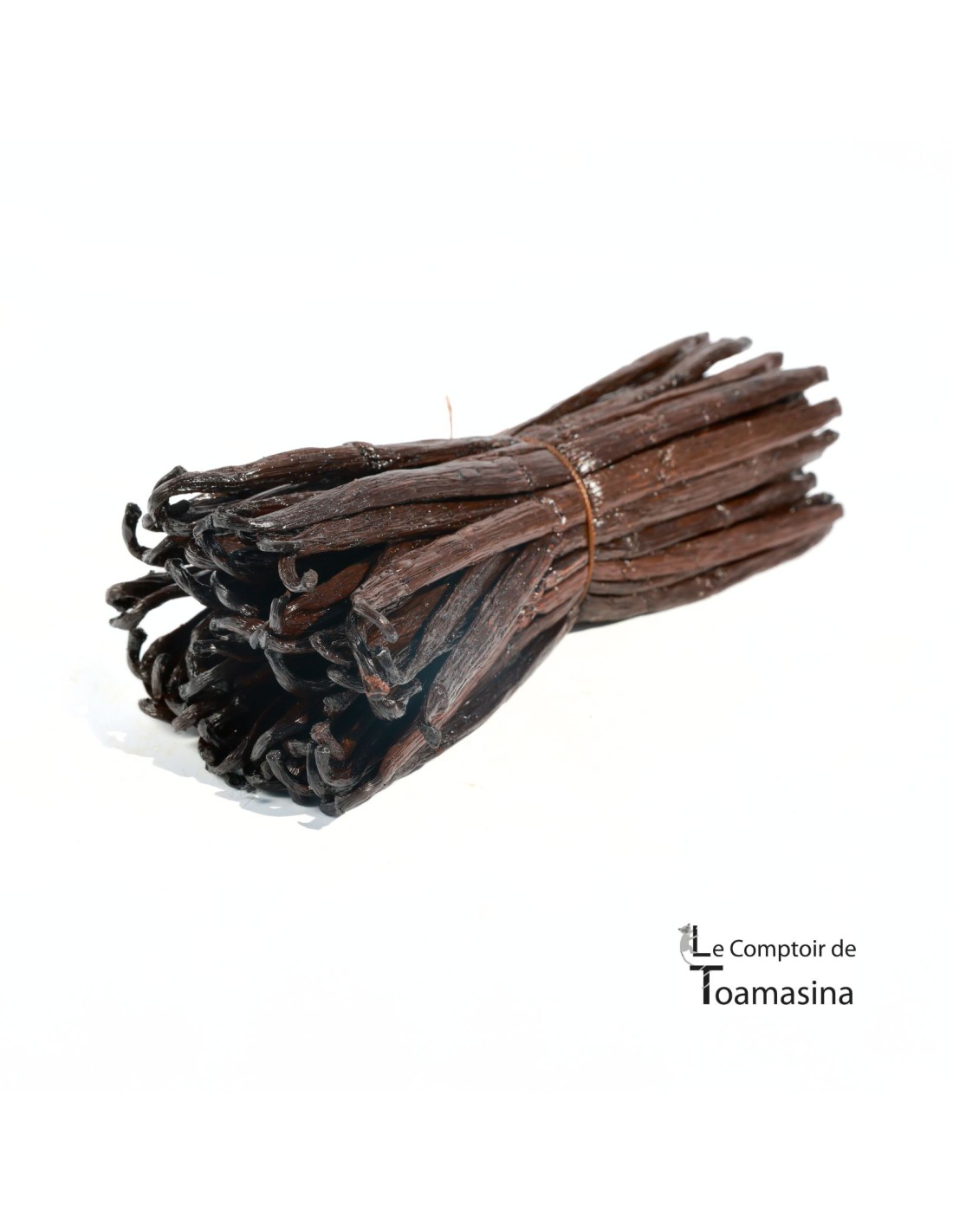
You have just received magnificent vanilla beans and are wondering how to use a vanilla pod to extract its full aromatic power without losing a single drop? Slitting the pod precisely, scraping the precious caviar, infusing in milk or cream, measuring accurately based on serving temperature, and reusing the empty pod: every step matters to unlock over 200 aromatic compounds packed inside a natural orchid pod.
Since 2010, Arnaud, founder of Le Comptoir de Toamasina, travels spice plantations around the globe — from legendary lands in Madagascar to Brazil's tropical forests and wild valleys in Tahiti. In this comprehensive guide, you will learn professional methods to master vanilla usage, exact recipes ratios, variety-specific techniques (Planifolia, Tahitensis, Pompona, Dubia, Bahianaise), savory infusions, cocktails, cosmetics, and zero-waste tricks to recycle your pods.
How to choose a quality vanilla bean before cooking?
Even before grabbing your knife to slit the pod, the success of your dessert relies entirely on raw material quality. A premium vanilla pod, fresh and cured according to traditional standards by a specialist, can be recognized immediately through distinct sensory criteria:
- Flexibility: a pod should easily wrap around your finger without snapping or splitting. A stiff or brittle pod has dried out and lost most of its essential oils.
- Shine and moisture: the surface should be glossy and slightly oily to the touch, showing rich aromatic resin content.
- Caviar density: inside, the black seeds should be dense, moist, and extremely abundant.
- Aroma profile: the scent must be warm, mesmerizing, complex, and long-lasting, with zero chemical or alcoholic notes.
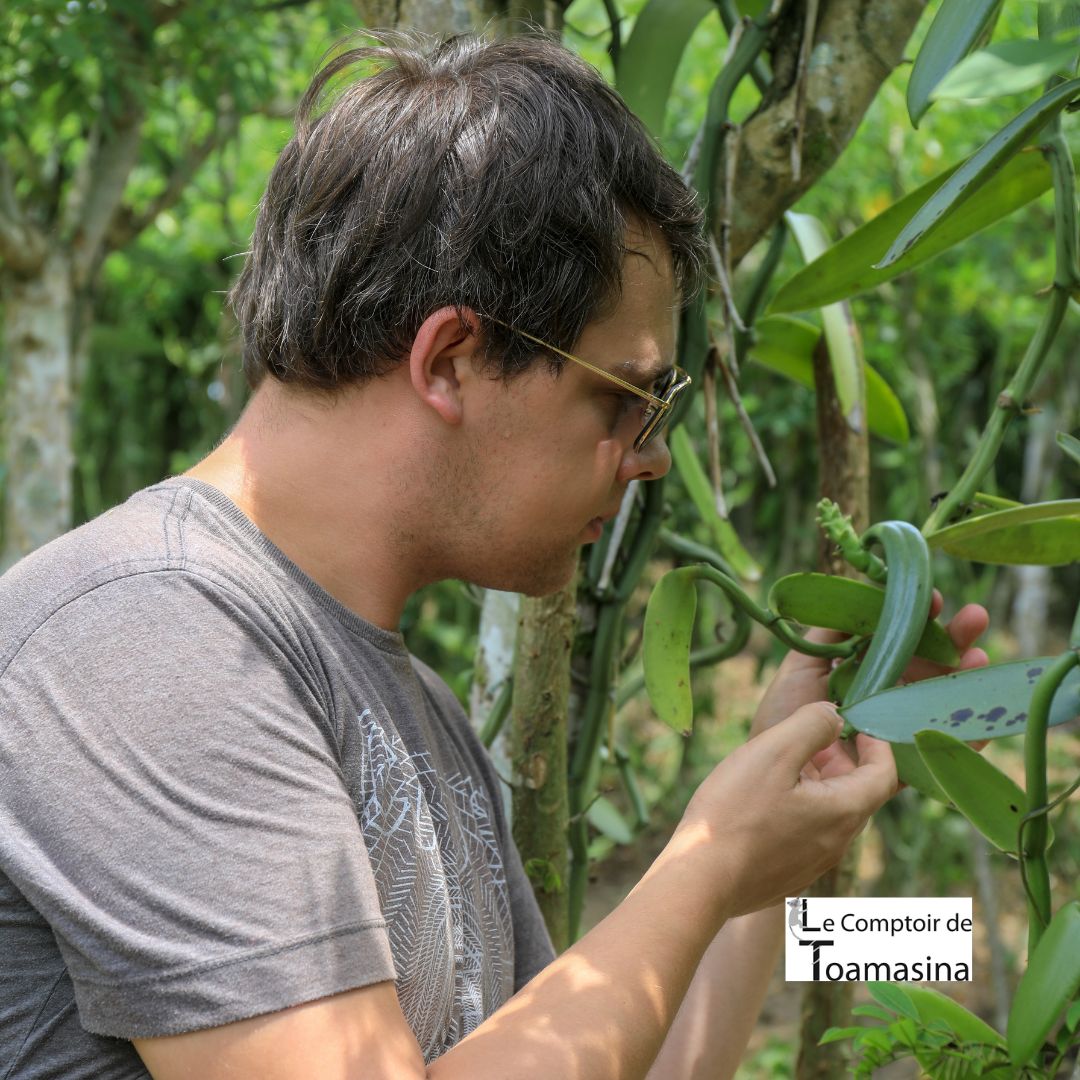
Arnaud Sion controlling green vanilla quality directly on a Bourbon vanilla plantation in Madagascar.
Quality criteria for an exceptional Gourmet pod:
Flexibility ➔ Bends around your finger without breaking or cracking.
Moisture ➔ Optimal moisture level strictly between 30% and 35%.
Appearance ➔ Glossy, oily coating with an even dark chocolate tone.
Aroma ➔ Over 200 complex molecules (vs 1 single molecule in synthetic vanillin).
Choosing a real natural bean over artificial flavoring changes everything in pastry baking. Industrially produced synthetic vanillin replicates only one isolated molecule, giving a flat and one-dimensional sweet note. In contrast, a real vanilla bean offers a full aromatic orchestra (woody, floral, anise, balsamic, and cocoa notes) that delivers depth and an unforgettable finish.
How to slit and scrape a vanilla bean to extract the seeds?
Extracting vanilla seeds trapped inside the pod is a simple technical gesture, but it requires precision to avoid wasting pulp.
- 1. Prepare your surface: Place the vanilla bean flat on a clean cutting board. Hold the top end (the narrowest tip) firmly between your thumb and index finger.
- 2. Slit the pod: Using the tip of a sharp knife, pierce the pod just below the top and slide the blade smoothly along the full length to split it in half.
- 3. Open the pod: Gently pry open both halves with your fingers to expose the inner cavity.
- 4. Collect the caviar: Hold the knife blade perpendicular to the pod and scrape firmly along the interior from base to tip using the back of the blade. This extracts all seeds without tearing vegetable fiber.
This movement extracts seeds as a dark, glossy paste. Once empty, incorporate these precious seeds straight into your mixture. Keep empty pods carefully: they still hold an impressive amount of fragrance that shouldn't go to waste.
Which vanilla variety to choose based on botanical species?
Not all vanilla beans are created equal. Depending on botanical species and origin terroir, aroma profiles vary greatly. Matching the right vanilla with the right recipe is a hallmark of master pastry chefs.
1. Vanilla Planifolia (Bourbon Vanilla)
The global gold standard. Packed with natural vanillin, it unfolds warm, comforting notes of cocoa, caramel, and sweet butter. Ideal for baked goods, cakes, brioches, flans, and pastry creams.
2. Vanilla Tahitensis (Tahitian Vanilla)
Exceptional, plump, indehiscent variety. An intoxicating bouquet featuring floral, anise, licorice, and peach notes. Sensitive to intense heat, it shines best in cold infusions (panna cotta, mousses, fruit salads).
3. Vanilla Pompona (Brazilian Banana Vanilla)
A rare wild species producing giant pods. Bold aromas of licorice, underwood, leather, and blond tobacco. Exceptional in savory dishes, fish sauces, poultry, and spirits.
4. Vanilla Dubia & Bahianaise (Brazil)
Ultra-rare wild Amazonian varieties. Resinous notes, wild berries, tropical balsam, and exotic fruits. Ideal for high-end creative culinary art, ice creams, and mixology.
How to infuse vanilla beans: cold vs hot method?
Infusion is the core culinary technique used to transfer aromatic compounds from pod to liquid base. Because vanilla aroma molecules are mostly fat-soluble, they bind perfectly to fatty liquids like whole milk, heavy cream, butter, or vegetable oils.
Aromatic extraction mechanism:
Split Pod + Caviar + Fat Base: Milk / Cream / Butter
➔ Cold Infusion (24h to 48h at 4 °C): Preserves 100% of delicate floral & volatile notes (Recommended for Tahitensis & Bahianaise).
➔ Hot Infusion (80 °C covered off heat): Fast & intense extraction of warm, woody vanilla notes (Recommended for Planifolia & Pompona).
Cold infusion: The chef's secret technique
This is the ultimate method for preserving fragile volatile notes. Split the pod, scrape seeds, and submerge everything into cold liquid (milk or cream) in the fridge for 24 to 48 hours. Strain through a fine sieve before whipping. Ideal for Tahitian vanilla whose floral top notes fade under high heat.
Quick hot infusion
Heat milk or cream to around 80 °C without reaching a boil. Add split pod and caviar, remove immediately from heat, and cover tightly with a lid for 20 to 30 minutes to trap aromatic steam.
How to blend seeds directly into doughs and cakes?
For dense batters (cakes, cookies, brioches), rub scraped caviar between your fingers with cane sugar or work it directly into softened butter. Sugar crystals and butter lipids separate seeds one by one, ensuring an even speckled distribution throughout your cake.
Professional vanilla dosage chart per recipe
Proper dosage depends on desired intensity, liquid richness, and serving temperature. Remember the golden rule: cold dulls taste buds. For recipes served frozen, increase vanilla amount by 50%.
| Recipe | Base quantity | Recommended dose | Ideal recommended variety |
|---|---|---|---|
| Custard / Pastry Cream | 50 cl milk | 1 medium pod | Planifolia (Bourbon Madagascar) |
| Crème Brûlée | 50 cl heavy cream | 1 pod | Planifolia / Pompona |
| Ice Cream / Gelato | 1 liter mix | 2 pods (+50% dosage) | Bahianaise / Planifolia |
| Panna Cotta / Whipped Cream | 50 cl cream | 1 pod | Tahitensis (Tahiti) |
| Brioche / Cakes / Cookies | 500 g flour | 1 pod (in softened butter) | Planifolia (Madagascar) |
| Chocolate Ganache | 250 g chocolate | 1/2 to 1 pod | Pompona / Dubia |
| Infused Rum / Cocktails | 70 cl spirit | 1 to 2 pods | Pompona / Tahitensis |
The art of infusing vanilla in savory dishes
Vanilla isn't just for sweet treats! In savory cooking, it acts as an elegant natural flavor enhancer. Warm, woody notes soften acidity and create exquisite pairings with seafood, fish, and white meats.
- Vanilla beurre blanc for fish & seafood: Infuse half a vanilla bean into white wine and shallot reduction before whisking in butter. Divine over seared scallops, cod, or lobster.
- Poultry and white meats: Infuse a Pompona or Planifolia pod into cream sauce to glaze chicken breast or veal tenderloin.
- Caramelized root vegetables: Roast carrots, turnips, or butternut squash with olive oil, sea salt, and vanilla caviar. The harmony with natural veggie sweetness is incredible.
How to use vanilla in cocktails & mixology
In modern mixology, vanilla adds roundness, structure, and exceptional length on the palate to both alcoholic creations and refreshing mocktails.
The art of infusing vanilla in creative mixology and cocktails.
- Homemade vanilla cocktail syrup: Bring 250 g cane sugar and 25 cl water to a boil with 2 split and scraped vanilla pods. Infuse covered for 24 hours before straining. This syrup instantly elevates an Old Fashioned, Daiquiri, or Espresso Martini.
- Direct spirit infusion: Place 1 to 2 Tahitian or Pompona vanilla pods inside a bottle of rum, bourbon, or añejo tequila. Steep from 2 weeks up to several months for a complex liqueur.
- Infused waters & Mocktails: For refreshing alcohol-free drinks, cold-infuse a Tahitian vanilla pod in a pitcher of sparkling water with cucumber slices and mint leaves.
Vanilla in DIY cosmetics: benefits and recipes
Beyond culinary virtues, vanilla pods are packed with natural antioxidants and soothing skin properties. They allow you to make luxurious homemade body care routines:
Vanilla infused body oil
Split 2 vanilla pods and steep them in 200 ml sweet almond or jojoba oil inside a dark glass bottle. Infuse for 4 weeks away from light, shaking occasionally. Apply after showering for nourished, subtly scented skin.
Gourmet sugar & vanilla body scrub
Mix 100 g brown sugar, 4 tbsp melted coconut oil, and caviar from a used vanilla bean. This natural scrub gently exfoliates while leaving a protective, comforting layer.
How to reuse empty vanilla pods (Zero Waste)?
An exhausted vanilla pod (scraped or previously infused) still holds up to 50% of its aroma in outer fibers. Stopping waste lets you maximize value from every single bean purchase:
- 1. Homemade vanilla sugar: Rinse used pod with clear water to remove milk or egg residue, air-dry thoroughly for 48 hours, then slip into a 500 g jar of sugar. After 3 weeks, your sugar will be deeply fragranced.
- 2. Pure homemade vanilla extract: Place 5 to 6 scraped pods into a bottle with 25 cl dark rum or vodka. Steep 2 to 3 months away from light. You get pure, concentrated extract with zero chemical additives.
- 3. Vanilla powder & Aromatic salt: Dry empty pods completely in a low oven (50 °C for 1 hour) and grind finely. Mix one teaspoon of this powder with 200 g sea salt flakes for an exceptional vanilla salt over fish and poultry.
Mistakes to avoid & storage rules
Pitfalls that ruin your vanilla:
- Boiling vanilla: Prolonged boiling destroys delicate volatile aromatic compounds. Always infuse off the heat with a lid on.
- Throwing away empty pods: The outer pod husk contains as much aroma as the seeds. Always recycle it!
- Storing in the fridge: Fridge cold and moisture trigger mold growth and dry out pod fiber.
How to properly store your beans?
Store whole vanilla beans in an airtight container (flat-bottom glass tube or well-sealed tin) at room temperature (between 15 °C and 20 °C), in a dry place away from direct sunlight.
Rehydration tip: If you find a forgotten dry bean, submerge it in warm water or milk for 15 minutes. The husk will soften, allowing you to split and scrape seeds easily.
FAQ: Answers to your vanilla questions
Should I use the whole pod or just the caviar in my recipe?
Both! Caviar gives instant potency and beautiful flecks, while infused pod husk releases deep woody base notes.
How long does homemade vanilla extract keep?
Extract made with high-proof spirits (rum, vodka) has no expiration date. It improves over time like fine wine.
Can I freeze vanilla beans?
Freezing is strongly discouraged. It ruptures plant cells, disrupts natural moisture balance, and destroys aroma compounds.
What is the best vanilla for savory cooking?
Brazilian Vanilla Pompona (leather, tobacco, licorice notes) or Madagascar Vanilla Planifolia are ideal for seafood, scallops, and poultry.