
Your cart
There are no more items in your cart
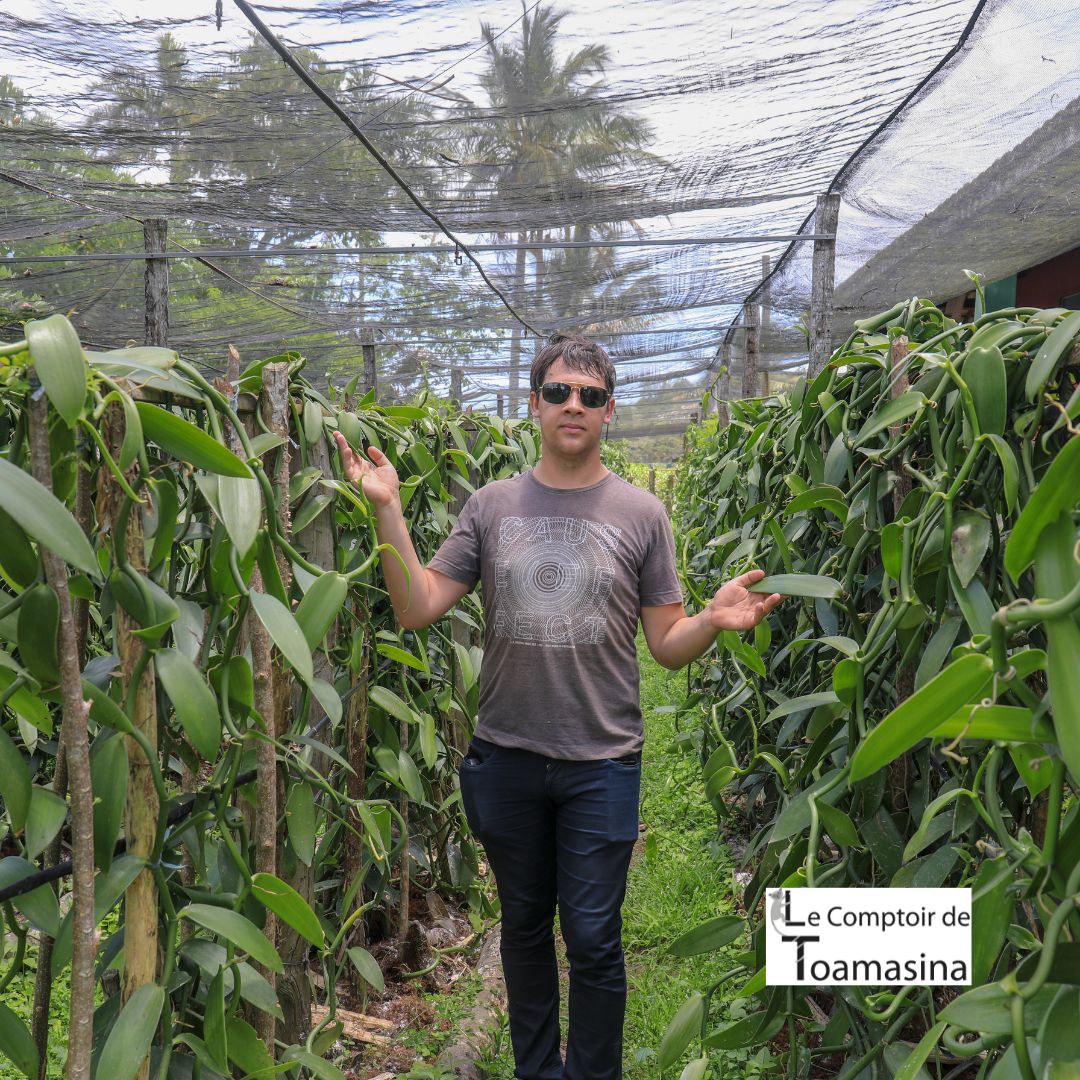
Have you ever wanted to understand how precious vanilla pods grow and uncover all the secrets of this tropical vine, from its native forest to your kitchen? Since 2010, Arnaud, founder of Le Comptoir de Toamasina and passionate spice expert, travels global plantations — from Madagascar to Brazil's wild rainforests and savannas — to share the secrets of this legendary crop.
In this expert guide, you will discover vanilla vine botany, global terroir mapping (from the Indian Ocean to the Amazon), manual pollination techniques, traditional curing craft, and practical advice to grow vanilla at home. Finally, we explain exactly which vanilla variety to select for each culinary creation.
1. Vanilla botany: Which plant yields the pod and how does it grow?
Understanding how the world's most famous spice grows begins by observing its unique botanical nature. The plant yielding these fragrant pods is neither a tree nor a shrub, but a fascinating climbing orchid belonging to the genus Vanilla (most famous being Vanilla planifolia). In the humid tropical forests of Mexico or preserved South American undergrowth, this remarkable plant develops a flexible, fleshy vine capable of reaching several meters in length. Its evergreen, succulent leaves store water and nutrients to support growth throughout the seasons.
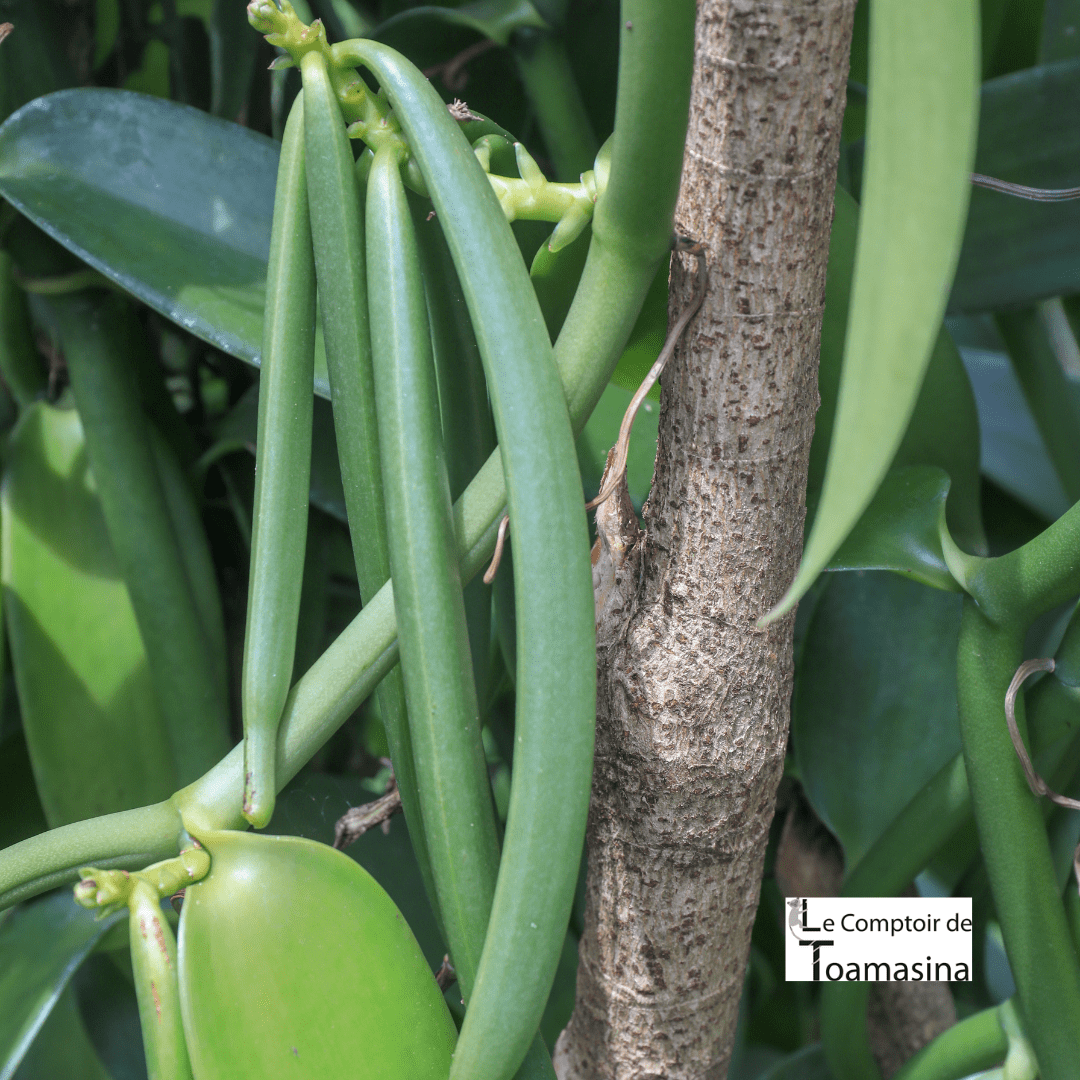
Green vanilla pod growing on the vine in the plantation.
Vanilla Vine Morphology in Plantations:
Vine stem (15-30 m) ➔ Wraps around a support (Living tree or trellis)
Terrestrial roots ➔ Absorb minerals from humus-rich soil
Adventitious aerial roots ➔ Cling to bark and capture ambient air moisture
To climb toward light while staying protected from direct sun scorch, the orchid requires a sturdy support tree. In its wild habitat, it clings along tropical canopy tree trunks. Its aerial adventitious roots act as light-green grips, firmly anchoring to bark while absorbing air humidity. Simultaneously, terrestrial roots draw essential soil minerals. This dual root system enables the vine to climb without choking its host tree, preparing future pods.
In the vanilla world, patience is the ultimate grower's virtue. A newly planted vine won't yield its first flower clusters until its third or fourth year. It demands filtered shade (about 50% to 70% shade density), as direct sunlight causes irreversible tissue burns.
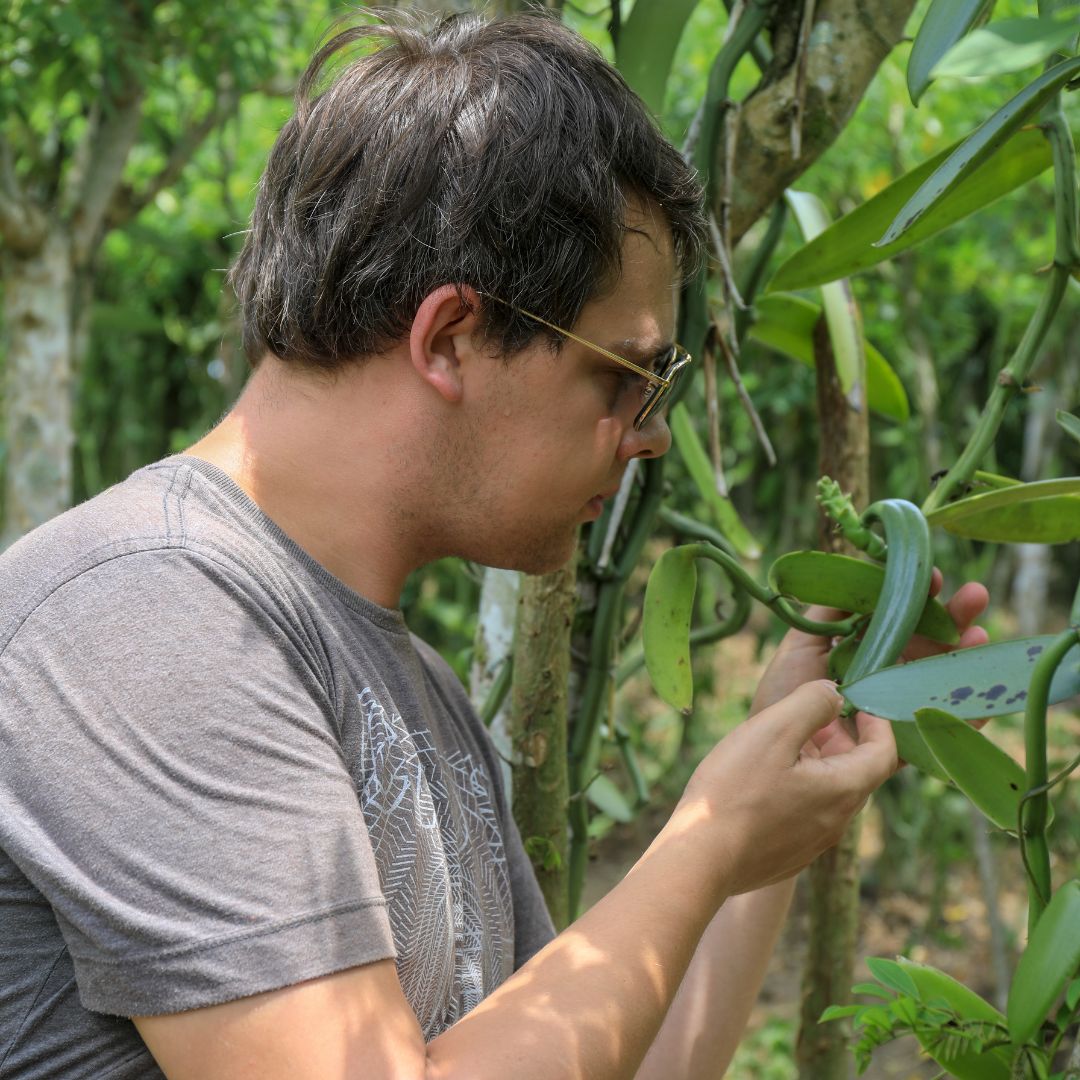
Arnaud Sion inspecting a green vanilla pod on a Madagascar plantation.
2. Global terroirs and Brazil's richness: Where and how vanilla grows?
Vanilla is a demanding plant thriving only within specific tropical latitudes between the 20th parallel North and 20th parallel South. To flourish and produce peak quality, it requires a warm, humid climate with average temperatures between 21 °C and 31 °C (nighttime minimum of 15 °C). Abundant, regular rainfall is essential to maintain ambient humidity above 80%.
Madagascar and the Indian Ocean
In Northeastern Madagascar (SAVA region), Réunion Island, or the Comoros, Vanilla planifolia produces iconic Bourbon vanilla. Grown in undergrowth or under shade houses, it benefits from steady rains and rich volcanic/granitic soil, yielding supple black pods rich in natural vanillin.
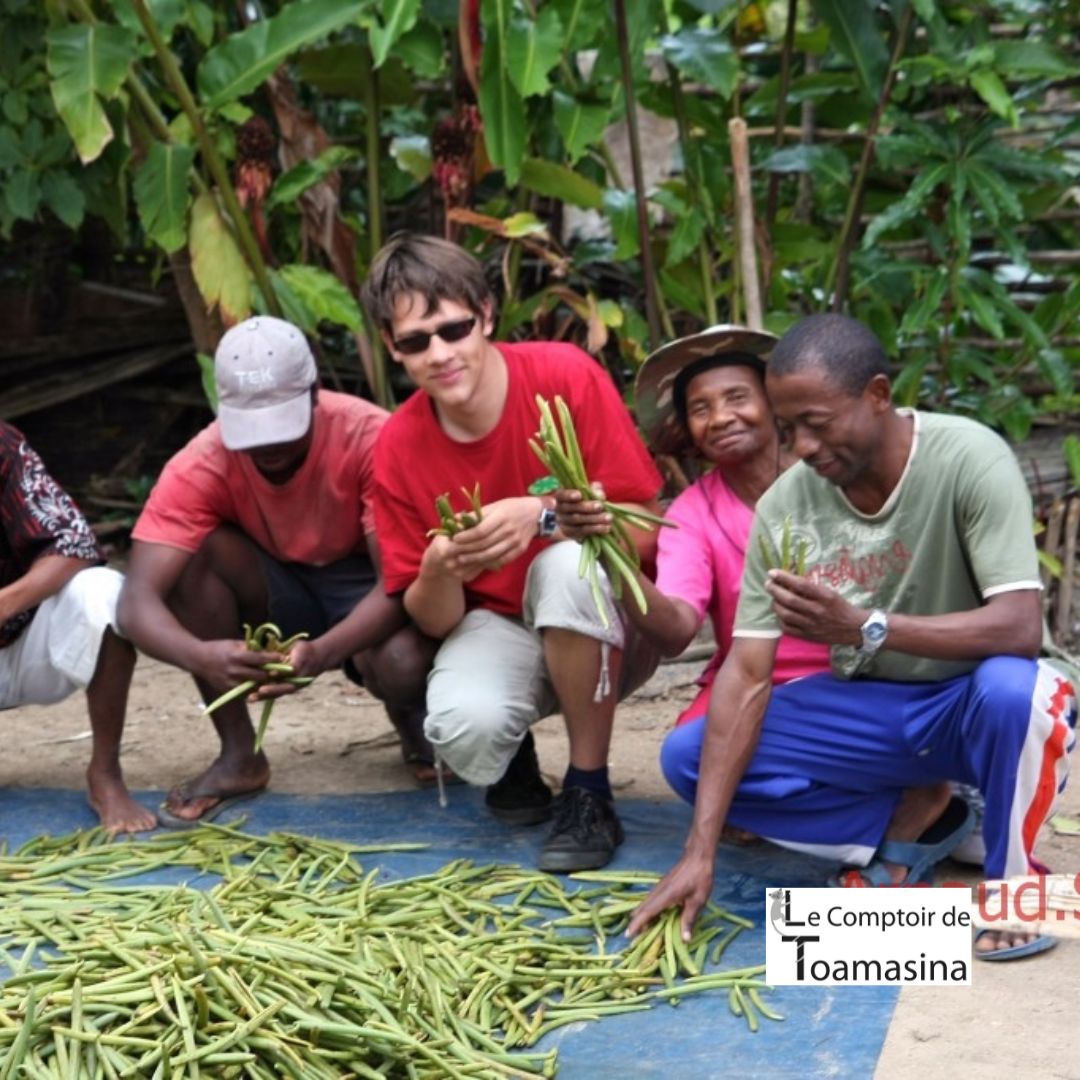
Arnaud Sion in the field with freshly harvested green vanilla at a partner farm in Madagascar.
Brazil: Biodiversity giant and cradle of wild species
Brazil hosts over 40 wild orchid species belonging to the Vanilla genus. Here, vanilla grows wild on primary forest trees or flourishes in innovative plantations across remarkable state terroirs:
- The Amazon: Native sanctuary of giant and rare species (Vanilla pompona, Vanilla dubia, Vanilla odorata). Vines grow in permanent humidity (85%), where pollination is sometimes still performed naturally by native stingless Melipona bees.
- Minas Gerais and the Cerrado: Here in the Brazilian savanna, Le Comptoir de Toamasina established the Arnaud Vanille experimental farm. The Cerrado features a dry season from May to October with cool nights (down to 10 °C). This controlled thermal stress prompts the vine to accelerate reproduction, inducing heavy flowering and potent pods.
- Bahia and Espírito Santo: These Atlantic coast states practice exemplary agroforestry. Vanilla is intercropped with cocoa, clove trees, açaí palms, and tonka bean trees. Bahia is home to ultra-fruity Vanilla bahianaise.
- Rio de Janeiro and São Paulo: Along Rio's Serra do Mar, coastal forests shelter wild species. In São Paulo, Le Comptoir de Toamasina conducts rooftop vanilla farming trials in drained containers under shade cloth.
- Goiás and Mato Grosso: Transition zones between savanna and rainforest host ultra-resistant wild species (Vanilla chamissonis, Vanilla trigonocarpa).
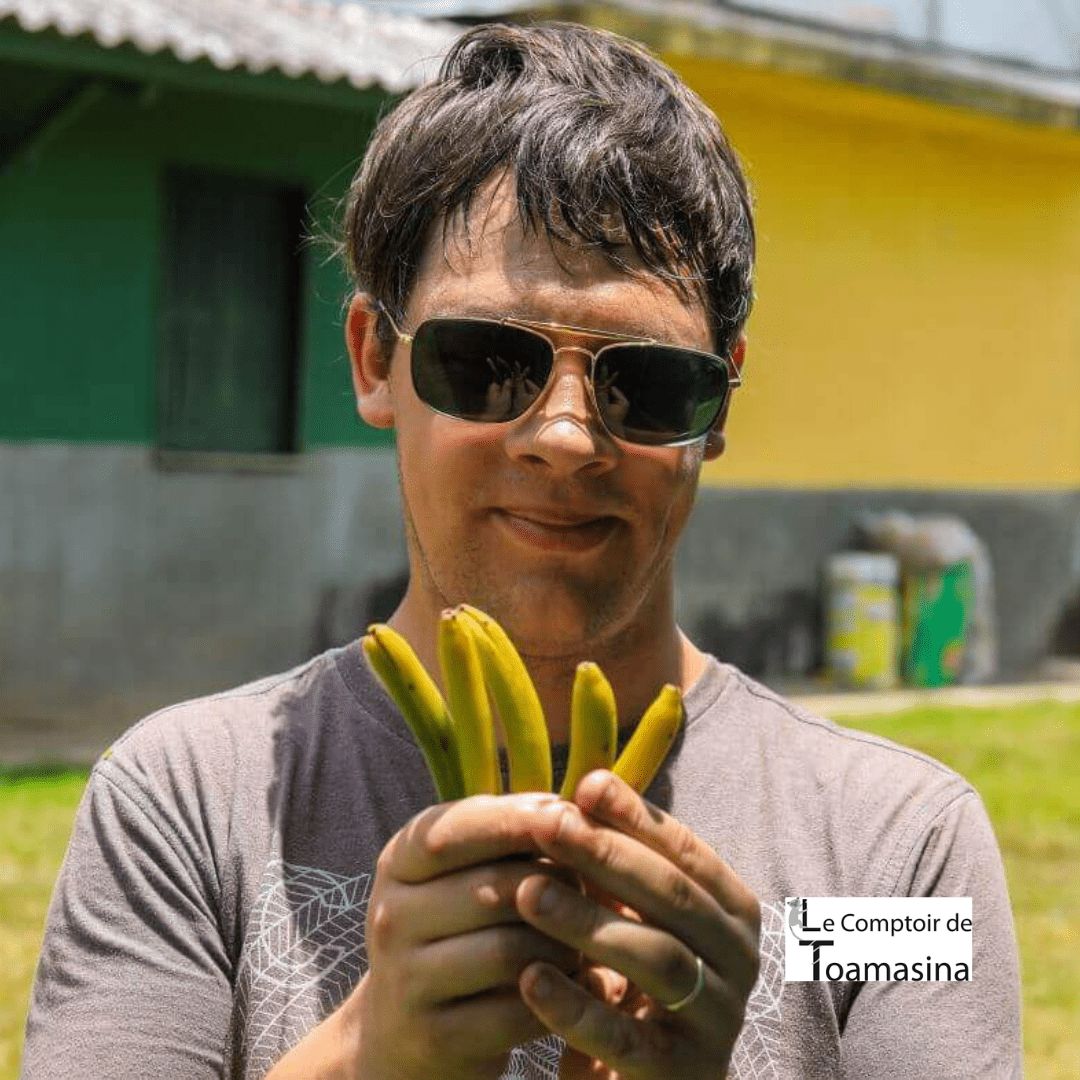
Arnaud Sion presenting ultra-rare Bahia vanilla during an expedition in Brazil.
3. Which vanilla bean to use for which recipe? (Variety Guide)
Each vanilla species and origin terroir gives the pod a distinct chemical and aromatic signature. Here is how to choose the right vanilla bean for your culinary applications:
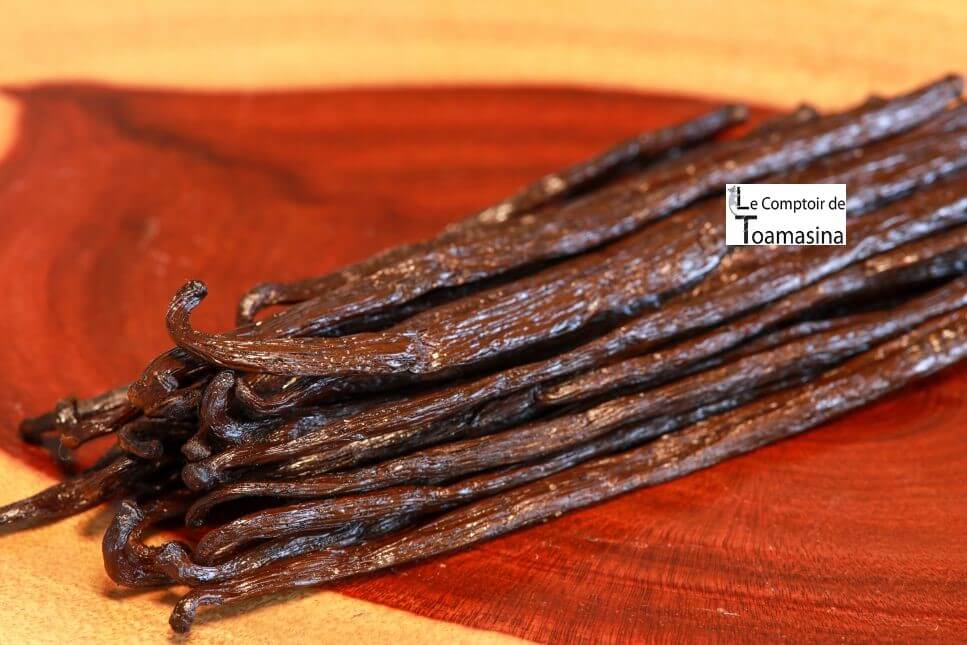
Cured Madagascar Bourbon Gold black vanilla pod, supple, oily, and packed with caviar.
| Species & Origin | Primary Aromatic Profile | Which vanilla for which recipe? (Best Use) |
|---|---|---|
| Vanilla planifolia (Madagascar, Brazil - Minas Gerais) |
Warm, woody, intense vanilla, cocoa, caramel, and sweet butter notes. | The baking all-rounder: Essential in warm classic pastries (custards, crème brûlée, pastry cream, cakes, brioches, cookies). |
| Vanilla tahitensis (Tahiti, Papua, Brazil) |
Floral, captivating, anise, licorice, prune, and fresh peach notes. | Cold & delicate preparations: Best used in cold infusions to protect delicate volatile top notes (panna cotta, whipped cream, ice creams, fruit salads). |
| Vanilla pompona (Amazon, Guadeloupe, Brazil) |
Bold, woody, coumarin, blond tobacco, licorice, and prune notes. | High gastronomy & savory: Perfect for spirits (infused rum, cocktails), seafood sauces (scallops, lobster), poultry, and dark chocolate ganaches. |
| Vanilla bahianaise (Bahia - Brazil) |
Exotic, highly fruity, soft with hints of anise and green wood. | Light creations & seafood: Wonderful in fish carpaccios, ceviches, mango tartare, delicate syrups, and tropical fruit desserts. |
| Vanilla dubia (Amazon - Brazil) |
Rare, resinous, tropical balsam, underwood, and wild berry notes. | Artisanal chocolate & fine dining: Used by chefs to bring a wild, mysterious signature to pure cocoa creations and fine meats. |
| Vanilla chamissonis (Goiás, Mato Grosso - Brazil) |
Balsamic, spiced, woody with bark and damp earth nuances. | Sweet & savory pairings: Ideal for marinades, braised meats, sweet potato purées, and pepper sauces. |
4. From bloom to pollination: The secret of hand fertilization
Flowering is the most poetic yet critical moment on a plantation. Flowers bloom gradually in clusters. However, each blossom opens only once a year early in the morning and stays receptive for just a few hours. If fertilization doesn't occur before midday, the flower wilts and drops permanently.
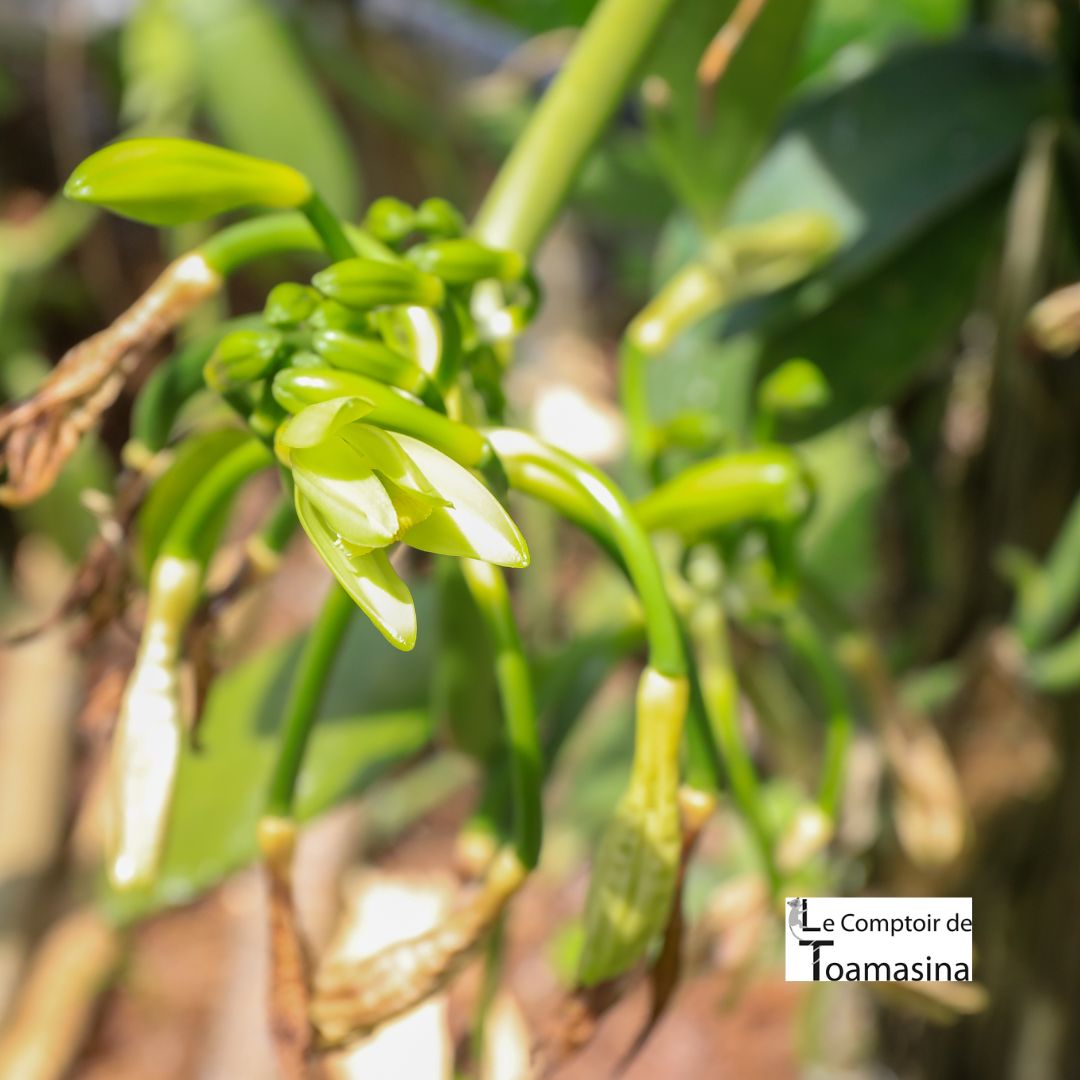
Vanilla flower blooming at dawn, ready for delicate hand pollination.
Flower Anatomy & Hand Pollination Technique:
1. Slit the labellum (trumpet) using a bamboo needle or lemon thorn
2. Lift the rostellum (the thin membrane separating male and female organs)
3. Lower the anther (pollen) with your thumb to press it firmly onto the stigma
Outside Mexico where native Melipona bees handle natural pollination, human intervention is mandatory. Discovered in 1841 by Edmond Albius on Réunion Island, hand pollination is meticulous work performed by skilled pollinators:
- The pollinator holds the blossom with their left hand, supporting the corolla with a finger.
- Using a small thorn or bamboo stick, they tear open the lower trumpet-shaped labellum to reveal reproductive organs.
- They lift the rostellum, the flap separating the male anther from the female stigma.
- Using their thumb, they press the anther down to transfer pollen directly onto the stigma.
An experienced pollinator completes 1,000 to 1,500 pollinations per morning. When successful, the flower petals remain attached and begin drying as the young pod grows.
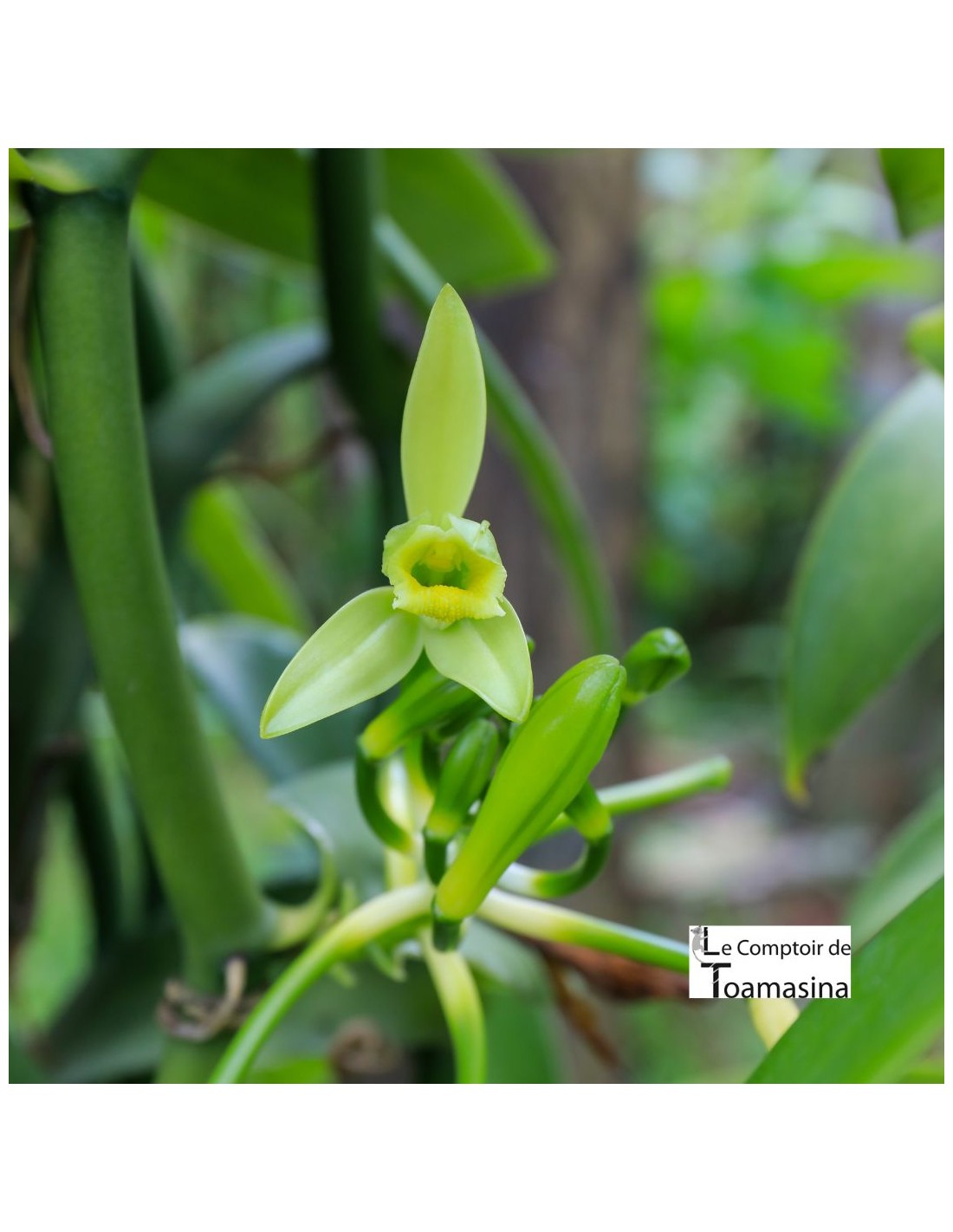
Open vanilla flowers before developing into Gourmet extra beans.
5. From green pod to cured bean: Traditional preparation steps
Following pollination, the pod reaches full size (12 to 22 cm) in two months, but requires 7 to 9 months maturing on the vine to develop gluco-vanillin. Harvesting occurs when the tip turns yellow.
At harvest, green pods are completely odorless. Traditional curing unlocks aromatic precursors. It takes roughly 5 kg of green pods to yield 1 kg of cured black vanilla.
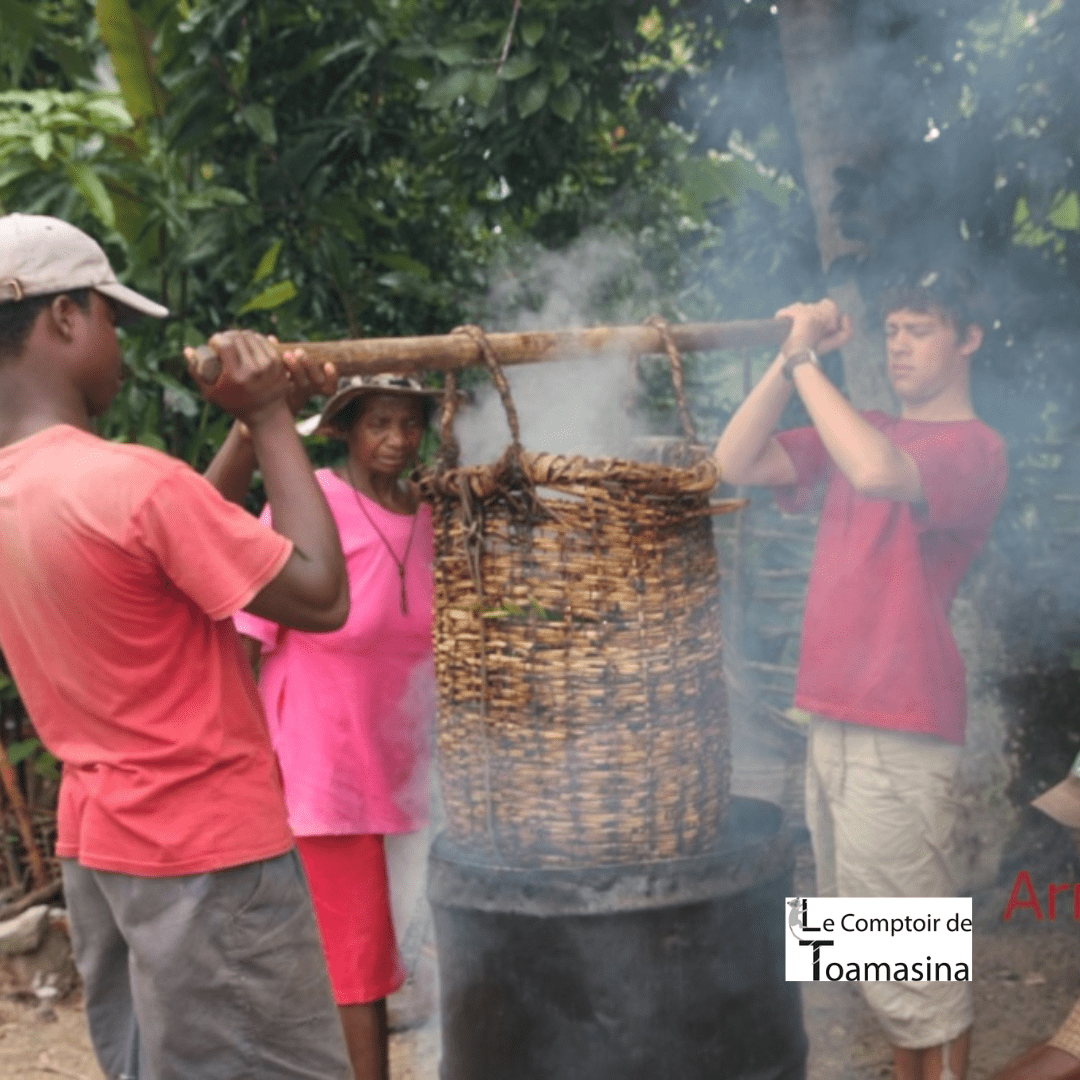
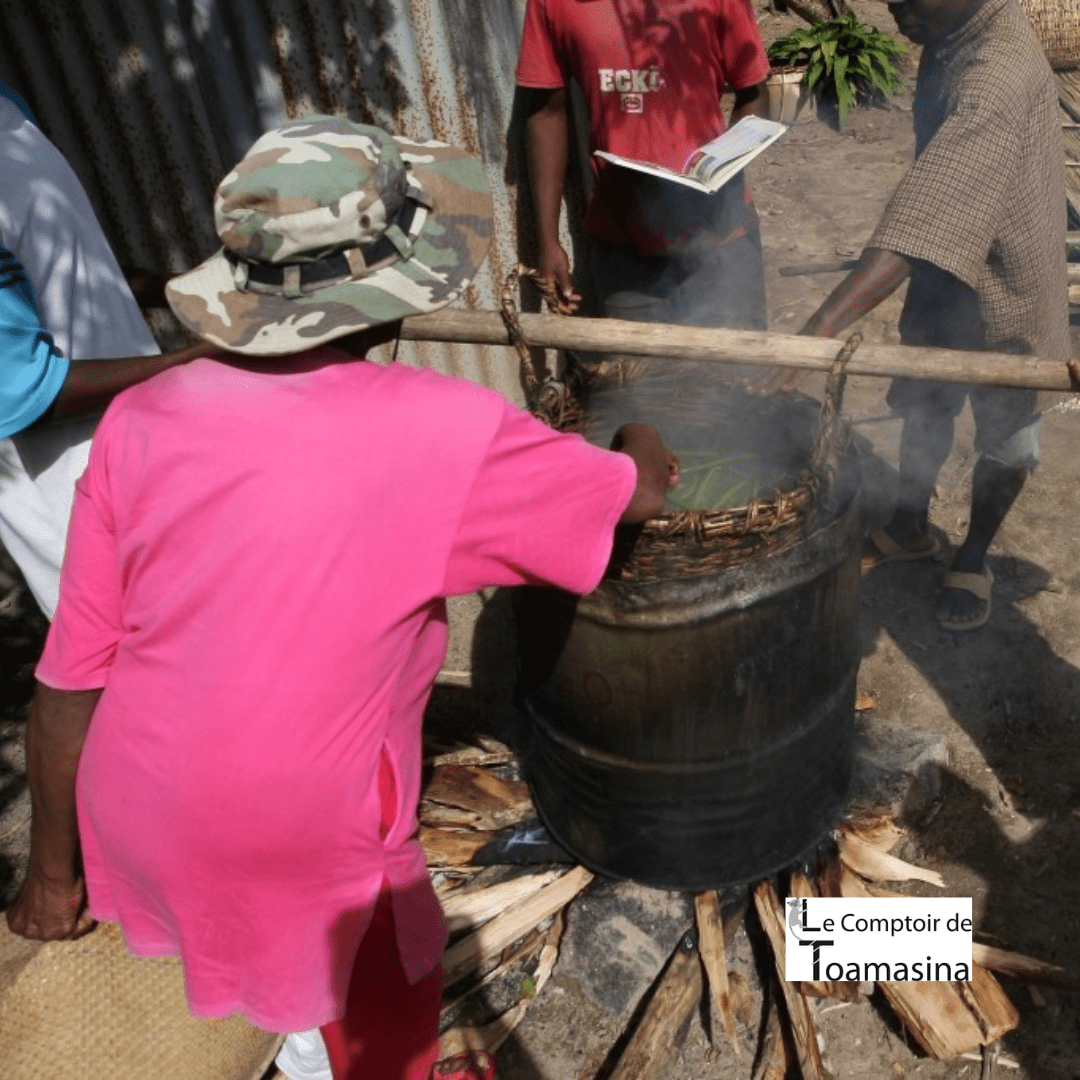
Arnaud Sion performing traditional scalding on green vanilla pods.
The 4 Steps of Traditional Curing:
1. SCALDING (Échaudage) ➔ Immersed 2-3 min in 65°C-70°C water (stops vegetation)
2. SWEATING (Étuvage) ➔ 24h to 48h in padded wooden boxes (pods sweat and turn brown)
3. DRYING (Séchage) ➔ 1 to 2 months (morning sun / afternoon shade on racks)
4. CURING (Affinage) ➔ 2 to 6 months in rosewood trunks (aroma stabilization)
This process demands extreme patience, taking 10 to 12 months from flower to kitchen-ready pod.
Meticulous pod sorting at Le Comptoir de Toamasina to reveal complex aromatic profiles.
6. How to grow vanilla at home in a pot
Growing your own vanilla plant indoors, in a veranda, or heated greenhouse is fully achievable at home by reproducing tropical microclimates.
Key Parameters for Home Vanilla Growing:
• Temperature: 20°C to 26°C day (Never below 15°C at night)
• Brightness: High light WITHOUT direct sun (filtered by sheer curtain)
• Humidity: > 70% (Daily misting + Humidifier)
• Substrate: 1/3 Orchid bark + 1/3 Sphagnum/Coco + 1/3 Clay pebbles/Perlite
1. Select the right plant
Start with a young Vanilla planifolia plant, the hardiest species most tolerant to indoor household variations.
2. Support and trellising
As a climbing vine, place a moss-covered pole, sphagnum pole, or bamboo trellis in the center of a deep pot. Secure the vine with soft raffia. Aerial roots will attach naturally once ambient humidity is right.
3. Aerated potting mix
Never use plain garden soil or heavy potting mix, which suffocates roots. Blend a light, airy substrate:
- 1/3 orchid bark mix.
- 1/3 coco coir or sphagnum moss.
- 1/3 perlite or clay pebbles for drainage.
4. Watering and misting
Pot watering: Water substrate with non-calcareous water only when top layer dries slightly. Avoid chlorinated tap water. Always drain saucer to prevent root rot.
Misting: Mist stem, leaves, and moss pole daily with lukewarm water to nourish aerial roots.
5. Fertilizing
During active growth (spring through autumn), apply diluted liquid orchid fertilizer once a month (half recommended strength) after watering.
7. Key takeaway summary
- Plant nature: Vanilla is a climbing orchid (Vanilla planifolia, pompona, tahitensis) requiring support and filtered shade.
- Global terroirs: Beyond Madagascar Bourbon vanilla, Brazil offers incredible variety across Amazonia, Cerrado, Bahia, Espírito Santo, Rio, São Paulo, Goiás, and Mato Grosso.
- Matching vanilla species:
• Planifolia: Baked goods, custards, cakes, pastry creams.
• Tahitensis: Cold infusions, panna cotta, chantilly, fresh fruit.
• Pompona: Savory dishes, fish sauces, spirits, dark chocolate.
• Bahianaise: Ceviches, carpaccio, cocktails, fruity desserts.
• Dubia & Chamissonis: Fine gastronomy, meat sauces, specialty cocoa. - Hand pollination: Flowers open for a few morning hours. Edmond Albius discovered how to lift the rostellum to press anther to stigma.
- Artisanal curing: Pods mature 8-9 months on vine before scalding (65 °C), sweating (48h), drying (1-2 months), and curing in wooden boxes (2-6 months).
- Growing at home: Feasible indoors in bright indirect light (20 °C to 26 °C), using sphagnum poles, well-draining orchid mix, and daily misting.
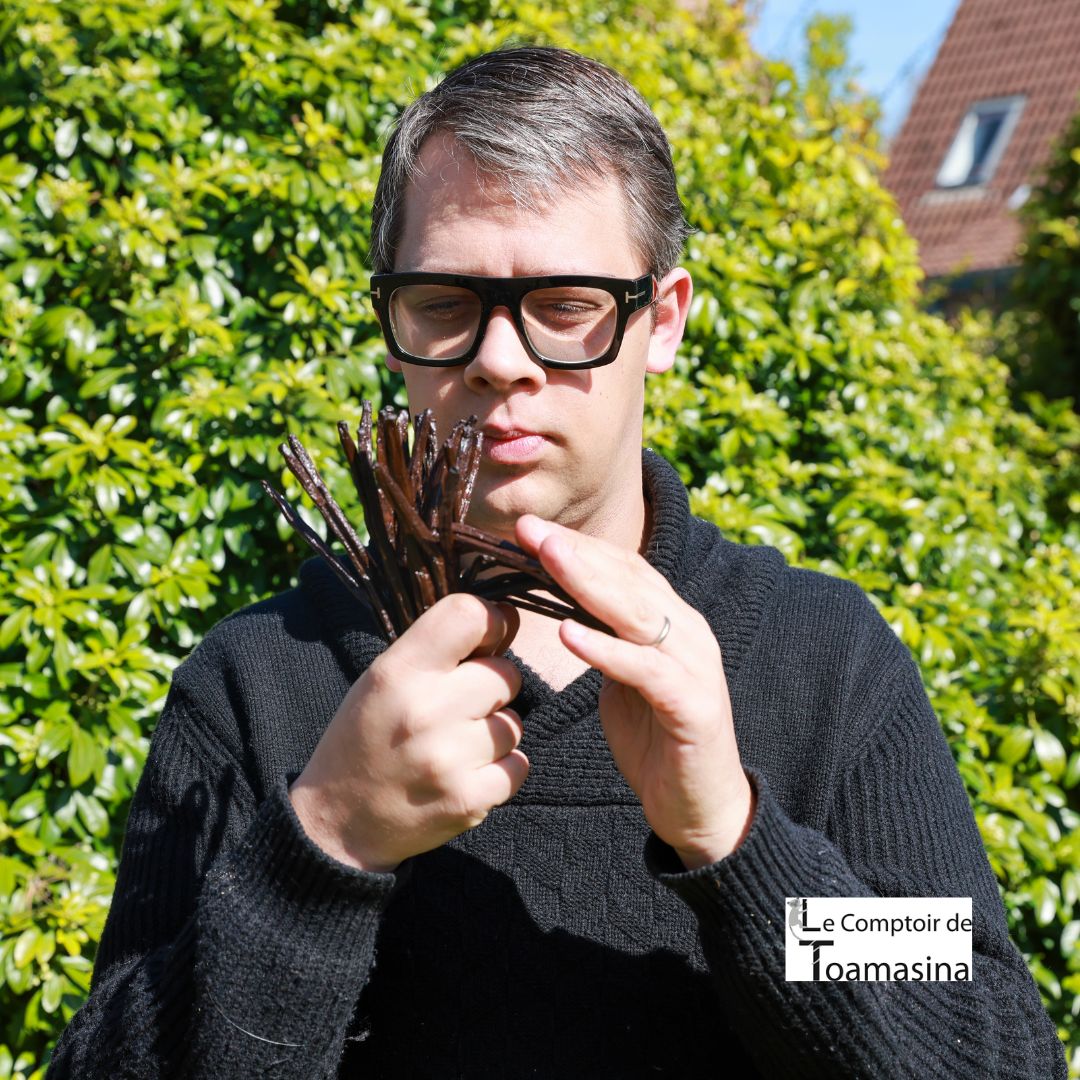
Arnaud Sion holding cured black vanilla pods ready to elevate your best recipes.
8. Frequently Asked Questions (FAQ)
How long does it take for a vanilla vine to produce its first pods?
Patience is key: a young vanilla plant takes 3 to 4 years to reach maturity and produce its first flowers. Once fertilized, pods take another 8 to 9 months to mature on the vine, followed by 3 to 6 months of curing.
Why is natural vanilla one of the most expensive spices in the world?
Vanilla's price stems from 100% manual production. Every single blossom must be hand-pollinated on the morning it opens. This is followed by 10 to 12 months of meticulous care, daily sorting, sun drying, and box curing.
Can you pollinate a vanilla flower in the afternoon or evening?
Unfortunately no. A vanilla flower opens only once in its lifetime early in the morning and stays receptive for just a few hours. If not pollinated before midday, the flower wilts and drops without forming a pod.
What is the main difference between Planifolia and Tahitensis vanilla?
Vanilla planifolia (Bourbon type) is rich in natural vanillin with warm cocoa, caramel, and woody notes, ideal for baking. Vanilla tahitensis features floral, anise, licorice, and peach notes, perfect for cold infusions and uncooked recipes.
What should I do if my potted vanilla leaves turn yellow or soft?
Yellowing or soft leaves usually signal overwatering in the pot or poor drainage, suffocating root systems. Allow top soil to dry between waterings, clear saucer standing water, and focus on foliage misting instead.