Your cart
There are no more items in your cart
The essentials of true direct sourcing
2010Founding year of Le Comptoir
30+Native Brazilian species
1 TonMada black vanilla project
30–35 %Optimal Gourmet moisture
- Real field experience: Direct learning alongside farming families since my first journey to Madagascar in 2010.
- Creator of full supply chains: A pioneering methodology started in Brazil for açaí, guarana, acerola, and tonka beans, now applied to rare botanical vanillas.
- Flagship Madagascar project: Direct partnership to purchase 1 ton of black vanilla to master quality and curing.
- International expertise in demand: Remote technical guidance provided to farmers in Congo, Tanzania, and Sulawesi to refine their plantations and curing.
"Direct producer": beyond the marketing slogan
It's a phrase you see everywhere online: "direct producer", "no middleman", "full traceability". But what is the reality in an opaque global market where Malagasy farmers sometimes receive less than 5 % of a pod's final price? All too often, these buzzwords mask basic catalogue purchases from industrial wholesalers selling overstocked and re-moistened beans.
At Le Comptoir de Toamasina, direct sourcing is not a tagline written in an office. It is the ethical and technical commitment I set for myself in 2010: I only sell what I have personally seen grown, cured, or selected with my own hands from growers I know and support over the long term.
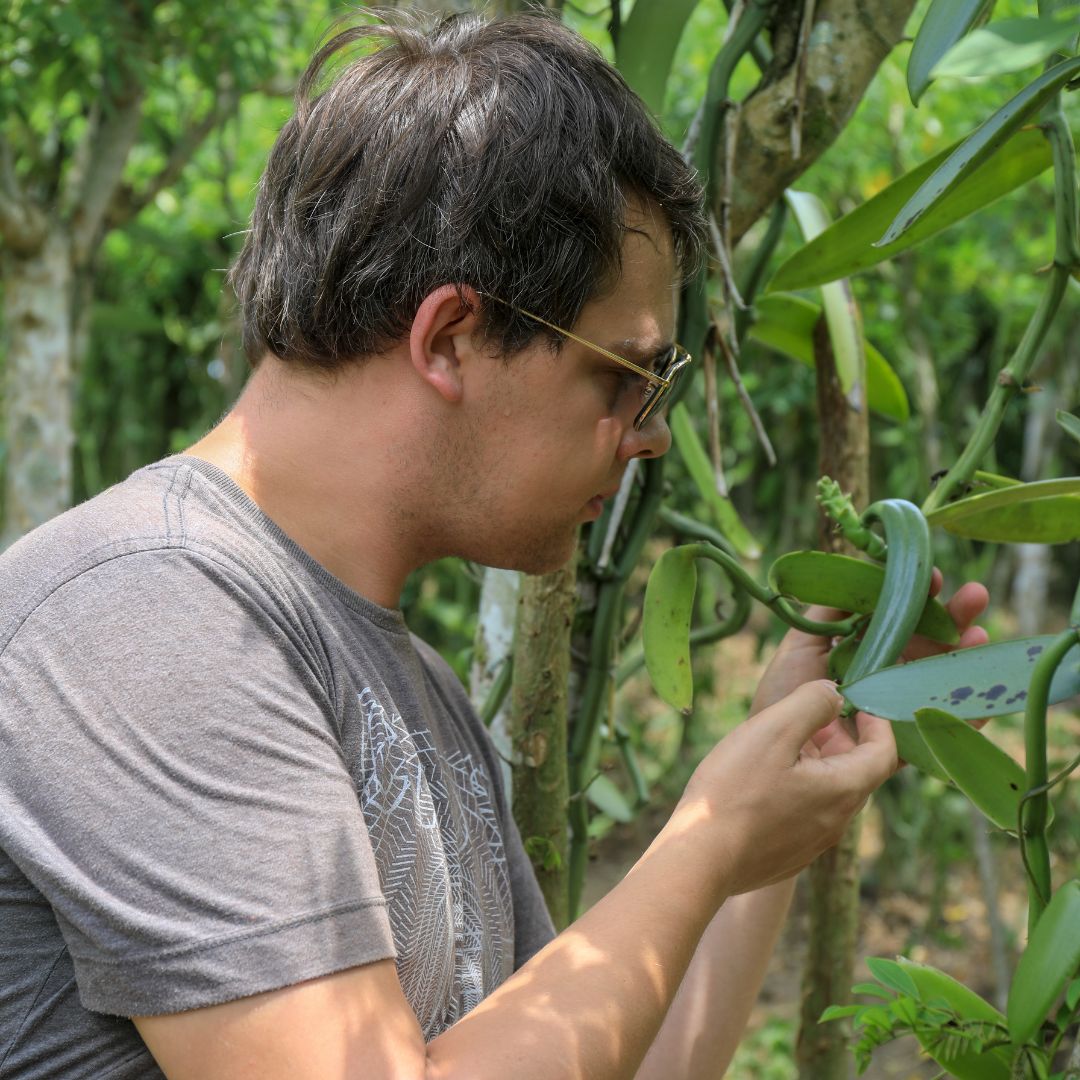
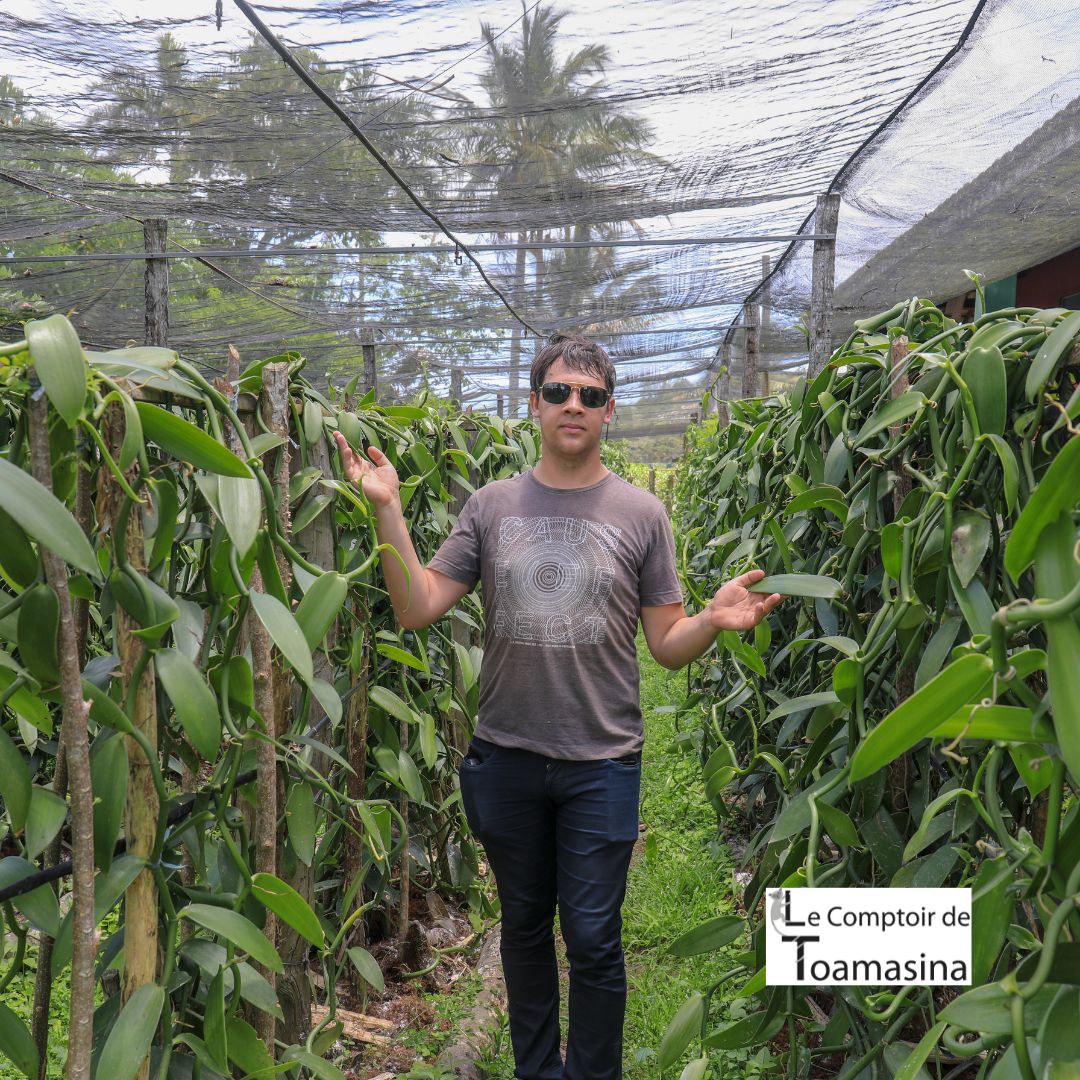
Arnaud Sion in the heart of a plantation: inspecting vine health and aerial roots is the vital first step toward exceptional vanilla.
My journey: 15 years of field experience
It all began in 2010. I was 21 years old. Aboard a Toyota Hilux on the dusty tracks of Madagascar, I discovered my very first vanilla plantation. That journey defined my life as a spice researcher. Anyone can plagiarize blog text, but no one can copy 15 years of genuine field experience.
2010 — Learning in Madagascar
First immersion in the SAVA region. I learned the hard work of farming families, scalding, and sun-drying. Created Le Comptoir de Toamasina with €414, a garden table, and my mother's Twingo to sell our first pods on the Sebastopol market in Lille.
2013 — The Thalassa media turning point
The crew of France 3's Thalassa television show followed me through Madagascar on my sourcing trips. This feature earned me the nickname "Arnaud Vanilla," which I have proudly carried ever since.
2015 to 2018 — Moving to Brazil and creating supply chains
I settled in Brazil to expand our partnerships. I built direct supply chains from scratch for açaí, guarana, acerola, and tonka beans.
2019 to Present — Rare Brazilian vanillas & the 1-ton project
In my Ford Ranger truck, I explore the Atlantic Forest and Cerrado to locate native wild vanillas (Bahiana, Pompona). Meanwhile, in Madagascar, we structured a major project to directly purchase 1 ton of black vanilla.
My core conviction from day one. Favoring one origin out of pure dogma makes no sense. Every terroir has its own unique aromatic identity. Real vanilla quality comes from honoring maturity on the vine, slow curing, and paying human labor fairly.
Building supply chains in Brazil and sharing technical know-how
Brazil: Building a complete model from scratch
This is our proudest achievement and what sets us completely apart from traditional importers. Before selling vanilla there, I built complete direct supply chains for superfoods (Açaí, Guarana, Acerola) and Tonka beans. My mobile office? My Ford Ranger pickup traversing thousands of miles of dirt roads.
Today, I apply this same logistical expertise to native Brazilian vanillas. Brazil is home to over 30 endemic species and wild varieties (notably Vanilla pompona and the extremely rare Vanilla bahiana). Working closely with local farmers to adapt drying and curing to these wild species, we uncover unique botanical treasures offered exclusively at Le Comptoir de Toamasina.
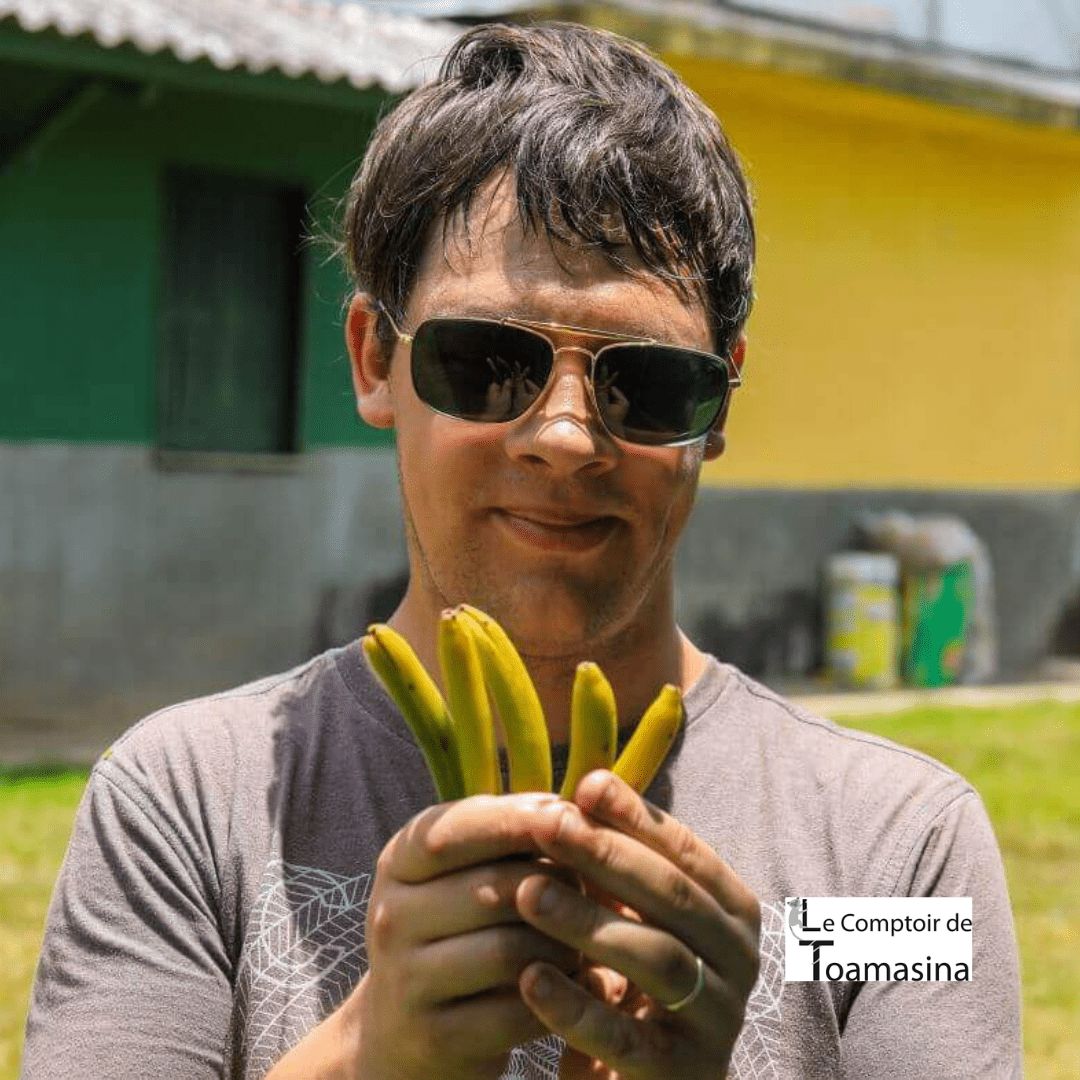
Arnaud Sion introducing Bahia vanilla during an expedition in Brazil: an extraordinary native species with fruity notes.
Madagascar: The SAVA region and our 1-ton project
Madagascar remains the historical heart of vanilla. To secure unmatched quality and direct impact, we are stepping up to a major milestone: a project to directly purchase 1 ton of black vanilla with a local partner. This allows us to oversee origin, quality, and selection from start to finish.
In the SAVA region, traveling up rivers by dugout canoe grants access to remote, off-grid valleys. There, geographic isolation protects vines from theft, allowing pods to mature for over 9 months on the vine for maximum flavor concentration. This is the secret of great Bourbon vanilla.
Global expertise: Congo, Tanzania & Sulawesi
I have never set foot in Tanzania, Congo, or Indonesia. And yet, our expertise helps farmers there every single day. Recognized for our field experience, growers near Mount Kilimanjaro, in DRC rainforests, or on the volcanic soils of Sulawesi (Indonesia) reached out directly.
Facing curing challenges (molding pods, overly fast drying, improper sweating), I advise and support them remotely. Analyzing their photos and protocols, I assist them in correcting their scalding and curing methods to unlock the immense potential of their terroirs.
How I select every batch of vanilla
High-end selection is never done via a catalogue. It happens pod in hand, inside wooden curing trunks. Here is my rigorous evaluation protocol:
| Control Criterion | Arnaud Sion Requirement | Why It Matters |
|---|---|---|
| Moisture Content | Between 30 % and 35 % for a living Gourmet pod | Below 25 %, the pod is dry, "dead," and will no longer develop aroma. |
| Flexibility & Elasticity | Must tie in a knot around a finger without splitting | Sign of controlled sweating and optimal preservation of essential oils. |
| Visual Aspect & Touch | Tanned, glossy, plump, and slightly oily skin | Indicates high concentration of resins and volatile aromatic compounds. |
| Aroma Quality | Clean, deep fragrance with no sour notes | Complete absence of moldy, cardboard, or rancid alcohol smells (signs of overstocking). |
| Harvest Year | Direct traceability to the active harvest campaign | Filters out recycled old industrial stocks sold as "fresh harvest." |
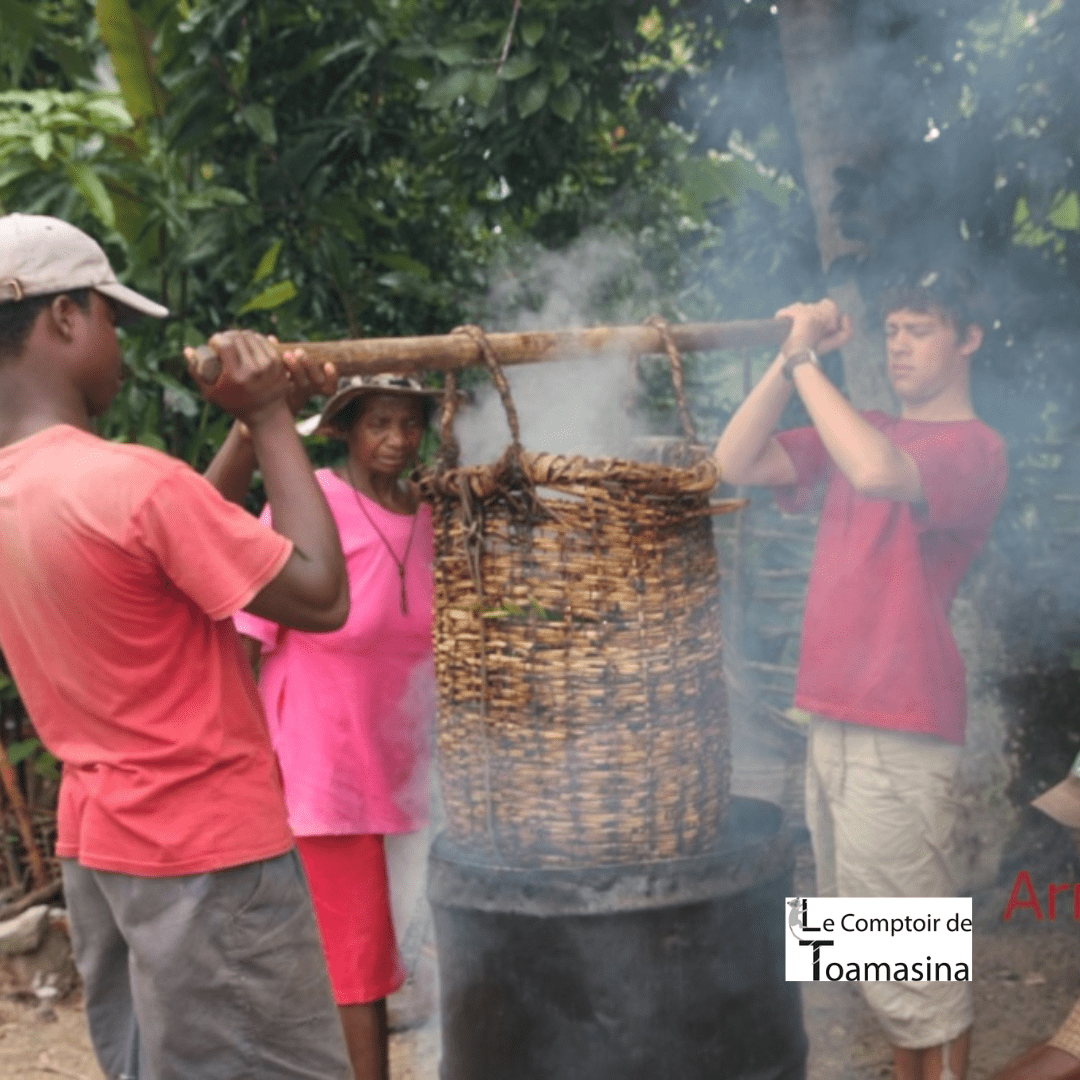
The crucial traditional scalding phase: rapid immersion in hot water at 65°C to stop plant life and trigger aromatic enzymes.
The gap with mass retail
In supermarkets, vanilla is an anonymous product: no grower names, no specific region, and dried-out pods inside unsuited plastic tubes. Abnormally low prices, such as industrial (TK) Ugandan vanillas sold at $10 a kilo for export, often conceal severe ethical issues like child labor on plantations.
Direct sourcing turns this model upside down: fewer middlemen mean more value stays at the source. Buying a pod from Le Comptoir de Toamasina means investing in tangible quality: a plumper pod filled with caviar, fully traceable, and grown through an ethical partnership.
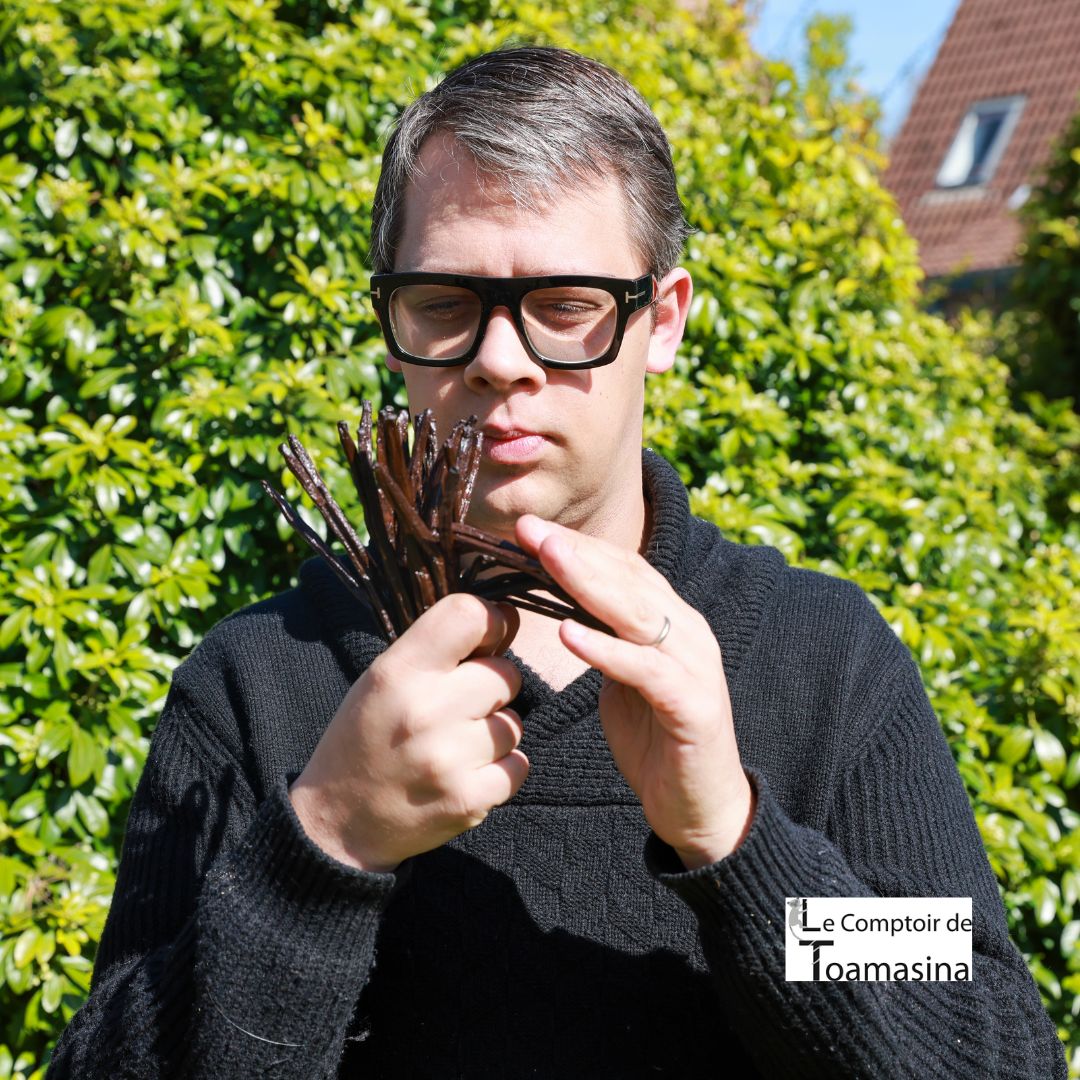
Pods cured according to ancestral rules, ready to unleash their 200 aromatic compounds in your culinary creations.
A word from the field by Arnaud Sion
"What you pay for at our store is not a broker's markup. It pays for over two years of painstaking work from flower to curing. It covers my individual pod selection, my field experience, and the guarantee of authentic, living vanilla."
Discover Our Exceptional Vanillas
Support our direct producer supply chain: from our Madagascar Bourbon vanilla to our rare Brazilian vanillas.
Frequently asked questions (FAQ)
What is "direct producer" vanilla at Le Comptoir de Toamasina ?
It is vanilla purchased directly from growers and curers, bypassing the traditional broker and wholesaler chain. Whether through our project to purchase 1 ton of black vanilla in Madagascar or our pioneering Brazilian supply chains (açaí, tonka, native vanillas), this model ensures freshness, traceability, and fair pay for farmers.
Why do you help farmers in Tanzania, Congo, or Indonesia ?
Though I have not traveled there in person, my field expertise gained in Brazil and Madagascar is recognized globally. Growers in those regions contact me so I can assist them remotely in correcting their scalding and curing methods to unlock the true potential of their land.
Why build dedicated supply chains in Brazil ?
Brazil holds vast land reserves and over 30 endemic wild vanilla species. After successfully developing supply chains there for açaí, guarana, acerola, and tonka beans, I apply the same standard to introduce rare vanillas of immense botanical value (Bahiana, Pompona).
Is a drier or "frosted" pod lower in quality ?
No. A fresh Gourmet pod is flexible and moist (30-35 %). However, during extended curing, natural pure vanillin crystals may form on the surface ("frost"). The pod may feel slightly firmer, but it delivers incredible aromatic concentration, much like a fine aged wine.
How should I store my vanilla pods at home ?
Keep your pods in an airtight glass tube or jar, away from light, moisture, and temperature fluctuations (between 15°C and 20°C). Never use plastic containers or store vanilla in the refrigerator, which dries pods out or causes mold.