
Your cart
There are no more items in your cart
Key Takeaways
- Vanilla is not a typical orchid: It is the only orchid that bears edible fruit. It requires both a host tree (tutor) to climb and a rich soil base.
- Hand pollination is mandatory: Outside of its native Mexico, the flower must be manually pollinated every morning to produce a bean.
- Looping the vine is the secret technique of bending the top of the vine back into the soil to stimulate root growth and mass flowering.
- The curing process is critical: From scalding to slow drying, the green bean loses up to 80% of its weight to unlock its rich flavor.

The famous vanilla flower, which remains open for only a few hours in the morning. This is the critical window for hand-pollination.
Why Houseplants Rarely Produce Vanilla Beans
A common question I receive is: "I've had a vanilla plant at home for years, why hasn't it produced pods?" The answer is simple: the vanilla orchid possesses a biological barrier (the rostellum) that prevents self-pollination. Unless a farmer pollinates it by hand, the flower drops, and no bean grows. Growing vanilla professionally requires strict discipline, from soil preparation to the final curing process.
Botany: A Hemiepiphytic Orchid
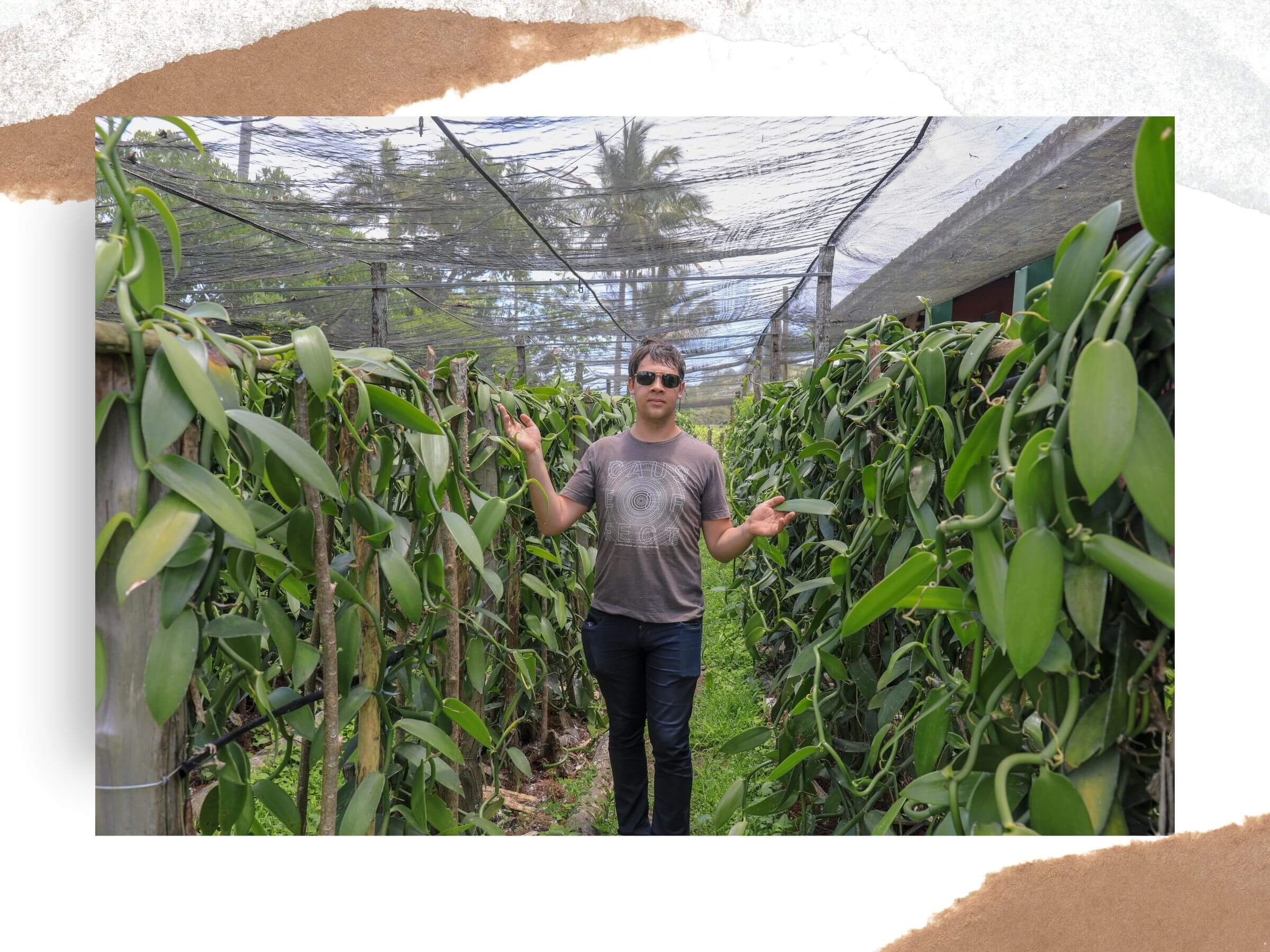
Vanilla is a hemiepiphyte: its seed germinates in the soil, and as it climbs its host tree, it retains roots in the earth while absorbing ambient moisture through aerial roots. Thus, it strictly requires two elements: a strong vertical support and a humus-rich, well-draining soil base.
| System | Method | Primary Advantage | Drawback |
|---|---|---|---|
| Extensive (Wild) | Vines grow wildly on existing forest canopy | Very low startup costs | Hard to monitor, unpredictable yields |
| Semi-Extensive | Natural forest enhanced with added support trees | Rich organic soil maintained naturally | Requires manual irrigation |
| Semi-Intensive | Planted in organized rows with living tutor trees | High yield, natural shade control | Moderate costs, continuous pruning needed |
| Intensive (Shade Houses) | Inert supports under UV shade cloths | Maximum control and highest density yield | Very high startup and infrastructure costs |
The Golden Rule of Shade.
Vanilla hates direct sunlight. It thrives under 50% to 70% filtered shade. If the leaves turn yellow, the plant is getting too much sun. If the shade is too dense, the plant will refuse to flower.
Vanilla hates direct sunlight. It thrives under 50% to 70% filtered shade. If the leaves turn yellow, the plant is getting too much sun. If the shade is too dense, the plant will refuse to flower.
Looping: Maximizing the Vine's Potential
Left unmanaged, a vanilla vine will climb straight up into the forest canopy, flowering out of reach. To prevent this, producers practice looping. When the vine reaches the top of its support, the farmer gently pulls the growing tip down, forming a downward loop, and buries the tip lightly in the mulch. The vine roots itself again and sends up fresh, vigorous shoots, creating a dense, highly productive plant at harvesting height.
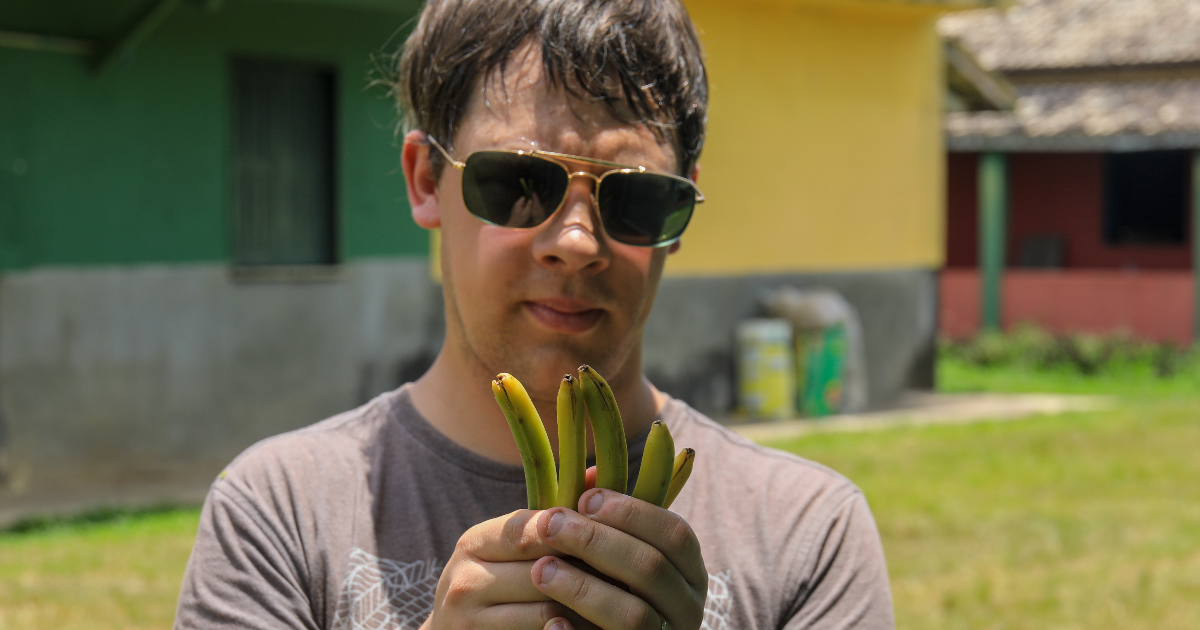
Freshly harvested green vanilla pods—completely odorless before they undergo the complex enzymatic curing process.
The Four Pillars of Vanilla Curing
A green vanilla bean harvested 9 months after pollination smells like absolutely nothing. The magic lies in the curing process, an alchemical transformation that converts glucovanillin into aromatic vanillin.
Phase 1 · Scalding (Water-killing)
Green pods are immersed in 63-65°C (145-150°F) water for 3 minutes. This halts vegetative growth and triggers the enzymatic reactions necessary for flavor development.
Phase 2 · Sweating
Wrapped in woolen blankets, the pods "sweat" inside wooden boxes at night and dry under the hot sun during the day. After 7 to 10 days, they turn dark, supple, and fragrant.
Phase 3 · Slow Drying
The pods are spread on open-air racks in the shade to dry slowly for 3 to 6 months. Farmers massage the beans by hand regularly to distribute essential oils evenly.
Phase 4 · Conditioning (Aging)
Bundled tightly, the beans are stored in wax-paper-lined wooden trunks for several months to age and stabilize. It is here that exceptional beans may develop pure vanillin frost.
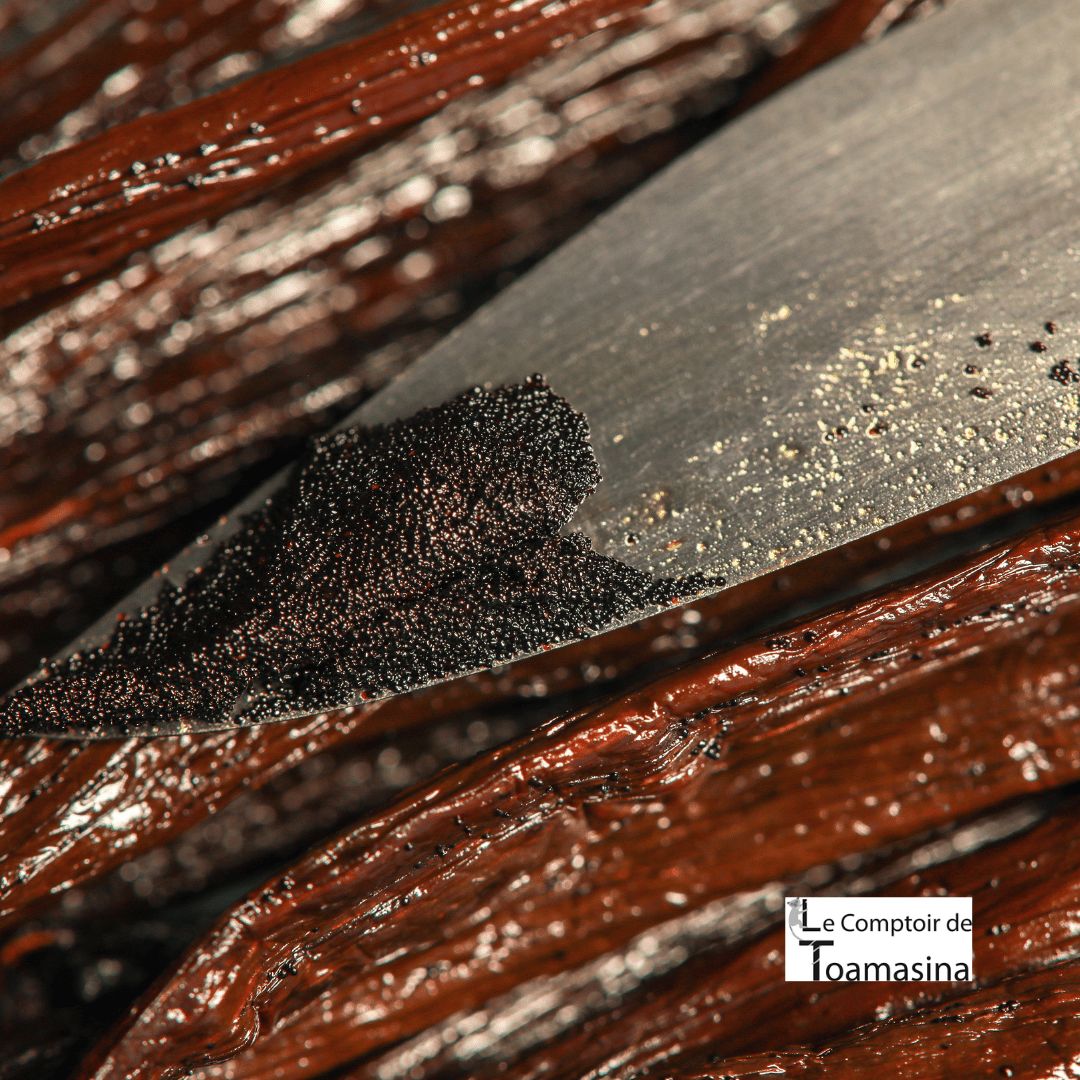
The magnificent result of the cure: dark, supple vanilla beans glistening with natural essential oils and packed with aromatic caviar.
Taste the Result of Our Expertise
Explore our collection of gourmet vanilla beans, cured to perfection using these exact traditional methods.
FAQ — Growing Vanilla
Why is vanilla so expensive?
Because the process is entirely manual. From hand-pollinating every single flower to a curing process where the bean loses 80% of its weight, it is highly labor-intensive.
Can I grow a vanilla plant at home?
Yes, but you need a tropical environment (like a heated greenhouse) with 50-70% humidity, filtered sunlight, a strong climbing support, and you must hand-pollinate the flowers yourself.
What is the "looping" technique?
It is the practice of pulling the climbing vine back down to the soil so it takes root again. This encourages the plant to bush out and produce more flowers at a manageable height.