
Your cart
There are no more items in your cart
The Essentials of the 4 Peppercorn Colors
1 single plantPiper nigrum for all 4 colors
5 to 7 daysof sun drying for black pepper
Few daysnatural shelf life of green pepper
100 %Whole beans, never ground
- Green Pepper: harvested before maturity, fresh and vegetal. Freeze-dried or roasted, never brined.
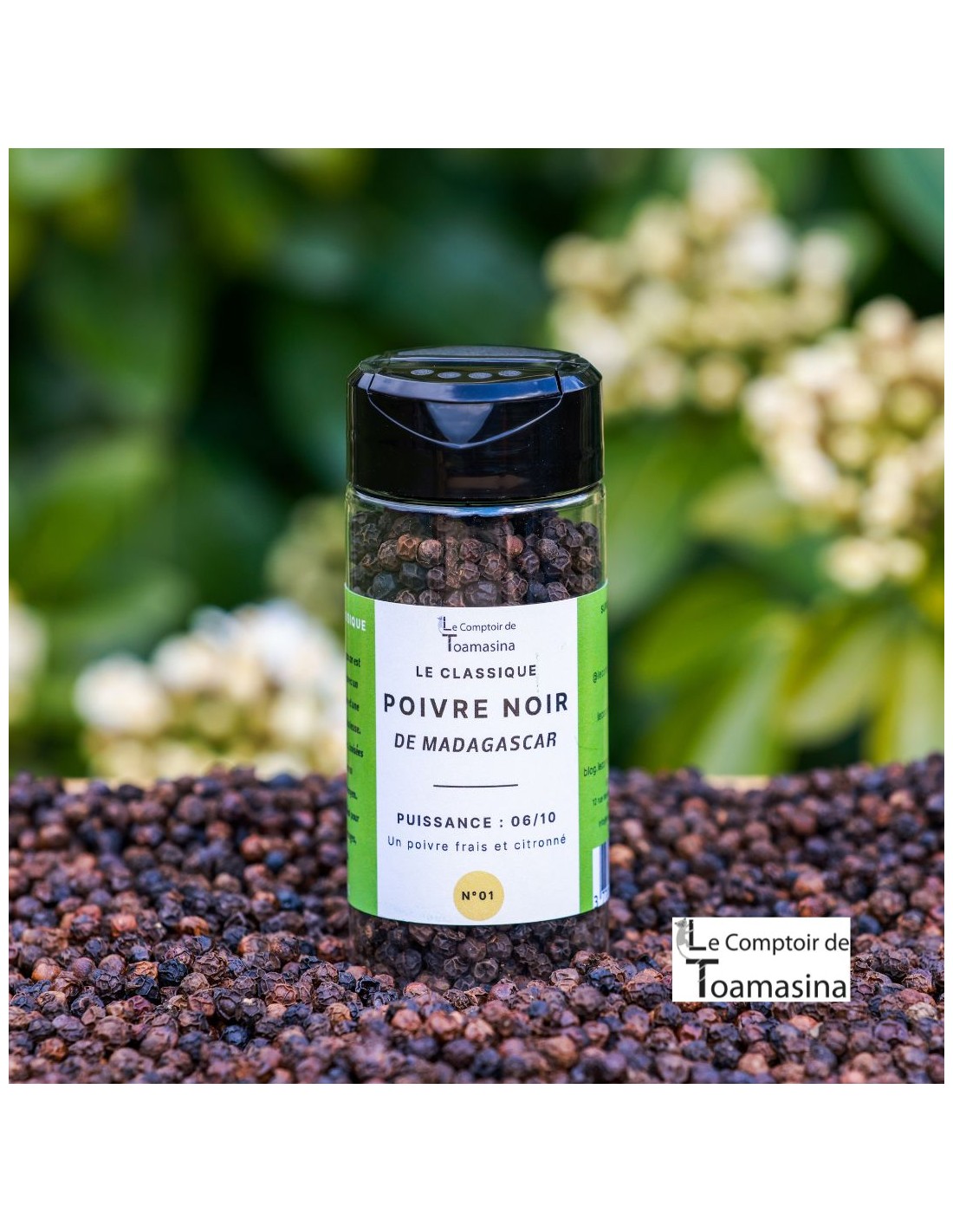
- Black Pepper: green berry sun-dried for 5 to 7 days. The most popular worldwide.
- White Pepper: ripe berry with pericarp removed via soaking. Musky and animal notes.
- Red Pepper: the rarest, picked at peak maturity. Fruity, subtle, and powerful.
One Plant, Four Faces
This is the first thing I tell anyone discovering the world of spices: true peppercorns all come from the same Piper nigrum tropical vine. The colors simply correspond to four different harvest stages and preparation methods of the exact same berry.
Green, black, white, and red peppers are not different plants. They are picked at different times and treated in radically different ways. Yet, what ends up in your grinder varies drastically in power, aroma, and culinary use.
Green
Before Maturity
Vegetal & fresh · Freeze-dried
Black
Sun-Dried
Warm & bold · 5 to 7 days drying
Red
Peak Maturity
Fruity & subtle · The rarest
White
Pericarp Removed
Musky & animal · Fine notes
Figure 1 — The four colors of pepper according to their harvest stage. Note that both white and red pepper come from fully mature berries; the only difference is the removal of the outer skin (pericarp).
Green Pepper: The Most Fragile
Green pepper is the key ingredient in classic peppercorn sauce. Harvested by hand while the clusters are still vibrant green, it captures the essence of vegetal freshness.
It is also the hardest to preserve. Full of water, fresh green pepper only lasts a few days. Traditionally it is kept in brine, but this masks its fine aromas. This is why we use freeze-drying or roasting, keeping its vegetal notes perfectly intact.
Black Pepper: The Global Standard
Black pepper is the world's most consumed spice. The berry is picked green, just before it starts turning yellow.
It is then sun-dried for 5 to 7 days. This drying phase gives it the characteristic black color. Poor drying quickly leads to mold and ruins the batch.
The Vanilla Connection.
This drying obsession is identical to my work with vanilla beans. A sloppy curing process destroys the aromatic potential of both products. That is why I personally verify the curing methods before buying any batch.
This drying obsession is identical to my work with vanilla beans. A sloppy curing process destroys the aromatic potential of both products. That is why I personally verify the curing methods before buying any batch.
White Pepper: The Misleading Name
Harvested at full maturity when the berries are bright red. They are soaked in fresh water to remove the outer skin (pericarp), revealing the core: the white pepper.
Despite the name, it is rarely pure white; it ranges from beige to cream. Appreciated for its musky and animal notes, it is ideal for light sauces, delicate fish, and white meats.
A Discovery in Brazil
"In Bahia, a small producer showed me ten kilos of perfectly pure white pepper, unlike anything I had ever seen. Ten kilos is nothing on a global scale—but it is exactly why I drive my pickup truck through Brazil searching for local producers."
Red Pepper: The Rarest Gem
Red pepper is the jewel of the late harvest, picked at the peak of maturity when the berry turns reddish-orange.
The drying process is extremely delicate, as the pericarp must not be damaged. Fruity, subtle, and visually stunning, it is perfect for desserts, fruit salads, and as a finishing touch on plated dishes.
How to Choose the Right Color
There is no "best" color: each serves a purpose. Black withstands prolonged heat, white adds elegance to fish, while green and red shine when added at the very end (uncooked) to release their volatile essential oils.
Discover Our Peppercorn Collection
Explore our complete range of peppercorns—green, black, white, and red—sourced directly from trusted farmers.
Shop Peppercorns