
Your cart
There are no more items in your cart
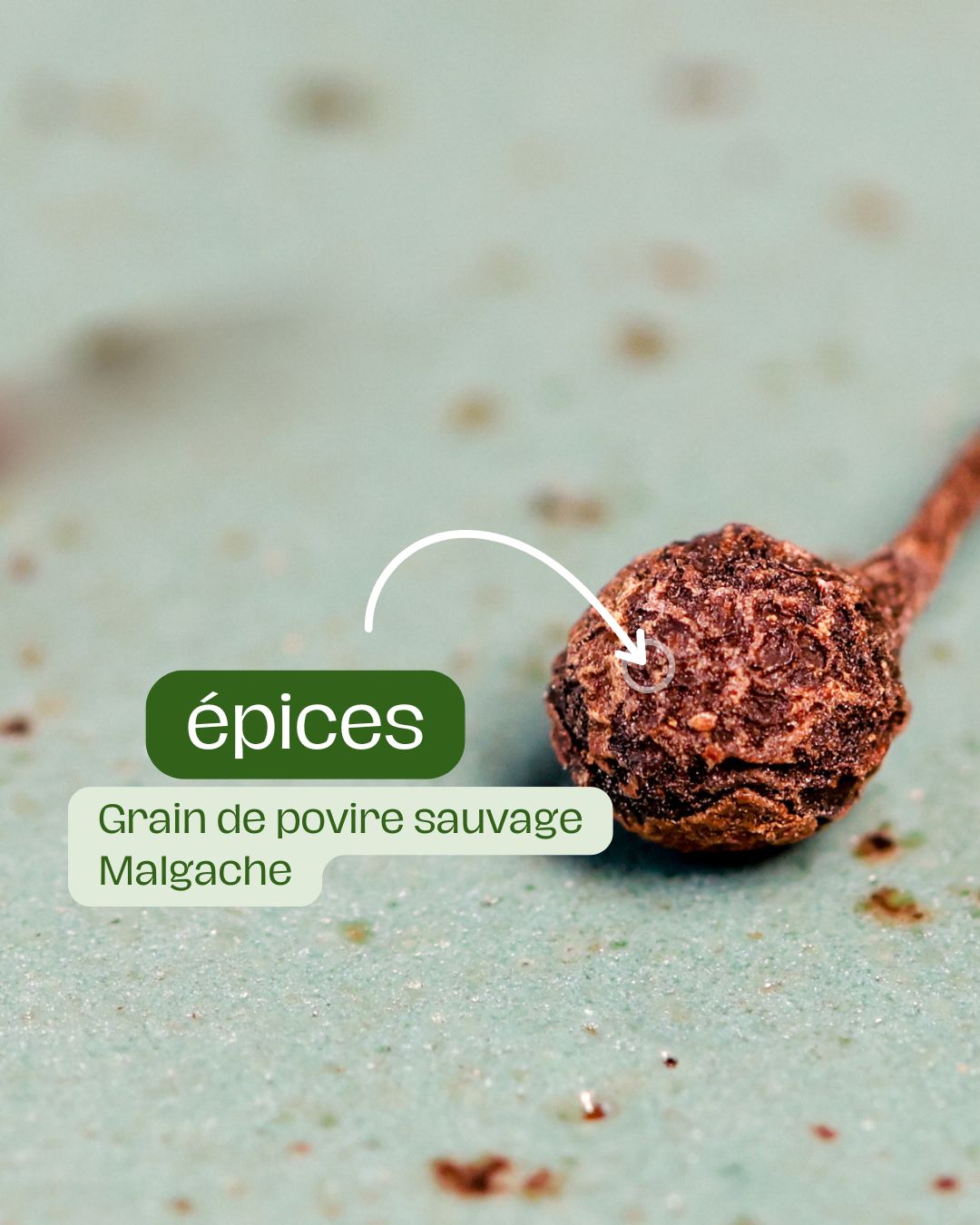
Table of Contents
There are spices that you truly understand the day you see them born. Voatsiperifery is one of them. Until I spent a morning in the humidity of a forest in eastern Madagascar, watching a picker climb barehanded towards a vine clinging to the canopy, I only had an abstract idea of this pepper. I wrote this guide based on what I saw and tasted on-site, to pass on to you not just a fact sheet, but a piece of the forest.
What is voatsiperifery and why this name?
Voatsiperifery is a true pepper, from the large Piper family, the same as black pepper. Its uniqueness lies in its lifestyle: it does not grow in aligned plantations, but in the wild, as a vine, along the large trees of the Malagasy primary forest. Its name comes from the local language, where voa means fruit and tsiperifery is the vine that carries it. It is, therefore, literally the "fruit of the vine," a field name coined by those who harvest it long before it reaches European stalls.
It is mostly found in the humid forests of the east and southeast of the Big Island. Unlike the cultivated pepper plant, which is pruned and trellised, the wild vine lives to the rhythm of the forest: it flowers and fruits irregularly, never yielding two identical years. This unpredictability explains a good part of its rarity. You don't plan a voatsiperifery harvest; you hope for it.
Voatsiperifery belongs to the great pepper family, but remains the wildest of them all.
How is this wild pepper harvested in the Malagasy forest?
This is the aspect that struck me the most. The harvest is by no means industrial: it relies on families who know every vine in their sector, passed down like an invisible heritage. To reach the clusters suspended at fifteen or twenty meters, you have to climb the host tree or along the vine itself. I saw men disappear into the foliage and then come back down with a mere handful of berries in their palms.
Then comes the slow drying process in the sun, on mats that are regularly stirred. This is when the small hooked tail forms, this curved peduncle that distinguishes voatsiperifery from all others. Drying relies on touch: too fast, it freezes the aromas; too humid, it exposes the berry to mold. When I talk with the collectors, this is always the step they describe as decisive, the one where everything is won or lost.
This artisanal harvest also explains a truth that must be told: voatsiperifery is fragile. A brutal picking, where the vine is sacrificed to go faster, dooms the following seasons. Serious supply chains pick without destroying and return the next year. It is slower, but it is the only way to still have this pepper in ten years.
Arnaud's Take
When people ask me why this pepper is rarer, I answer with an image: behind every small cluster, there is a man who climbed a tree. Its value is not marketing; it is time and sweat.
What taste distinguishes it from other peppers?
Voatsiperifery offers a profile that I have found nowhere else. On the palate, it opens with warm, woody notes, almost like precious woods, then comes a citrus freshness, a touch reminiscent of grapefruit or lime zest. The heat arrives next, round, enveloping, never brutal. It settles in slowly and leaves a remarkable length in the mouth, that persistence that connoisseurs look for.
What is striking is the balance. A classic black pepper hits hard and fast; voatsiperifery unfolds in successive layers. During the tastings I lead, I always have people taste it last, because after it, the others sometimes seem a bit monotonous. It is a gourmet's pepper, not an everyday pepper, and that is exactly what makes its value.
Attack
Woody and warm, with a depth reminiscent of precious woods and resin.
Mid-palate
An unexpected citrus freshness, between grapefruit and lime zest.
Finish
A round and long heat, which settles gently rather than burning all at once.
Length
A rare persistence, which invites you to taste it alone before pairing it with a dish.
How to cook it without ruining its aromas?
My rule is simple: you never cook voatsiperifery. Its richness is volatile, and prolonged cooking drives it away. Therefore, it is reserved for the end, right before serving, freshly ground, in a grinder or mortar, directly onto the plate. The heat of the dish is enough to release its fragrances without destroying them.
Its pairings are a delight. It works wonders on just-seared white fish, white meat, or foie gras, where its citrus freshness cuts through the fat. But it is in desserts that it surprises the most: on a strawberry, a roasted pineapple, dark chocolate, or a vanilla cream, it opens an unexpected dialogue. Many discover it in savory dishes, and then cannot do without it on fruit. Use sparingly: its length in the mouth means that one turn of the grinder is often enough where you would use two with another pepper.
| Pairing | When to add | Why it works |
|---|---|---|
| Pan-seared white fish | Off the heat | The citrus freshness supports the delicacy of the flesh |
| Pan-seared foie gras | When plating | The round heat cuts through the fat without masking it |
| Fresh strawberries | Just before serving | The woody and citrus notes awaken the fruit |
| Dark chocolate | To finish a dessert | The length of the pepper prolongs the bitterness of the cocoa |
Why does its wild supply chain deserve to be protected?
Voatsiperifery raises a question that I like to share: how to consume a wild resource without depleting it? Because it is not cultivated like a regular pepper plant, it depends directly on the health of the forest and the know-how of the pickers. Every cluster harvested with respect for the vine is a promise for the next season; every brutal harvest is a debt.
That is why I favor supply chains that pick without breaking and that pay families fairly. Buying voatsiperifery this way is not just treating yourself to a beautiful pepper; it is supporting a fragile balance between people and their forest. For a spice merchant, there is no more beautiful way to do their job.
Key Takeaway
Voatsiperifery is a wild pepper, picked from vines, with a woody and fresh citrus profile. It should be freshly ground, never cooked, in both savory and sweet dishes. Choosing it from a respectful harvest means protecting its supply chain.
Want to discover this forest pepper?
I select my peppercorns directly from the pickers, to pass on to you the best of the Malagasy terroir.
Discover my whole peppercornsA pepper that tells the story of Madagascar
Choosing voatsiperifery is not just choosing a great pepper; it is entering a story made of the forest, picker families, and patience. Each grain carries this narrative as much as its fragrance, and that is what I want to pass on to you.
If you are a beginner with rare peppers, take the time to taste it alone, on a piece of bread, before pairing it. You will then understand its uniqueness, to be discovered alongside my other whole peppercorns.
Your Frequently Asked Questions
Is voatsiperifery a true pepper?
Yes, it is a species of the Piper family, just like black pepper, but growing wild as a vine in the forests of Madagascar.
Why is it so rare?
Because it is picked by hand, by climbing wild vines that fruit irregularly.
Can it be cooked?
It is better to avoid it. It is freshly ground and added at the end of cooking or when plating.
Savory or sweet?
Both. It sublimates fish and white meats, but also surprises on fruits and chocolate.