
Your cart
There are no more items in your cart
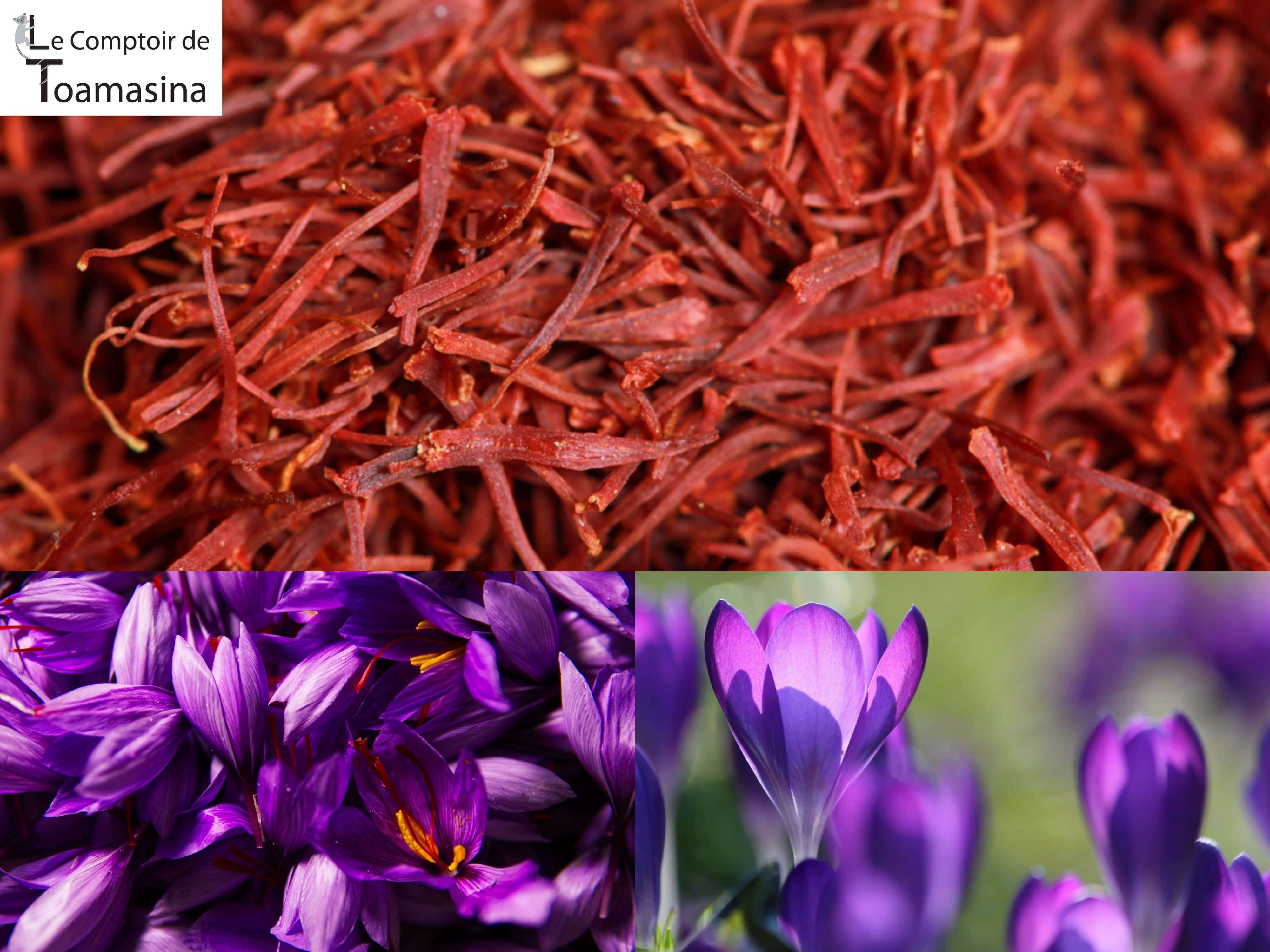
Table of Contents
- Is saffron really the most expensive spice?
- How many flowers for a pinch of saffron?
- Why does human labor dictate the price?
- Do terrain and climate affect the cost?
- Why be wary of saffron that is too cheap?
- How to recognize saffron that is worth its price?
- Is paying the fair price really a luxury?
- Frequently asked questions
Is saffron really the most expensive spice?
I am often asked this question at the counter, with an eyebrow raised, almost with suspicion: why does saffron cost so much? The short answer fits into a single picture. When you buy saffron, you aren't just buying a spice; you are buying hours of human labor that nothing else can replace. It is by far the most expensive spice by weight, and that is no commercial exaggeration.
I have spent enough time with growers, in vanilla as well as in spices, to recognize right away a crop that escapes machinery. Saffron is one of them. Behind every red filament lies a sequence of meticulous actions, from morning to night, over just a few weeks in autumn. Understanding this price means understanding why certain things still resist industrialization, and why I decided, at Le Comptoir de Toamasina, to champion these products rather than cut-rate versions.
So let's take the time to break down this price, calmly, just as I would with you in front of an open jar of saffron.
How many flowers for a pinch of saffron?
Here is the figure that changes everything in my customers' minds. Each crocus flower yields only three red stigmas. Three, not one more. And to obtain a single dry gram of saffron, you must gather the stigmas of several hundred flowers. When speaking of a larger weight, you quickly climb into tens of thousands of flowers that had to be picked one by one.
Add to this that saffron loses an enormous amount of weight upon drying. Fresh stigmas, gorged with moisture, shrink to a fraction of their mass once dry. In other words, you have to pick an impressive quantity of fresh material to keep, at the end of the day, only a small handful of filaments. No other common spice has such a low yield relative to the labor provided.
From field to pinch
A flower picked by hand yields three stigmas.
It takes hundreds of flowers for a single dry gram.
Drying significantly reduces the harvested weight even further.
Result: a handful of saffron concentrates hours of labor.
Why does human labor dictate the price?
This is the heart of the matter. The saffron harvest cannot be mechanized. The flower is too fragile, the stigmas too delicate, and above all, the action is too precise for a machine to handle without ruining everything. Each flower is picked by hand, at dawn, before the sun opens it completely. Then comes stripping, the stage where the flower is opened to extract the three red filaments, one by one, around a table.
I have tried stripping, and I measured just how slow and demanding this work is. Experienced hands sort hundreds of flowers, but even the fastest cannot cheat with the raw material. This human time, multiplied by the tens of thousands of required flowers, is what builds most of the price. In vanilla, in Madagascar, I find the exact same logic: hand pollination of the flowers accounts for a large portion of the cost. Exceptional spices share this common trait: they are paid for in hours of patience.
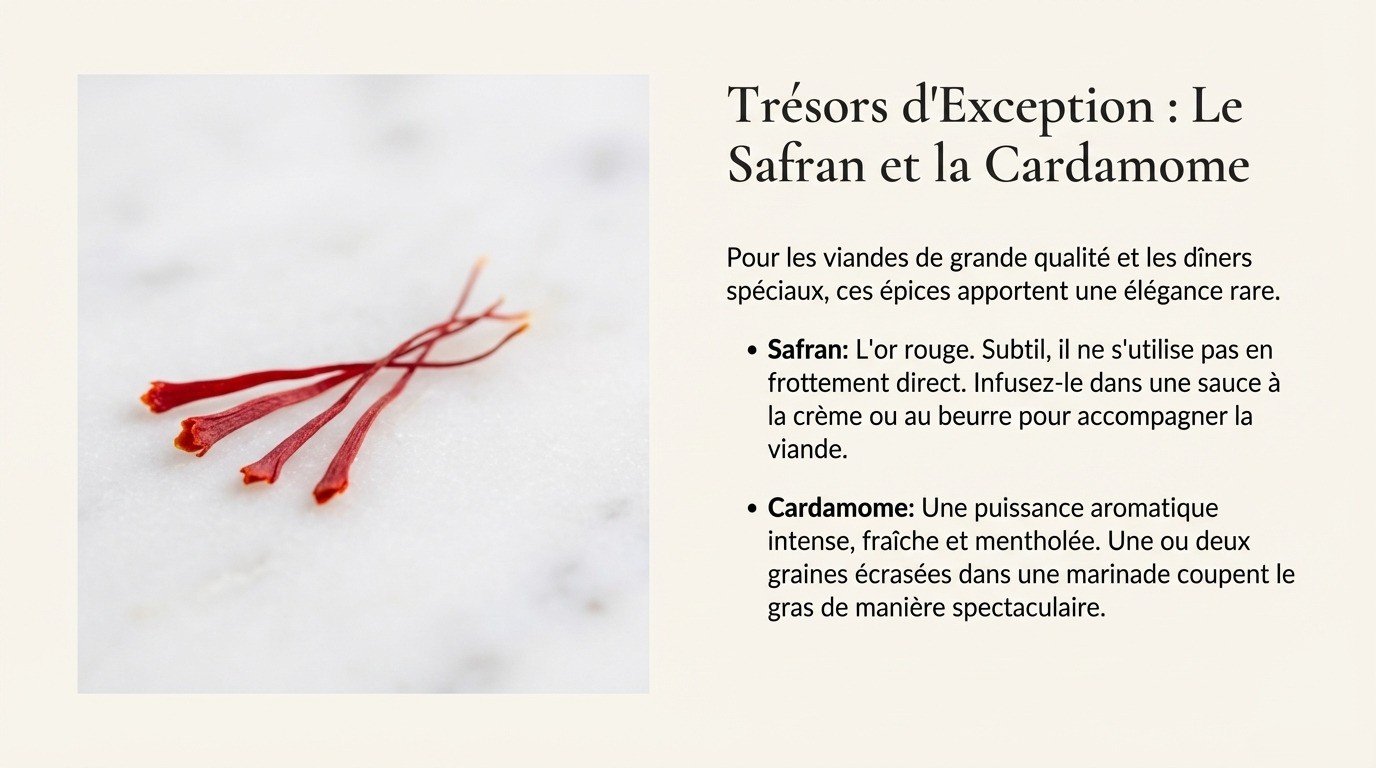
A small dose is enough: saffron is measured in pinches, never in spoonfuls.
Do terrain and climate affect the cost?
Yes, but not as one might imagine. Saffron crocus requires well-drained soil and a climate with distinct seasons, with a dry summer and a mild autumn. These conditions exist in several regions around the world, from Iran to Spain, from Kashmir to France. The plant itself is therefore not rare. What costs money is not the difficulty of growing the flower, but everything that comes after blooming.
The time factor also plays a huge role. The harvest is concentrated over a few autumn weeks, and each flower lives for only one day. It is therefore necessary to mobilize many hands at the same time, with no possibility of spreading out the work. This seasonal urgency, this impossibility of smoothing out production over time, further reinforces labor costs. You cannot pick yesterday a flower that opens today.
Arnaud's Take
When a customer finds saffron expensive, I invite them to think differently: in doses rather than weight. A tiny amount is enough to flavor an entire dish. Brought down to the plate level, quality saffron ultimately costs very little, and it brings a depth that no imitation can match. It is the same reasoning I hold for vanilla: better a little of a real product than a lot of an empty one.
Why be wary of saffron that is too cheap?
Here is the flip side of the coin. Because saffron is expensive, it is also one of the most adulterated spices in the world. An abnormally low price should always arouse suspicion. Deceptions are ancient and well-known: cutting saffron with other materials, adding the yellow part of the stigma which has almost no aromatic value, or worse, selling products that are not saffron at all under its name, like certain dyed dried flowers.
It is precisely because fraud is widespread that I always repeat the same thing at the counter: real saffron cannot be cheap. If it is, something is wrong. The fair price is not a seller's whim, it is the honest reflection of agricultural labor. Saffron sold at a fraction of its real cost inevitably hides a trickery, whether on quality, purity, or origin.
| What you pay for | What it represents |
|---|---|
| The harvest | Tens of thousands of flowers picked by hand at dawn |
| The stripping | Three stigmas extracted one by one, flower after flower |
| The yield | A massive loss of weight during drying |
| The season | Work concentrated in just a few weeks |
| The purity | A sorting process that keeps only the red part, the most aromatic |
How to recognize saffron that is worth its price?
A fine saffron is recognized first by eye. The filaments must be of a deep, uniform red, sometimes with an orange tip at the end. Beware of saffron that is too pale or too yellow, a sign that much of the worthless part has been left in. The smell, then, does not lie: quality saffron gives off a powerful fragrance, both honeyed, earthy, and slightly bitter, filling the room as soon as you open the jar.
In cooking, real saffron slowly releases its color and aroma. Left to infuse in a warm liquid, it tints gradually, without ever instantly coloring like a dye would. This patient diffusion is a good sign. I always advise preferring whole filaments over powder, because powder lends itself more easily to fraudulent blends and you can no longer see the shape of the stigmas.
- Deep red filaments, not pale or overly yellow.
- A frank, powerful scent upon opening.
- A slow release of color during infusion.
- A preference for whole filaments over powder.
Is paying the fair price really a luxury?
I deeply believe not. Paying the fair price for saffron means compensating real human labor, often family-run, often passed down from generation to generation. It also means treating yourself to a spice where a tiny amount transforms a dish. Brought down to usage, to the pinch that flavors a risotto, a bouillabaisse, or a brioche, quality saffron is by no means an inaccessible whim.
At Le Comptoir de Toamasina, my approach is always the same: get as close to the growers as possible, understand their work, and respect it in the pricing. Saffron sold too expensive without reason would be dishonest, but saffron sold too cheap would be equally so, for it would betray those who harvested it. The right price is the one that does justice to the flower, the picker, and your plate.
Key Takeaway
Saffron is expensive because everything, from picking at dawn to stripping the three stigmas, is done by hand, across tens of thousands of flowers, in just a few weeks. A price that is too low almost always hides fraud. Think in doses rather than weight: a pinch of real saffron is worth far more than a spoonful of imitation.
The yield, first
Three stigmas per flower and a heavy loss upon drying: a multitude of flowers is needed for very little spice.
Human hands, always
Harvesting and stripping remain entirely manual. It is this human time that builds most of the price.
The season, a constraint
Everything happens over a few weeks in autumn, with no possibility of spreading out the work over time.
Fraud, to watch out for
Saffron that is too cheap should raise flags. Prefer deep red whole filaments.
Choose real saffron and genuine spices
At Le Comptoir de Toamasina, I select my spices as close to the growers as possible, for a price that respects their labor and your kitchen. Come discover the shop.
Discover the shopFrequently asked questions
Is powdered saffron cheaper because it is inferior?
Not necessarily inferior, but riskier. Powder lends itself more easily to mixtures, and you can no longer verify the shape of the filaments. Very cheap powdered saffron should especially raise suspicion. I always recommend whole filaments, which are safer and easy to inspect by eye and nose.
Does a small amount really suffice?
Yes, and that is the whole point. Saffron is so concentrated that a pinch flavors a dish for several people. Brought down to cost per plate, it becomes very reasonable. It is better to buy a little of quality saffron and dose it accurately.
Where to find trusted saffron?
From sellers who know the origin of their product and stand by a price consistent with the labor involved. You can browse my advice on exceptional spices and visit the Le Comptoir de Toamasina shop, where I defend products selected directly alongside growers.