
Your cart
There are no more items in your cart
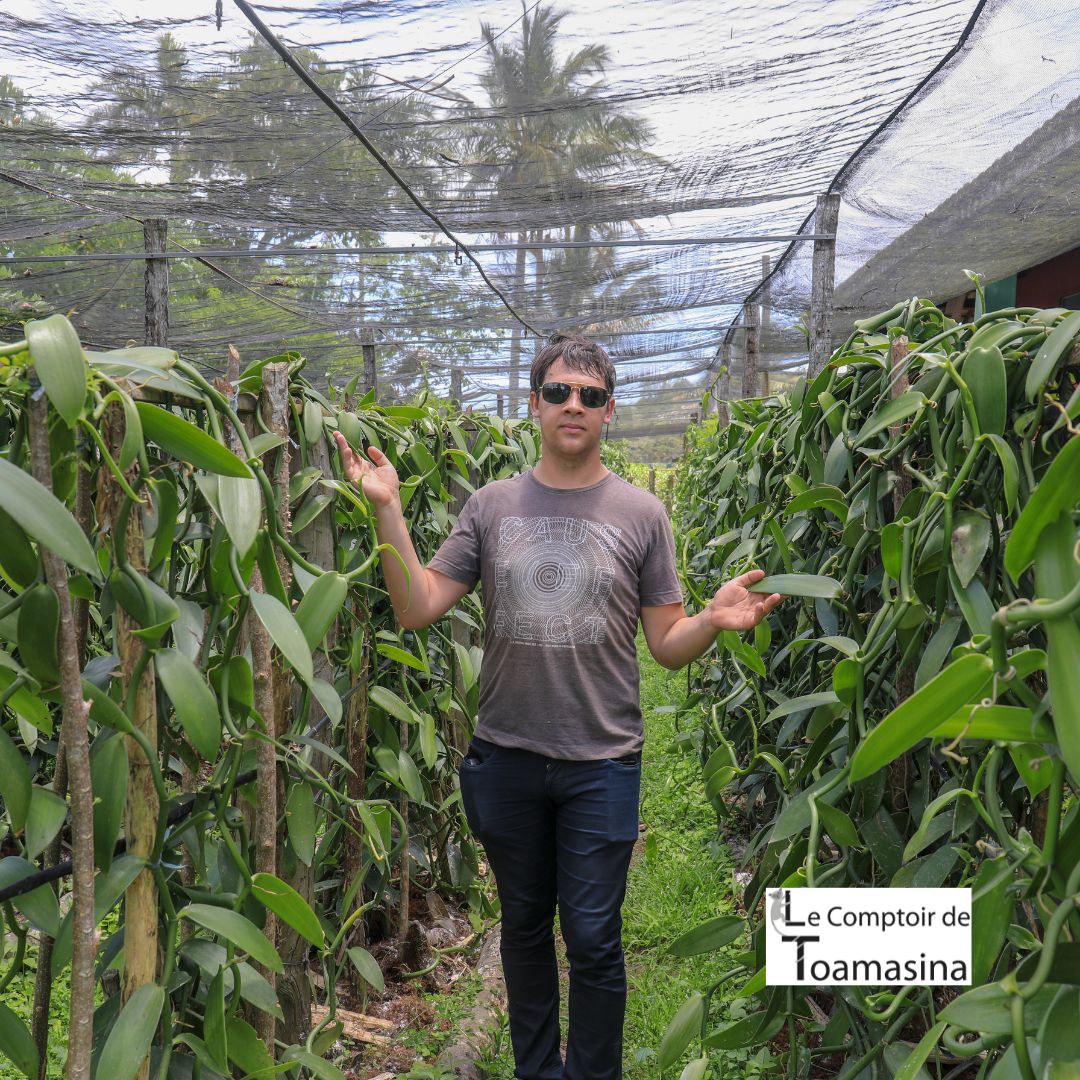
The Essentials
- Bourbon Vanilla (Planifolia): the baking benchmark, rich in vanillin, with notes of caramel and cocoa.
- Tahitensis Vanilla: the most floral and anise-scented, reserved for cold recipes.
- Pompona Vanilla: the "banana vanilla", rare, powerful, featuring tonka and blond tobacco notes.
- Wild Brazilian vanillas, such as Bahiana, are my personal specialty since my Ford Ranger expeditions through the Cerrado and Bahia.
1. Why I can speak about these varieties from experience
There isn't just one vanilla, but dozens of varieties, each with a unique aromatic signature shaped by its botanical species, terroir, and curing. Most guides online compare these varieties using technical datasheets. I have tasted them directly on-site, right out of the sweating box, among growers themselves — in Madagascar of course, but also in Tahiti, and especially in Brazil where I founded my own plantation and embark on annual expeditions searching for species that most European houses don't even know exist.
My conviction from day one. Favoring one origin over another out of pure dogma makes no sense. Every vanilla holds its own aromatic power. Choosing a great vanilla involves terroir, climate, and above all, the painstaking work of the men and women who bring it to life.
2. Understanding vanilla varieties: a botanical question
All vanillas belong to the genus Vanilla, a tropical climbing orchid. Yet out of the hundreds of recorded species, only a handful produce cultivated and commercialized aromatic pods. Three species dominate the gourmet vanilla landscape:
- Vanilla planifolia — the most widespread, source of the famous Bourbon vanilla.
- Vanilla tahitensis — Tahitian vanilla, prized by perfumers and pastry chefs.
- Vanilla pompona — the "banana vanilla", rarer, with deep, woody notes.
To these three pillars are added confidential wild species that I personally source from Brazilian forests since 2019. The difference between these varieties is not just visual: it plays out at a molecular level, in the aromatic composition of each pod.
3. Bourbon Vanilla (Planifolia): the universal benchmark
When people mention "vanilla", they are almost always thinking of Bourbon vanilla. Derived from the species Vanilla planifolia, it accounts for the vast majority of global production. Its name comes from Bourbon Island, the historic name of Réunion, where its cultivation was structured in the 19th century thanks to the manual pollination method invented by Edmond Albius.
Origins and terroirs of Planifolia
Planifolia originated in Mexico, but found its favored terroirs in the Indian Ocean: Madagascar leading the way (my starting point in 2010), alongside Réunion, Comoros, and remarkable origins like Tanzania, whose climate and volcanic soils yield pods of exceptional purity.
The aromatic profile of Bourbon vanilla
Planifolia's signature relies on a star molecule: vanillin. It gives Bourbon vanilla its warm, comforting palette:
- Notes of caramel and cooked sugar;
- Nuances of cocoa and roasted bean;
- A buttery, almost milky roundness;
- A soft, lingering woody backdrop.
This high vanillin content also explains its heat resistance: Bourbon vanilla holds up remarkably under heat, making it the ideal partner for cooked recipes. I devote a full article to it in my guide on Madagascar vanilla.
Which uses for Bourbon vanilla in cooking?
- Custards: pastry cream, crème anglaise, crème brûlée;
- Baked goods: flans, cannelés, financiers, shortbreads, brioches;
- Caramels and preserves where its sweet note shines;
- Ice cream and entremets with a dairy base.
A special case: frosted vanilla
Within the Bourbon family itself, certain pods reach a rare level of excellence: frosted vanilla. This "frost", consisting of natural vanillin crystals rising to the surface, signals an exceptionally rich, perfectly cured pod — a badge of quality, not a defect. It is a batch I personally seek out during every campaign due to its rarity.
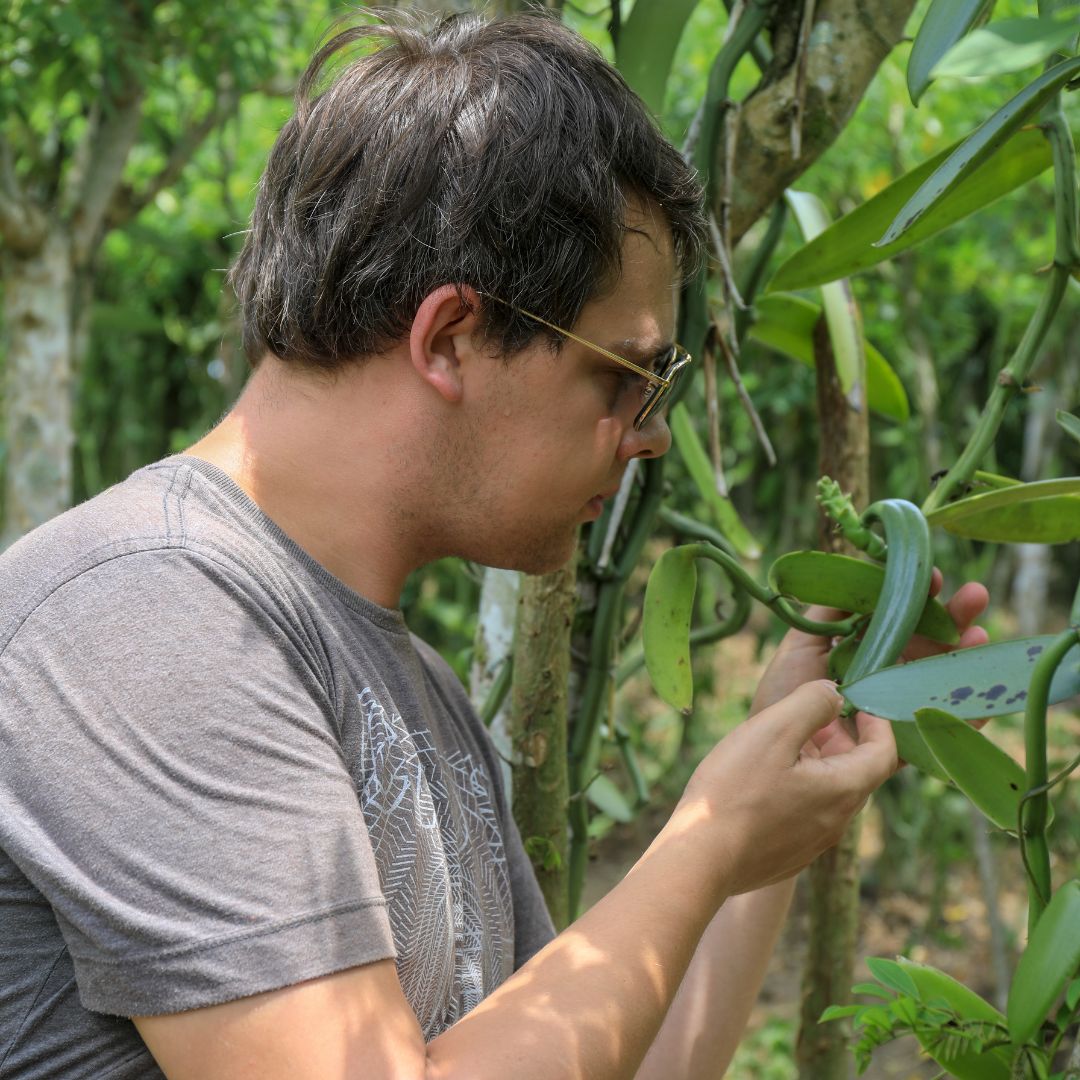
Inspecting Vanilla planifolia vines in the heart of a Bourbon vanilla plantation.
4. Tahitensis Vanilla: floral elegance
If Bourbon is the vanilla of warmth, Tahitensis is the vanilla of delicacy and perfume. Originating from the species Vanilla tahitensis, it differs radically in aromatic profile, to the point of being considered a "perfumer's vanilla".
Origins: Polynesia and Papua
Tahitensis is grown primarily in French Polynesia — notably on Raiatea island and the Marquesas archipelago — as well as Papua New Guinea. It is a hybrid vanilla with unique genetic lineage, producing plump, glossy pods that are often wider than those of Planifolia.
The aromatic profile of Tahitensis
What makes Tahitensis so singular is its lower vanillin content, balanced by other aromatic compounds, specifically heliotropin (piperonal) and anisic alcohol. The result is a bouquet of supreme subtlety:
- Intense floral notes (orange blossom, frangipani);
- An aniseed and subtle licorice signature;
- Hints of red berries and candied cherry;
- A long, lingering, perfume-like sillage.
Which uses for Tahitian vanilla?
Because its most subtle aromas are volatile, Tahitensis performs best in cold or lightly heated preparations, preserving its floral spectrum:
- Fruit salads, pineapple or mango carpaccios;
- Cold creams, panna cotta, yogurts, fresh cheeses;
- Chantilly cream and light mousses added off the heat;
- Savory pairings: fish, shellfish, white butter sauces.
5. Pompona Vanilla: the rare and powerful "banana vanilla"
Less known to the general public, Pompona vanilla (Vanilla pompona) is a variety with strong character, sought after by connoisseurs for its strength and originality. Nicknamed "banana vanilla" or "vanillon" due to its short, wide, and plump pods.
Origins of Pompona vanilla
Pompona is native to Central and South America. Today it is cultivated in Brazil — where I have watched it grow during my expeditions —, Martinique, Mexico, Peru, and New Caledonia. Production remains confidential, making it a niche vanilla prized by chefs seeking unique signatures.
The aromatic profile of Pompona
Pompona stands out for a notable coumarin content, giving it a unique character close to tonka bean. Its bouquet is rich and warm:
- Subtle musky and animal notes;
- A woody and spiced backdrop;
- Accents of tonka, cut hay, and blond tobacco;
- A round, almost syrupy sweetness.
Which uses for Pompona vanilla?
- Dark chocolate, ganaches, cocoa-rich desserts;
- Spirits and cocktails: spiced rums, infusions, syrups;
- Rich pastries: nut entremets, salted butter caramels;
- Bold pairings with coffee, spices, or dark fruits.
6. Wild Brazilian vanillas: my specialty, born on Cerrado dirt tracks
Beyond the three main cultivated varieties exist wild species of extreme rarity. This is precisely what led me to move to Brazil in 2015: searching in a Ford Ranger for what nobody else had ventured to find.
The Bahiana vanilla (Vanilla bahiana), native to Bahia State, is the most iconic example. A slow-growing wild species with minuscule yields, it presents a singular aromatic profile — simultaneously fruity, floral, and delicately woody. An exclusivity I have offered since 2019, stemming from my early journeys through southern Bahia — where I closely followed research by Marina Rosa de Souza from the Federal University of Southern Bahia on local Vanilla species identification.
What I concretely do on site
"Every year, I travel across wild Brazil in a pickup truck, from the savannas of Minas Gerais to the forests of Espírito Santo, through Bahia and the Cerrado. I meet small-scale farmers who never export on their own, and I buy directly, sample in hand, before committing to a batch. It's slower than sending a purchase order to an exporter — but it's the only way I can truly know what I sell."
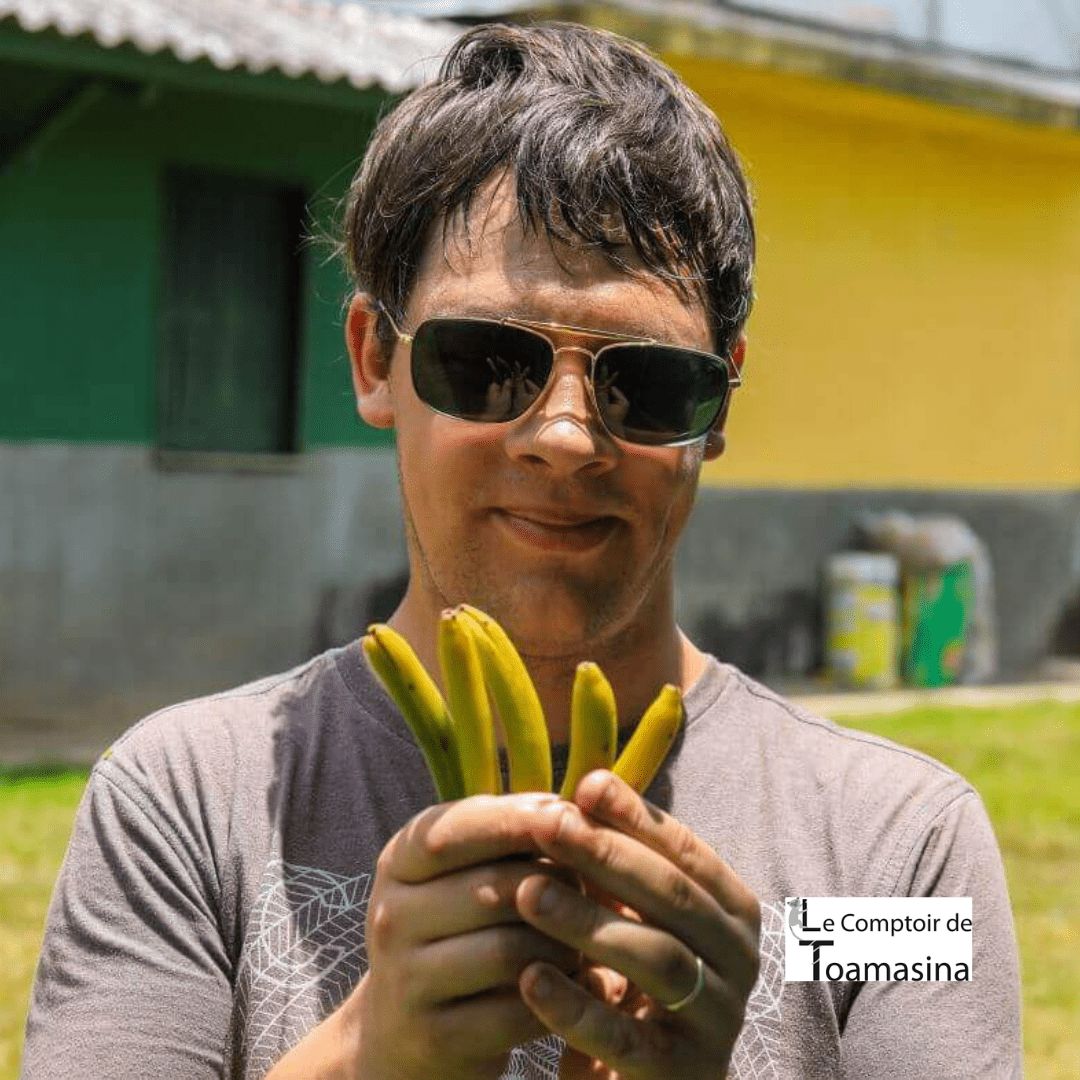
Arnaud Sion introducing Bahia vanilla during a botanical expedition in Brazil.
7. Comparative table of vanilla varieties
| Variety | Dominant molecule | Aromatic notes | Pod appearance | Rarity | Ideal usage |
|---|---|---|---|---|---|
| Bourbon / Planifolia | Vanillin | Caramel, cocoa, butter, soft wood | Thin, long, dark brown, flexible | Common | Baking, cooking, custards |
| Tahitensis | Heliotropin, anisic alcohol | Floral, aniseed, red fruits | Wide, plump, glossy | Rare and prized | Cold preparations, savory dishes |
| Pompona | Coumarin (+ vanillin) | Musky, woody, tonka, tobacco | Short, wide, plump ("banana") | Very rare | Dark chocolate, spirits, rich desserts |
| Bahiana (wild) | Complex profile | Fruity, floral, delicate wood | Small, thin, atypical | Exceptional (wild) | Tasting, signature creations |
8. How to choose your vanilla variety?
Making the right choice comes down to three simple factors: the recipe, the cooking method, and the desired flavor profile.
Choosing by recipe
- Classic heated baking (custards, flans, cakes) → Bourbon / Planifolia vanilla.
- Fresh and delicate desserts (panna cotta, fruits, whipped cream) → Tahitensis vanilla.
- Chocolate, spiced rums, bold creations → Pompona vanilla.
- Tasting and signature recipes → wild vanillas such as Bahiana.
Choosing by terroir
For the same species, terroir changes everything. A Planifolia from Madagascar will not taste like a Planifolia from Tanzania — the same applies to Pompona, of which I have tasted very different profiles between the Cerrado and Martinique. Climate, soil, and altitude all leave a signature on the pod.
9. Storing your vanilla properly, regardless of variety
Once your variety is selected, it must be properly preserved. Vanilla is a living product: if stored poorly, it dries out and loses its aroma. Keep it in an airtight container away from light and heat — never in the refrigerator.
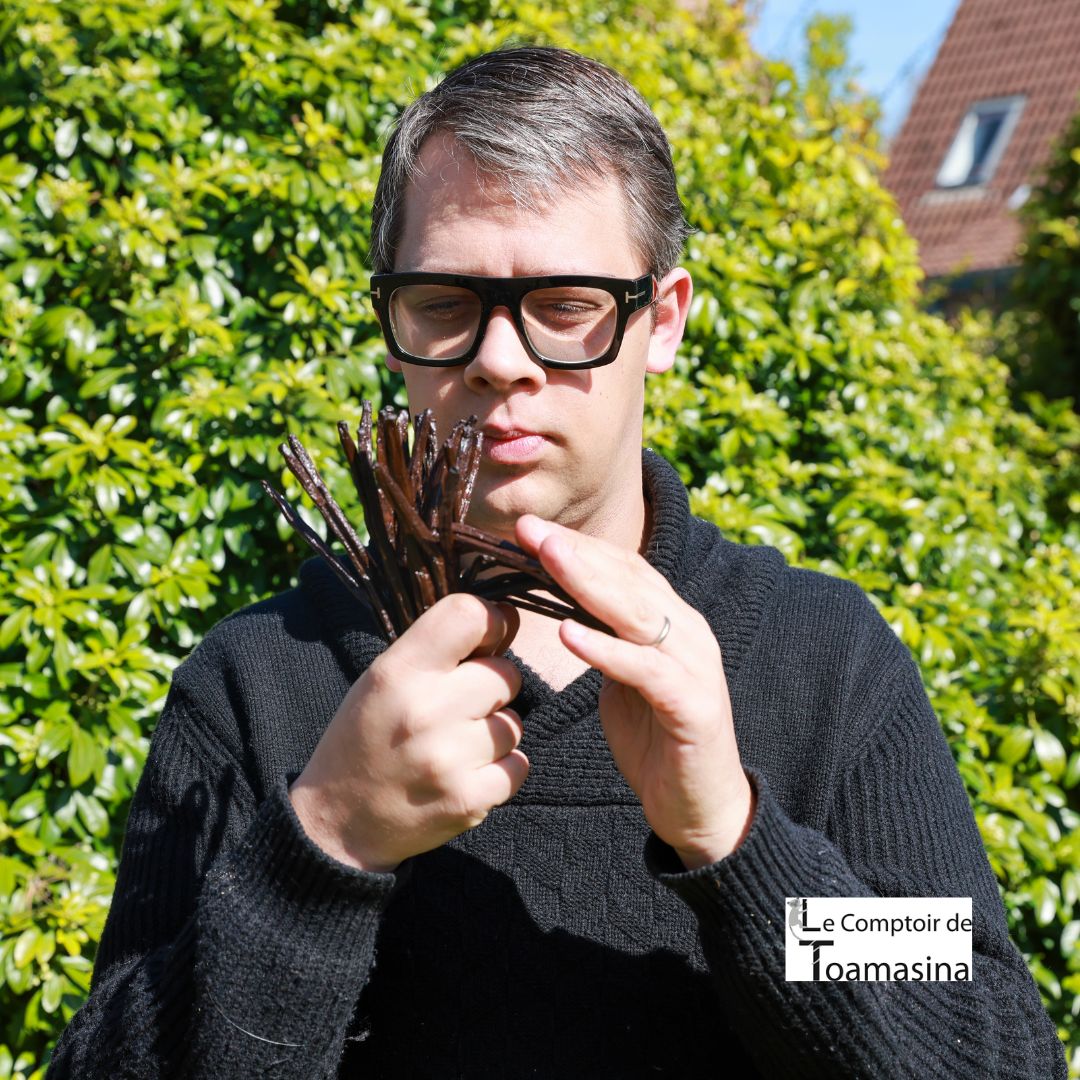
Arnaud Sion inspecting pods one by one to evaluate flexibility and aroma.
Discover Our Vanilla Varieties
Explore my full selection, from Madagascar vanilla to rare Brazilian vanillas, alongside our entire range of world vanillas.
FAQ — Vanilla Varieties
Which vanilla variety is the best?
There is no single "best" variety overall: it depends on usage. Bourbon is the most versatile for baking, Tahitensis excels in cold and delicate desserts, and Pompona elevates dark chocolate and spirits. The best vanilla is the one that matches your recipe and taste.
What is the difference between Bourbon vanilla and Madagascar vanilla?
They are not opposing terms: "Bourbon vanilla" refers to the species Vanilla planifolia grown in the Indian Ocean, and Madagascar is its leading producer. Therefore, Madagascar vanilla is almost always Bourbon vanilla.
Why is Tahitensis vanilla more expensive?
It is cultivated on small acreage in Polynesia and Papua with limited yields and specialized know-how. Its relative scarcity, floral aromatic richness, and high demand among chefs explain its premium positioning.
What is Pompona vanilla or "banana vanilla"?
It is a vanilla species (Vanilla pompona) with short, wide, plump pods, earning its nickname. Rich in coumarin, it develops musky, woody notes close to tonka bean, ideal for chocolate and spirits.
Is frosted vanilla moldy?
Not at all. "Frost" consists of natural vanillin crystals rising to the surface of exceptionally rich, well-cured pods: it is a sign of top quality, not mold.
Where can I find Bahiana vanilla or other wild Brazilian species?
These are confidential origins that I source personally during annual expeditions in Brazil. They are offered in limited quantities on our online store depending on harvest campaigns.