
Your cart
There are no more items in your cart
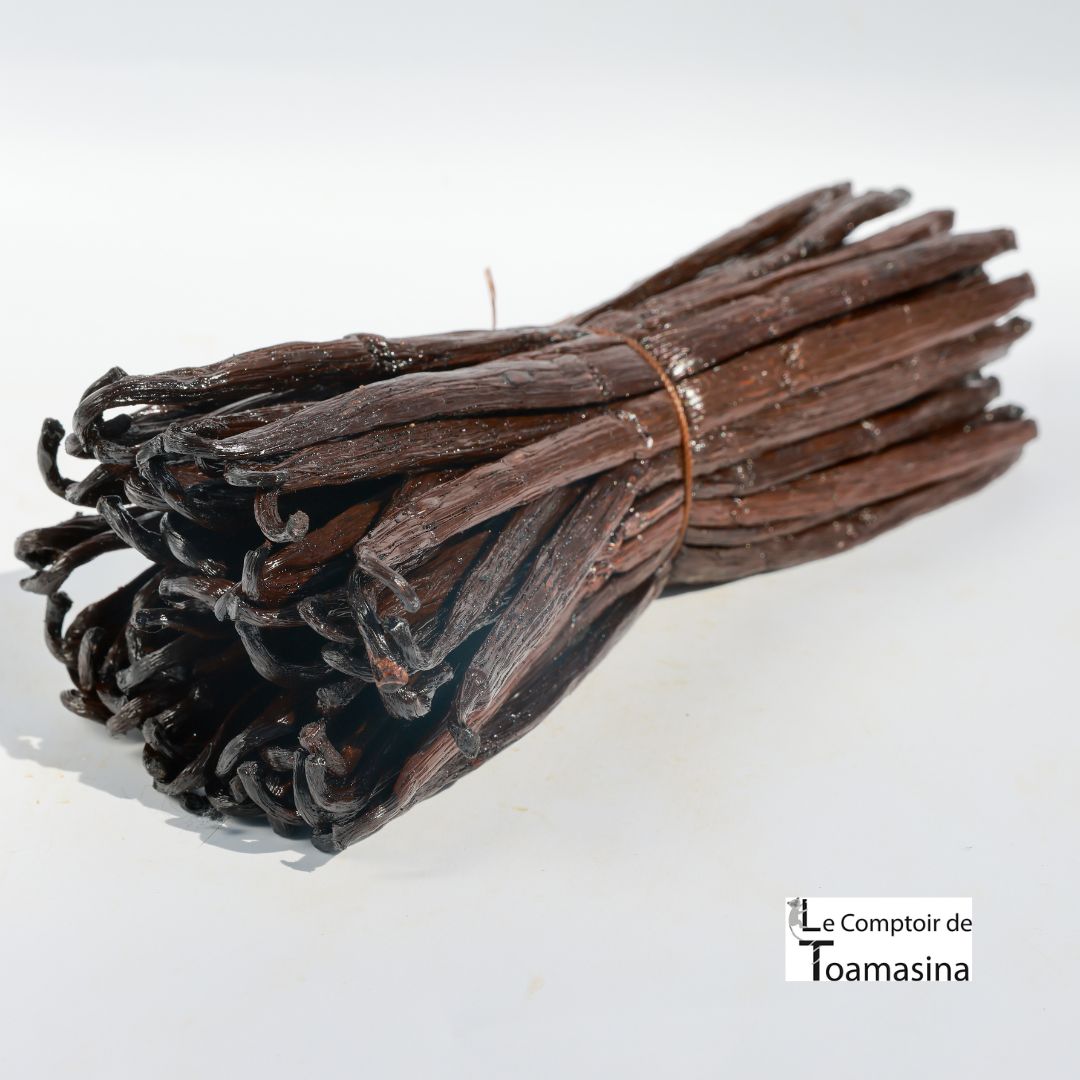
Key Takeaways
- Never freeze: extreme cold breaks aromatic cell walls and permanently dehydrates the bean.
- Never use long rum immersion for storing whole beans: alcohol extracts flavors from the bean into the liquid—great for making extract, terrible for preserving the bean itself.
- Sugar also dries out vanilla through osmosis. Perfect for making vanilla sugar, but not for storing intact beans long-term.
- The right method: an airtight glass or tin container at room temperature, protected from light, heat, and thermal shocks.
Why vanilla storage is a topic I take very seriously
Since 2010, I have been importing and selecting vanilla beans from Madagascar, Tahiti, and Brazil. For just as long, I have seen the same storage myths shared across websites without ever being tested on a real bean. Worse yet, some of these tips—like freezing or drowning beans in alcohol—are used by sellers to conceal poor curing in the first place. I have written about this extensively on my blog.
A vanilla bean is a living agricultural product. After harvest, it undergoes months of scalding, sweating, and curing. Throughout this process, its moisture content slowly balances—sitting around 30% to 35% for a prime Gourmet bean—keeping it supple and carrying its rich essential oils. Any storage method that disrupts this delicate balance ruins the bean.
Why you should never put vanilla beans in the freezer
This is the advice I see most frequently, and it troubles me the most because it stems from a reasonable assumption—cold preserves food—applied to the wrong product.
Here is what actually happens inside a vanilla bean below 0°C (32°F). Water within plant tissues freezes into ice crystals. As they expand, these crystals mechanically rupture the plant cell walls holding aromatic compounds—vanillin and over 200 other complex molecules. Once cell walls break, volatile compounds escape freely upon thawing instead of remaining locked inside the bean structure.
The practical result.
A thawed bean loses significant moisture due to thermal shock, and essential aromatics evaporate along with escaping water. The outcome is a bland, brittle bean that will never regain its pre-frozen complexity.
A thawed bean loses significant moisture due to thermal shock, and essential aromatics evaporate along with escaping water. The outcome is a bland, brittle bean that will never regain its pre-frozen complexity.
Freezing destroys aromatic molecules and pulls moisture out of the pod—it is a matter of plant physics, not opinion. It is the exact same mechanism that makes thawed strawberries soft and watery compared to fresh ones: cellular rupture from freezing is irreversible.
Why rum is not a storage method for whole beans
The second persistent myth is "keep your bean in rum and it will last forever." This is both true and false, which is where the confusion lies.
Alcohol is indeed an excellent solvent for extracting vanilla flavor—this is how homemade vanilla extract is made by steeping split beans in neutral spirits over several weeks. However, extraction works as a one-way street: aromatic compounds migrate out of the bean into the liquid via diffusion. The longer it steeps, the more flavor the bean yields to the alcohol.
The key distinction.
Making vanilla rum and storing whole vanilla beans serve opposite goals. If your aim is to flavor rum, steeping is the correct approach. But if your goal is to store the pod itself for future baking, long alcohol immersion drains its aromatic profile rather than preserving it.
Making vanilla rum and storing whole vanilla beans serve opposite goals. If your aim is to flavor rum, steeping is the correct approach. But if your goal is to store the pod itself for future baking, long alcohol immersion drains its aromatic profile rather than preserving it.
Submerging beans in rum also destroys their supple cured texture, making a quality pod indistinguishable from an exhausted one.

A properly preserved vanilla bean should retain its suppleness and natural aromatic oil.
Sugar also dries out vanilla: the physics of osmosis
This is the least understood factor, yet simple to explain: osmosis.
Sugar is hygroscopic, meaning it actively attracts and holds moisture. When you bury a moist vanilla pod in a jar of sugar, a concentration gradient forms between the water-rich interior of the pod and the dry sugar around it. Following natural osmotic pressure, water inside the pod gradually migrates outward into the surrounding sugar.
This exact process makes homemade vanilla sugar so aromatic: day by day, pod moisture evaporates into the sugar, carrying aromatic compounds with it. The sugar becomes fragranced, while the pod dries out in return.
It is a technique, not a flaw.
For making vanilla sugar, this process is ideal: you knowingly sacrifice the pod to flavor the sugar. The mistake lies in assuming that burying fresh pods in sugar is a way to "preserve" them intact for future baking. It is actually transforming them into something else.
For making vanilla sugar, this process is ideal: you knowingly sacrifice the pod to flavor the sugar. The mistake lies in assuming that burying fresh pods in sugar is a way to "preserve" them intact for future baking. It is actually transforming them into something else.
The right approach: use previously scraped or drier pods for vanilla sugar, while keeping your finest fresh Gourmet pods sealed intact for baking.
The right method: how I store my own vanilla beans
Once you understand why freezing, long steeping, and sugar alter the bean, the proper storage method becomes obvious: protect the pod from environmental shocks without altering its natural moisture content.
| Container | Why It Works |
|---|---|
| Waxed or parchment paper wrap | The traditional method used by farmers in the SAVA region of Madagascar: protects from light while preventing excess moisture trap. |
| Airtight glass jar or vial | Glass is non-porous and odor-neutral. Sealed tight, it maintains a stable microclimate around the pod. |
| Tin or wooden box | Time-tested storage that limits air and light exposure, provided the container isn't excessively large for the number of beans. |
| Food-grade PET vial | A lightweight, practical short-term solution; transfer to glass for long-term storage exceeding several months. |
Three essential rules to follow
- Keep away from light. Direct sunlight breaks down aromatic compounds and bleaches the bean skin.
- Protect from thermal shocks. Keep away from ovens, stovetops, and drafty areas: vanilla reacts poorly to sudden temperature fluctuations.
- Isolate from strong food odors. Vanilla readily absorbs ambient scents; store it in a sealed, dedicated container.
Even when properly stored, beans will naturally age and may firm up after a year or two in a cupboard. This is a sign of extended curing rather than decay, provided there is no mold present.
Vanillin frost vs. mold: the common confusion
A crucial final point regarding storage: never confuse natural vanillin crystallization (frost) with harmful mold.
| Feature | Vanillin Frost | Mold |
|---|---|---|
| Appearance | Fine, sparkling, needle-like white crystals | Fuzzy, cottony, or patchy growth |
| Color | Pure, brilliant white | Green, gray, or bluish localized spots |
| Aroma | Intense, clean, sweet vanilla fragrance | Musty, stale, or damp smell |
| Meaning | Indicates an exceptionally rich, well-cured bean | Indicates excess moisture storage; discard bean |
This misunderstanding leads people to throw away excellent beans every year. Inspect crystal texture carefully before discarding any pod.
▶
Watch my video guides on Comptoir de Toamasina's YouTube channel.
Why I share these insights
I don't just read spec sheets. I have worked directly alongside growers in Madagascar's SAVA region, observing traditional parchment wrapping methods that keep beans supple for months without complex equipment. This guide summarizes what fourteen years in the field have taught me.
Explore our premium selection
Discover our fresh, perfectly cured vanilla beans packaged for optimal long-term storage at home.
FAQ — Vanilla Bean Storage
Can I put vanilla beans in the freezer?
No. Extreme cold forms ice crystals that burst cell walls, permanently dehydrating the bean and destroying volatile flavor compounds.
Can I store vanilla beans in rum?
Only if your goal is making flavored rum. For preserving whole beans to bake with later, no: alcohol extracts flavor out of the bean into the liquid.
Why does sugar dry out vanilla beans?
Through osmosis: sugar draws water out of the moist pod. While this fragrances the sugar, it dries out the pod itself.
What is the best way to store vanilla beans?
In an airtight container (waxed paper, glass jar, or tin) at room temperature, protected from sunlight, temperature fluctuations, and strong odors.
My bean has white specks—is it moldy?
Not necessarily. Sparkling white crystals are natural vanillin frost, a sign of high quality. Mold appears fuzzy, colored (green/gray/blue), and smells musty.
Is a dry vanilla bean ruined?
No, as long as it has no mold. Dry beans can be rehydrated in warm liquids, ground into powder, or used to flavor homemade vanilla sugar.
To go further
Explore more guides and expert insights on the Comptoir de Toamasina blog: