Your cart
There are no more items in your cart
At a Glance
- Vanilla planifolia: The core botanical species (native to Mexico). High in pure vanillin, it produces classic, rich, and chocolatey vanilla profiles.
- Bourbon Vanilla: NOT a species, but a historical geographical designation and curing method (scalding, sweating, drying) applied to Planifolia in the Indian Ocean (Madagascar, Réunion, Comoros).
- Vanilla tahitensis: A distinct species (natural hybrid). Pods are plump, moist, and indehiscent (do not split at maturity). Its profile is floral, aniseed, fruity, and almond-like.
- Harvest Differences: Planifolia is picked green before full maturity. Tahitensis ripens longer on the vine until pods turn yellow-brown.
Three Core Concepts You Must Distinguish
Vanilla is one of the world's most prized spices, but the word "vanilla" masks diverse botanical and processing realities.
1. Vanilla planifolia: The Vanillin Benchmark
Vanilla planifolia is the primary species behind global vanilla production. Native to Mexico and Central America, it is renowned for its high concentration of natural vanillin. It is the flagship species cultivated in Madagascar, Réunion, Comoros, Brazil, and Papua New Guinea.
2. Bourbon Vanilla: An Origin and Curing Method, Not a Plant
Bourbon vanilla is not a species! It is an **official historical and commercial designation** granted in 1964. It applies exclusively to Vanilla planifolia grown and cured in Indian Ocean islands (Madagascar, Réunion, Comoros, Mayotte, Mauritius, Seychelles) using hot-water scalding and slow sun-curing.
3. Vanilla tahitensis: The Floral Pacific Species
Vanilla tahitensis is a distinct botanical species (a stabilized natural hybrid). Mainly associated with Tahiti and French Polynesia, it is also beautifully grown in Papua New Guinea. Its pods are thick, plump, moist, and **indehiscent** (they do not split naturally on the vine when ripe).
Flavor and Processing Differences
While Bourbon vanilla (Planifolia) undergoes 65°C water scalding to trigger enzymatic vanillin release, Tahitensis vanilla ripens longer on the vine. Gently dried without harsh scalding, it preserves volatile floral, anise, and almond compounds.
| Feature | Bourbon Vanilla | Vanilla planifolia | Vanilla tahitensis |
|---|---|---|---|
| Term Type | Geographical & process label | Botanical species | Botanical species (hybrid) |
| Main Origins | Madagascar, Comoros, Réunion | Mexico, Brazil, PNG, Indonesia | Tahiti (Polynesia), PNG |
| Flavor Profile | Warm, pure vanillin, cocoa, caramel | Rich, intense, balanced, woody | Floral, anise, fruity, plum, almond |
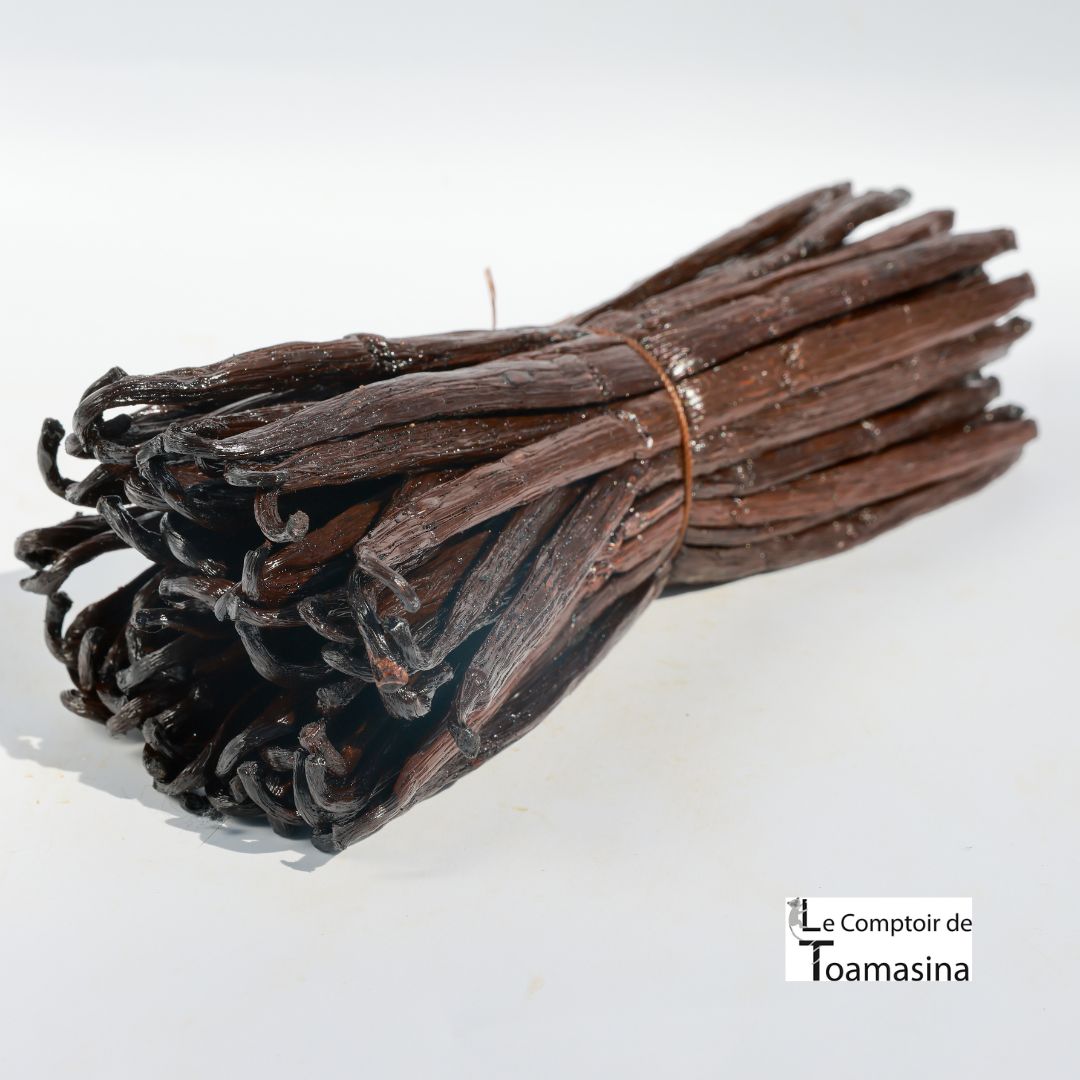
| Appearance | Black, supple, glossy | Black to dark brown | Plump, thick, moist, indehiscent |
How to Choose the Right Vanilla
For classic baking and hot cooking: Choose Bourbon Vanilla (Planifolia) for its heat-resistant, intense vanillin profile.
For cold desserts, fruit, and ganaches: Choose Tahitian Vanilla (Tahitensis) for its unique floral signature.
Explore Our Single-Origin Vanilla Beans
Gourmet grade vanilla beans hand-selected with passion and transparency by Arnaud Sion.
FAQ — Everything About Vanilla
Is all Planifolia vanilla considered Bourbon?
No. Only Vanilla planifolia grown and cured in the Indian Ocean islands can legally be called Bourbon vanilla.
What is an indehiscent pod?
It is a vanilla pod that does not split open on the vine when ripe, a key trait of Vanilla tahitensis that allows longer vine-ripening.