
Your cart
There are no more items in your cart
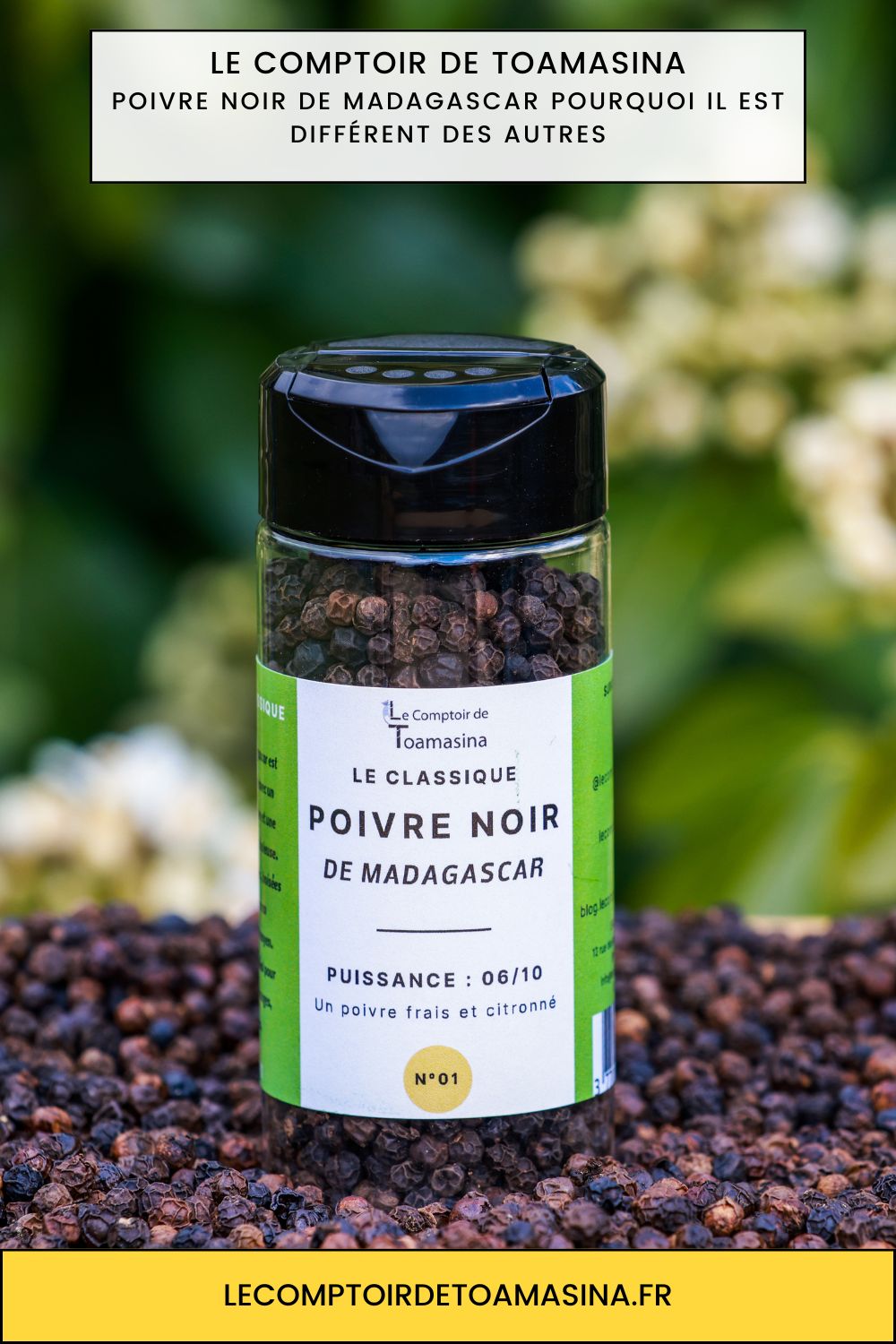
I remember the first time I held a handful of pepper in my hand, still warm from the dryer, a few kilometers from Toamasina. The scent rose, peppery of course, but also woody, almost fruity. That day I understood that this little grain we mechanically slip into our grinders has an immense history behind it, made of boats, caravans, wars, and fortunes. Pepper is not just a spice. It is one of the commodities that most profoundly transformed the geography of world trade. Let me tell you about this spice route as I have pieced it together, year after year, by tracing back the supply chains.
What you will discover
Where does pepper really come from?
The pepper we know, from the species Piper nigrum, originated on the Malabar Coast in southwestern India, in present-day Kerala. It is a climbing vine that loves humid heat, the light shade of tall trees, and regular monsoons. The inhabitants of this coast were already harvesting it more than three thousand years ago. When I work with planters today, I find exactly the same gestures described in ancient texts: you wait for a few berries on the cluster to start turning red, then you pick the whole thing and let the grain ferment and dry until it becomes this little wrinkled, black globe.
What fascinates me is that the plant hasn't changed. The technique has spread, new terroirs have been added, but black pepper, white pepper, green pepper, and red pepper all come from the same vine. They are merely different stages of maturity and treatments. Understanding this is already understanding why this spice was able to travel so far: the dried grain can be stored for months, withstands long journeys, and keeps its soul.

The dried grain: lightweight, durable, transportable. It was this resilience that made its commercial fortune.
Why was pepper worth its weight in gold in Antiquity?
In ancient Rome, pepper was a marker of wealth. It was weighed, kept in chests, mentioned in wills. The Romans imported it from India via the Red Sea, taking advantage of the monsoon winds that their navigators had learned to read. The quantities were enormous for the time, and the grain arrived in the warehouses of Rome where there was even a neighborhood dedicated to spices.
There is an anecdote I like to tell at the counter: when the Visigoths besieged Rome at the beginning of the fifth century, the ransom demanded reportedly included a ton and a half of pepper. Whether the story is exact in its numbers or not, it says it all: you do not ask for a common commodity as a ransom. Pepper served as currency, diplomatic gift, investment. A grain of flavor that became a store of value.
Arnaud's Take
When a customer tells me that pepper is "just pepper," I remind them that at certain times people paid their taxes and rent with it. We have forgotten how precious this spice was. Rediscovering it in whole peppercorns, freshly ground, is reconnecting with this original value.
How did the spice route work?
We talk about "the" spice route, but we should say "the" routes. Pepper followed several itineraries that combined. By sea, it left the Malabar Coast, crossed the Indian Ocean, traveled up the Red Sea or the Persian Gulf, then reached Egypt and the Mediterranean. By land, caravans extended certain stretches across the Middle East. At each stage, middlemen took their cut, and the price climbed.
I've spent years trying to understand modern supply chains, and the principle hasn't fundamentally changed: the more middlemen there are between the planter and you, the more the grain loses freshness and gains in price without gaining in quality. The big difference is that in the past, no one could do it any differently. Knowledge of the routes, winds, and ports was jealously guarded because it was worth fortunes.
The grain's journey, past
1. Harvest on the Malabar Coast, India
2. Crossing the Indian Ocean to the rhythm of the monsoons
3. Passage through the Red Sea or the Persian Gulf
4. Markets of the Levant and Alexandria
5. Redistribution in Europe by merchant cities
Who controlled the pepper trade in the Middle Ages?
In the Middle Ages, the keystone of the European pepper trade was Venice. The city of the Doges had forged ties with the ports of the Levant and redistributed the spice throughout Europe. This position gave it considerable power. Venetian merchants bought pepper at eastern trading posts and resold it for a premium in northern markets.
This quasi-monopoly made all the other powers dream and seethe. Because pepper was no longer just a flavor; it was a huge part of international trade. Whoever controlled pepper held a major economic lever. This frustration of the kingdoms kept on the sidelines would, quite literally, push sailors to cross unknown oceans.
| Era | Dominant Actor | What pepper represented |
|---|---|---|
| Antiquity | Rome and the sailors of the Red Sea | Store of value and luxury |
| Middle Ages | Venice and the ports of the Levant | Redistribution monopoly |
| Renaissance | Portugal then the Netherlands | Stakes for maritime routes |
| Today | Multiple terroirs (India, Madagascar, Brazil, Asia) | Gastronomic pleasure and terroir quality |
How did pepper trigger the Age of Discovery?
Here is the point I find most dizzying. If the caravels left Europe at the end of the fifteenth century, it was largely to bypass the middlemen and directly reach the source of the spices. Christopher Columbus was looking for a route to the Indies and their aromatic riches when he stumbled upon the American continent. A few years later, Vasco da Gama sailed around Africa and reached the Malabar Coast by sea, finally opening up the highly coveted direct route.
In other words, the map of the world as we know it owes much to the desire to access pepper and its aromatic cousins. Great maritime powers clashed for centuries over these routes. Fleets were built, companies were founded, commercial empires were built, all around a pea-sized grain.
A grain that changed borders
Few agricultural products can boast of having motivated the crossing of entire oceans. Pepper, so commonplace today, pushed humanity to map the planet. Every time I trace a supply chain back to the planter, I feel like I am retracing, on my own modest scale, that old journey.
How did pepper arrive in Madagascar?
Madagascar was not the cradle of pepper, but the Big Island has become a land of excellence for it. The plant was introduced there and perfectly acclimated, driven by a tropical climate and rich volcanic soils. Today, when I travel through the plantations on the east coast, I see vines climbing up living stakes, exactly like on the Malabar Coast, but with the aromatic signature of the Malagasy terroir.
What I love about Madagascar black pepper is its roundness and complexity. It doesn't have that uniform aggressiveness of mass-produced peppers. It speaks of its soil, its rains, the hand that picked it. The island is also home to a unique treasure, voatsiperifery, that wild forest pepper harvested by hand, which I discuss in more detail in other articles. Toamasina, formerly Tamatave, remains one of the great ports from which these spices depart, prolonging the ancient route in its own way.
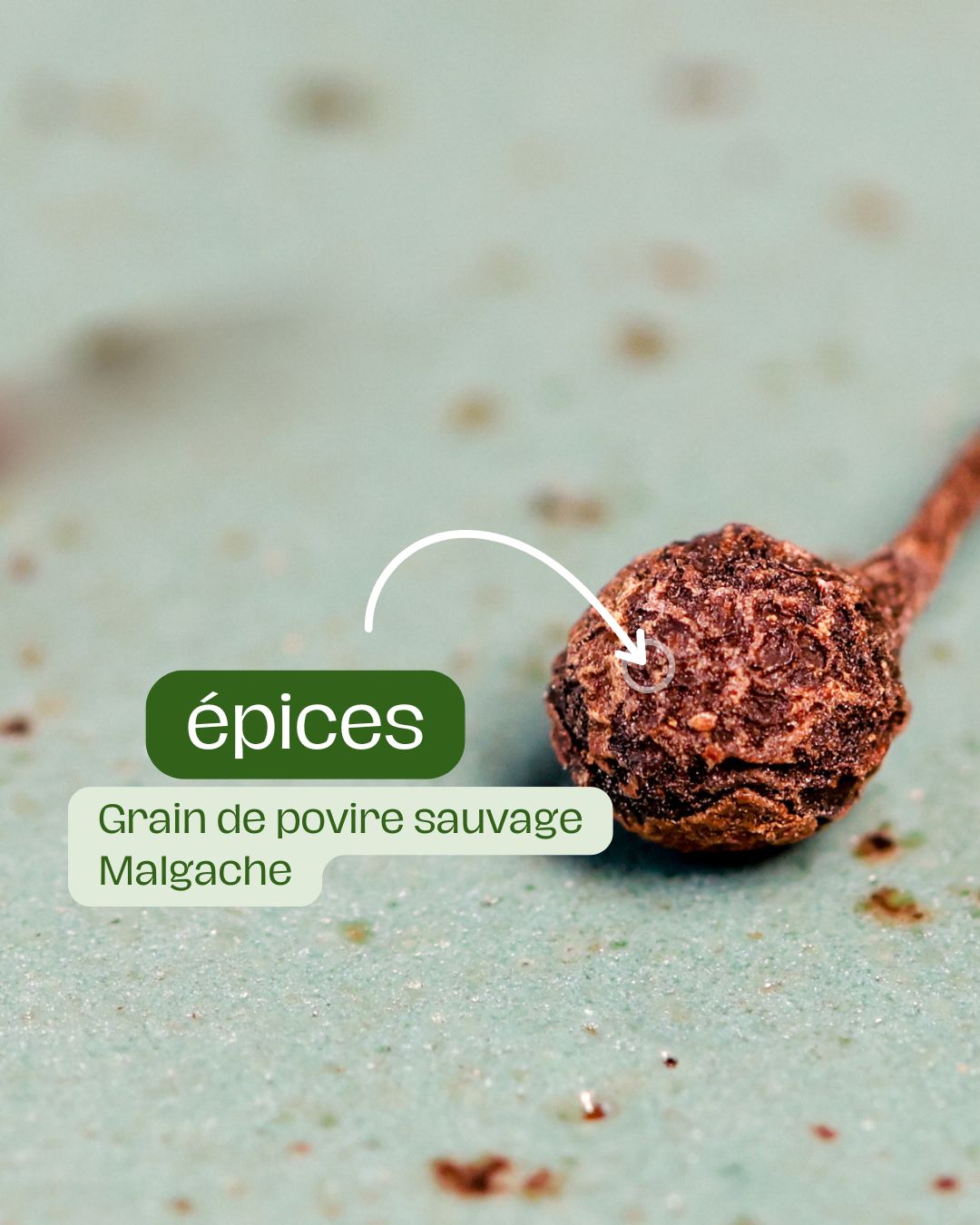
Harvesting wild pepper in Madagascar: the ancient gestures of the spice route, still alive today.
What remains of this history in your grinder?
Every time you turn your grinder, you unknowingly perform the final gesture of a three-thousand-year-old story. The grain you crush has the same botanical origin as the one that filled the coffers of Rome and made the fortune of Venice. The great victory of our time is that this luxury of the past has become accessible. But accessibility has a downside: we have gotten used to anonymous peppers, ground long ago, which have lost their aromas.
My job at Le Comptoir de Toamasina is to shorten the route. To get as close to the planter as possible, to select whole grains, to make them travel as freshly as possible to you. To restore pepper's dignity as a precious spice. Because this grain deserves better than a gray, characterless powder.
One grain, multiple colors
Black, white, green, and red all come from the Piper nigrum vine. Only the maturity and processing change.
Always in whole grains
Ground pepper goes stale in a few weeks. The whole grain keeps its essential oils until the very last turn of the grinder.
Key Takeaway
Pepper built routes, fortunes, and empires. Choosing a terroir pepper in whole grains means tasting this history directly, with all the freshness that the merchants of old could never offer.
Taste the spice route at home
Discover our selection of peppercorns, chosen from planters and delivered in all their aromatic freshness.
Discover our whole peppercornsTo extend the discovery, you can also explore our entire range of peppers or browse Le Comptoir de Toamasina's shop to find the spice that will accompany your next recipe.
Your questions about the history of pepper
Did pepper really serve as currency?
Yes. In various eras, pepper was used to pay off debts, rent, or dowries. Its stable value and long shelf life made it a reliable store of wealth, almost like a currency.
What is the difference between black, white, green, and red pepper?
They all come from the same vine, Piper nigrum. Green is picked young, black is dried after the onset of maturity, red is harvested fully ripe, and white is stripped of its outer shell. The terroir and processing do the rest.
Why choose a Madagascar pepper?
The volcanic terroir and the climate of the Big Island produce round, complex, and fragrant grains. Harvested with care and delivered fresh, Madagascar pepper expresses a depth that mass-produced peppers cannot achieve.