
Your cart
There are no more items in your cart

Table of Contents
Of all the spices I handle, none commands as much respect from me as saffron. When I weigh a few filaments on my scale at the counter, I always think of the hands that picked them one by one, at dawn, in the cold of a field of purple flowers. Saffron is not only the most expensive spice in the world, it is also one of the oldest, a common thread that has connected civilizations for millennia. Let me tell you this story, the one I share with every customer who leaves with their precious little vial.
Where does saffron come from and since when has it been cultivated?
Saffron is born from the flower of a crocus, Crocus sativus, a small bulbous plant that blooms in autumn. Each flower yields only three red stigmas, these precious filaments that are harvested and dried to obtain the spice. Three filaments per flower, not one more. That is the whole secret of its rarity, and the first thing I explain to those who are surprised by its price. It takes tens of thousands of flowers to obtain a simple handful of dry saffron.
Its cradle is located around the Eastern Mediterranean and the Near East, in those ancient lands where the first agricultural civilizations learned to domesticate plants. Historians trace its use back several thousand years. Its traces are found in ancient frescoes of the Aegean region, where gatherers pick crocus flowers, a moving testimony to the antiquity of this cultivation. Saffron was already, in that distant era, a prized product surrounded by care.
What touches me the most is that the way of harvesting it has hardly changed since then. The flowers are still picked by hand, early in the morning, before the sun damages them, and then the stigmas are delicately separated one by one. No machine has ever been able to replace this gesture. It is this continuity, this living link with the gatherers of millennia ago, that gives saffron an almost sacred dimension in my eyes.
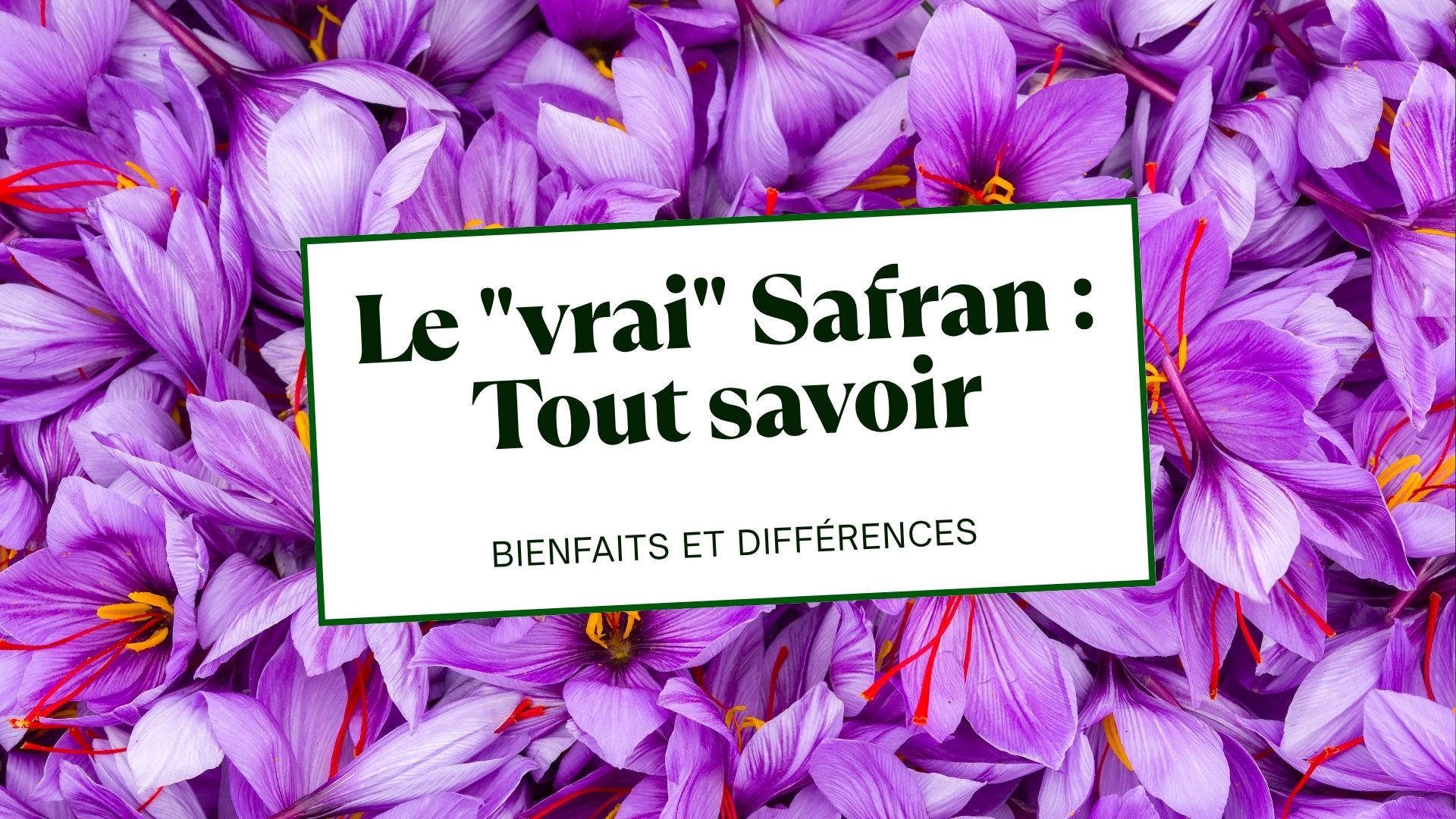
Three red stigmas per flower: this is why saffron has always been worth its weight in gold.
Why is it called red gold?
The nickname "red gold" is by no means an exaggeration, and it is due to two reasons that I like to explain side by side. The first is economic. Saffron requires a truly dizzying amount of manual labor. Picking the flowers, pruning them, separating the stigmas, drying them carefully: each gram represents hours of toil and a huge cultivation area. It is this labor, more than the plant itself, that explains a price that has always rivaled that of precious metals.
The second reason is visual and poetic. Saffron gives preparations a deep, warm, almost solar golden color. A tiny amount is enough to tint a whole dish with this light that irresistibly evokes gold. In ancient courts, this color was a sign of refinement and wealth. To serve a saffron dish was to display one's rank. Red gold, therefore, both for what it costs and for what it offers to the eye.
Arnaud's Take
What I always repeat: the high price of saffron is not a whim, it is the honest reflection of immense human labor. When you pay for beautiful saffron, you are paying for tens of thousands of harvesting gestures. This is also why I encourage you to buy a little, but very good quality, rather than a lot of a dubious product.
How did saffron conquer the world?
The journey of saffron is an epic that follows the great trade routes of Antiquity and the Middle Ages. From its Mediterranean and Near Eastern cradle, it spread through trade, conquests, and migrations. Merchants transported it preciously, because its lightness and value made it an ideal commodity for long distances. A small packet of filaments was worth a fortune, without the cumbersome weight of other goods.
It reached the Arab world, where it profoundly marked the cuisine and where its name itself finds part of its linguistic origin. It took root in Persia, which remains today one of the great lands of production. It traveled to Spain, where it became the soul of an emblematic golden rice dish (paella), then spread throughout Mediterranean Europe. Each region eventually developed its own culture and recipes, adopting red gold as a local treasure.
What fascinates me is that wherever saffron arrived, it was treated with the same deference. It has never been a trivial spice that you throw in by the ladleful. It has always kept this exceptional status, this scent of luxury and celebration, whatever the continent. Few products can boast of having crossed so many borders while keeping their aura intact.
| Major region | Role in the history of saffron | Trace left |
|---|---|---|
| Eastern Mediterranean | Cradle of the first known uses | Ancient frescoes of harvesting |
| Persia | Historical land of major production | Fragrant cuisine and saffron rice |
| Arab world | Diffusion and culinary influence | Linguistic origin of the name |
| Spain | Adoption in Southern Europe | Emblematic golden rice dishes |
What role did it play in civilizations?
Saffron has never been a simple cooking spice. Through the ages, it has taken on a thousand roles. It was used as a precious dye to color the fabrics of the powerful, giving their clothes that deep yellow hue reserved for the elite. It was used in perfumes and cosmetics, so much was its enveloping scent sought after. It was associated with festivals, celebrations and rites, where its solar color symbolized joy and abundance.
In many cultures, it has also occupied a place in traditions and folk uses related to well-being, passed down from generation to generation. I always remain cautious when approaching this subject, because my profession is that of taste and history, not health. What I can say is that saffron has fed the imagination of peoples as much as their plates, and that this symbolic richness is an integral part of its history.
Its value was such that it sometimes caused commercial tensions and conflicts. Falsifying saffron has long been a severely punished crime, such were the financial stakes. This ancient fight against fraud still resonates today, because the question of authenticity remains at the heart of the saffron trade. It is a subject that is particularly close to my heart.
A spice to respect, from field to plate
Because saffron carries so much history, it deserves to be handled with care. Here are the principles I always teach my clients so they can fully enjoy their red gold.
- Buy it in filaments rather than powder, to be able to judge its quality and avoid dubious mixtures.
- Infuse it in a hot liquid before incorporating it, to release its color and fragrance.
- Use it sparingly: a pinch is enough to transform an entire dish.
- Store it away from light, in an airtight container, to preserve its soul.
How to recognize true saffron today?
Fraud has always accompanied saffron, and it still exists. That's why I spend a lot of time, at the counter, teaching my customers a few simple reflexes. The first concerns the shape. True saffron comes in filaments, these red stigmas slightly flared like a trumpet at one end. Beware of powder, which is easier to falsify, and beware of batches that are too cheap, because true saffron cannot cost next to nothing.
The second reflex concerns color and fragrance. The filaments should be deep red, possibly with a small, lighter part at the base. The scent is unique: warm, simultaneously floral, honeyed and slightly bitter. When you plunge a few filaments into warm water, a good saffron slowly releases its golden color, without ever instantly tinting the water a bright red, which would often betray an added colorant.
Finally, trust the source. Buying your saffron from an artisan who knows their product, who can recount its origin and harvest, remains the best guarantee. This is the whole meaning of my work since 2010: I choose my spices with full knowledge of the facts so that you do not have to doubt. A saffron without a history is a suspicious saffron.
The shape
Red filaments flared like a trumpet at one end. Flee from anonymous powder and prices too good to be true.
The scent
Warm, floral, honeyed and slightly bitter. Saffron without a strong odor is tired or adulterated saffron.
The water test
In warm water, a good saffron slowly colors golden. Instant red coloring should alert you.
The source
A seller who knows the origin and harvest of their saffron is your best quality assurance.
How to use it to honor its history?
Using saffron is prolonging a gesture that is several millennia old, and this deserves a minimum of method. The first rule is to infuse it. Never throw your filaments directly into a dish without letting them soak. Plunge them into a little hot liquid, broth, milk or simply warm water, and let rest for a while. You will see the color and fragrance slowly unfold. It is this infusion that you will then add to your preparation.
The second rule is patience. Saffron gives the best of itself when added quite early in gentle cooking, so that its aromas diffuse, while avoiding burning it over high heat. It wonderfully accompanies rice dishes, fish, poultry and certain sweets. It also pairs well with noble products and even slips into delicate desserts, where its floral note works wonders.
What I love is that saffron transforms a simple dish into a festive moment, without ever needing to overuse it. A well-infused pinch, and your kitchen is adorned with this golden light that has fascinated men since Antiquity. This, for me, is honoring the history of a spice: giving it the time and space to tell where it comes from.
Key Takeaway
Saffron, from the three stigmas of Crocus sativus, is one of the oldest and most precious spices in the world. Harvested by hand as it was millennia ago, nicknamed red gold for its cost and its solar color, it has crossed all the great civilizations. Choose it in filaments, infuse it, use it sparingly, and beware of imitations.
Want to taste a saffron chosen with the respect it deserves?
Since 2010, I select my exceptional spices directly at the source, to offer you products whose history I know. Discover my selection at Le Comptoir de Toamasina.
Discover my exceptional spicesTo explore my entire universe, go to Le Comptoir de Toamasina's shop, where I gather my vanillas, my peppers and my rare spices chosen one by one. Every product there carries, like saffron, a story of the land and encounters.
Your questions about the history of saffron
Why is saffron so ancient?
Traces of its use are found several thousand years ago, notably in ancient frescoes from the Aegean region showing the gathering of crocus flowers. It is one of the few spices whose cultivation has hardly changed since its origins.
Why is it called red gold?
For two reasons: its cost, linked to the enormous manual labor of harvesting, which has always rivaled that of precious metals, and its deep golden color, a symbol of wealth and refinement in ancient courts.
How to avoid fake saffron?
Prefer filaments over powder, check the flared trumpet shape, smell the warm, honeyed scent, test the slow coloring in warm water, and always buy from a seller able to tell the origin of their product.