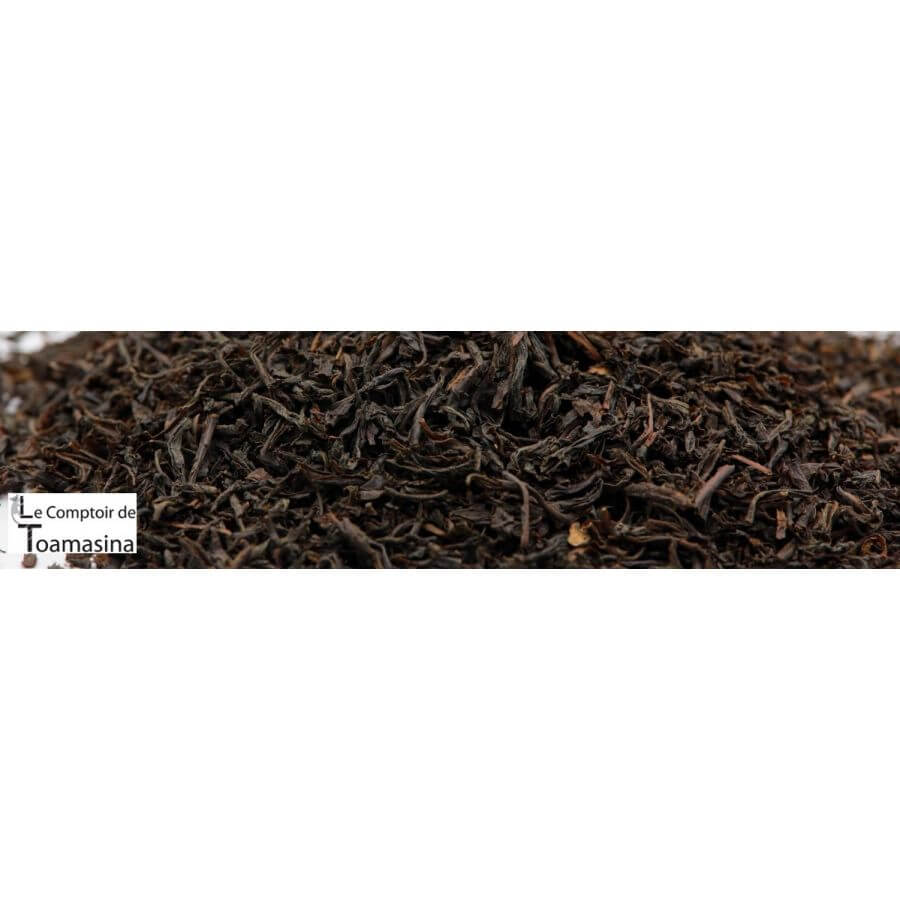
Full-bodied Assam Black Tea
Assam Black Tea – India's full-bodied classic
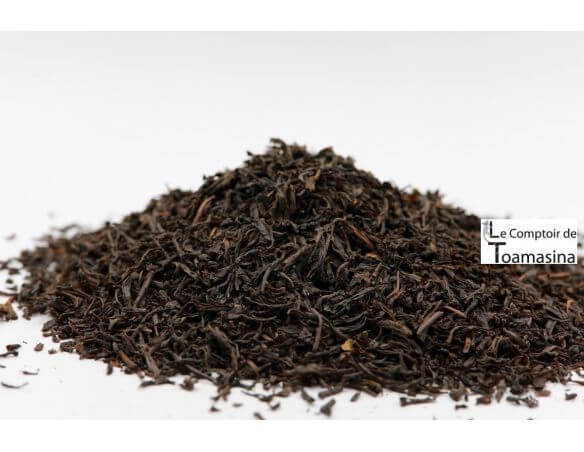
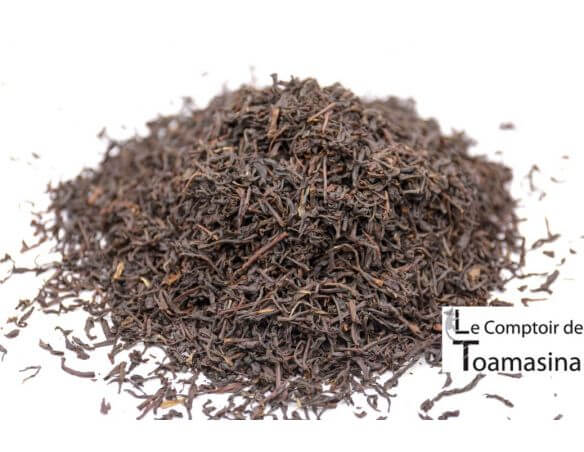
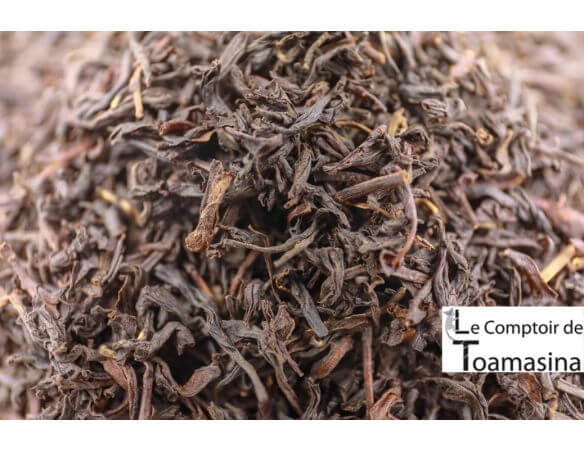
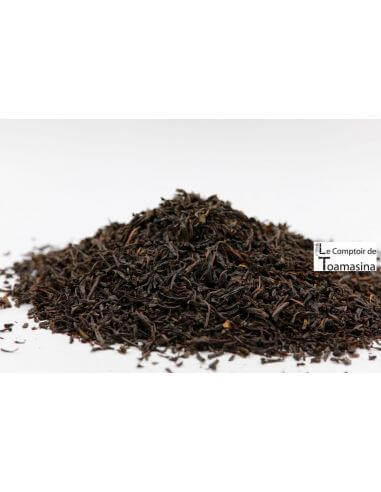
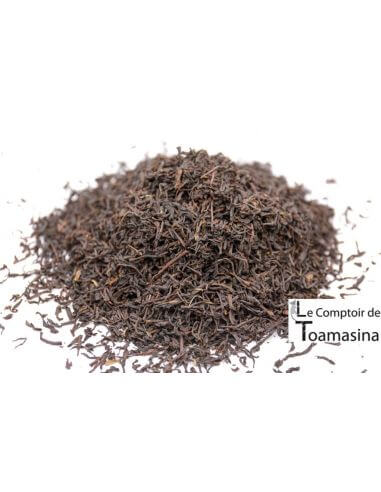
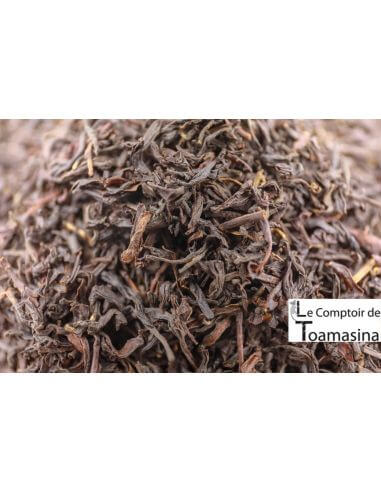
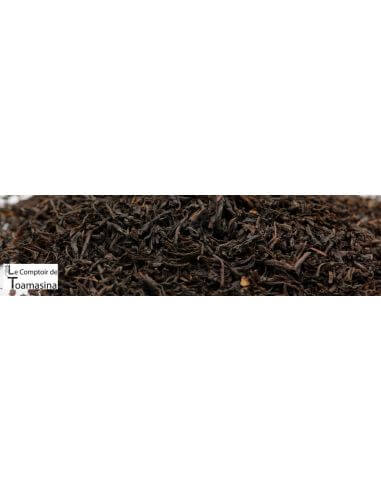
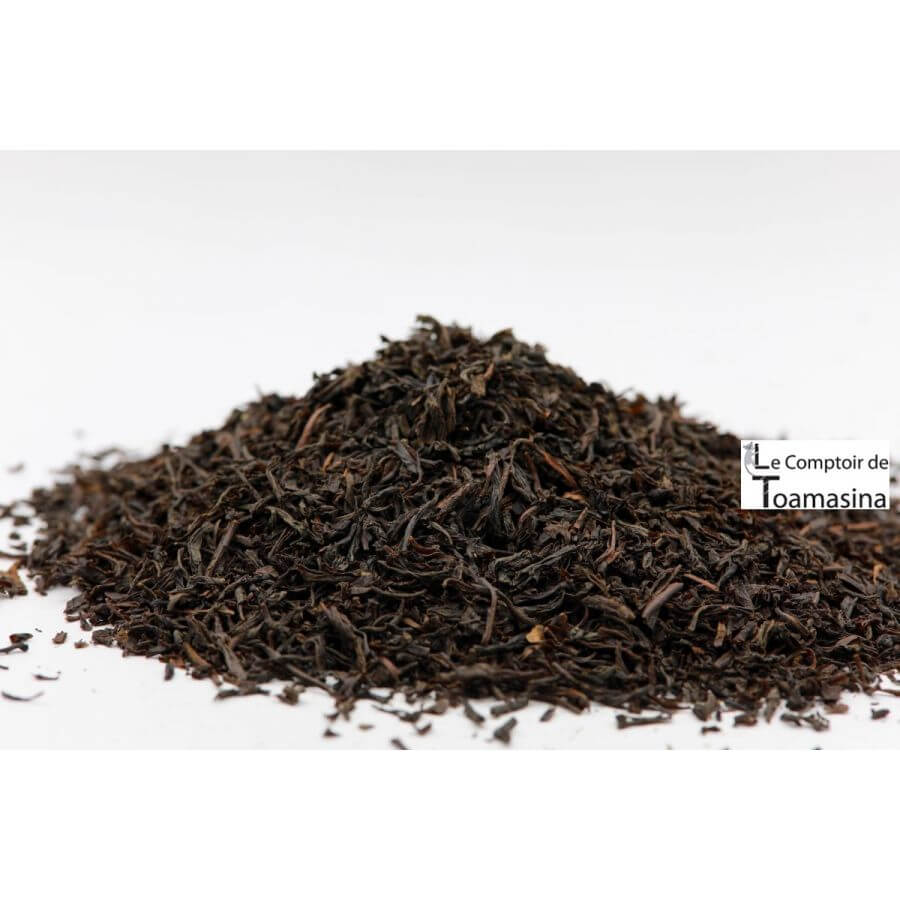
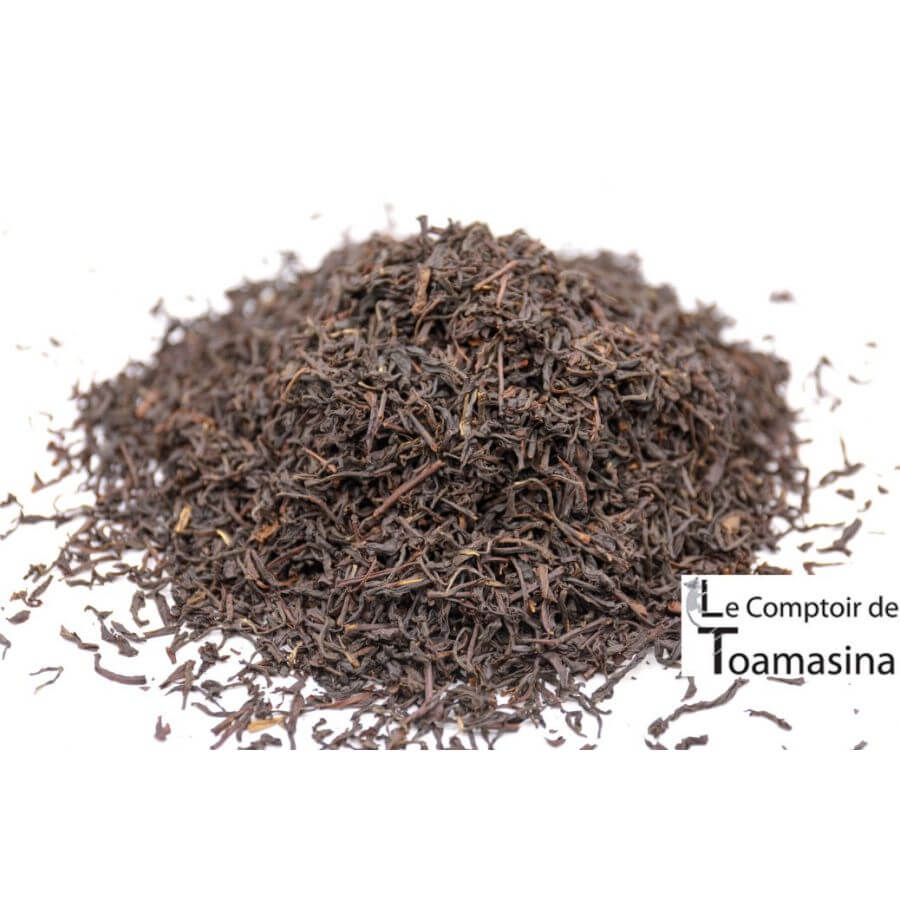
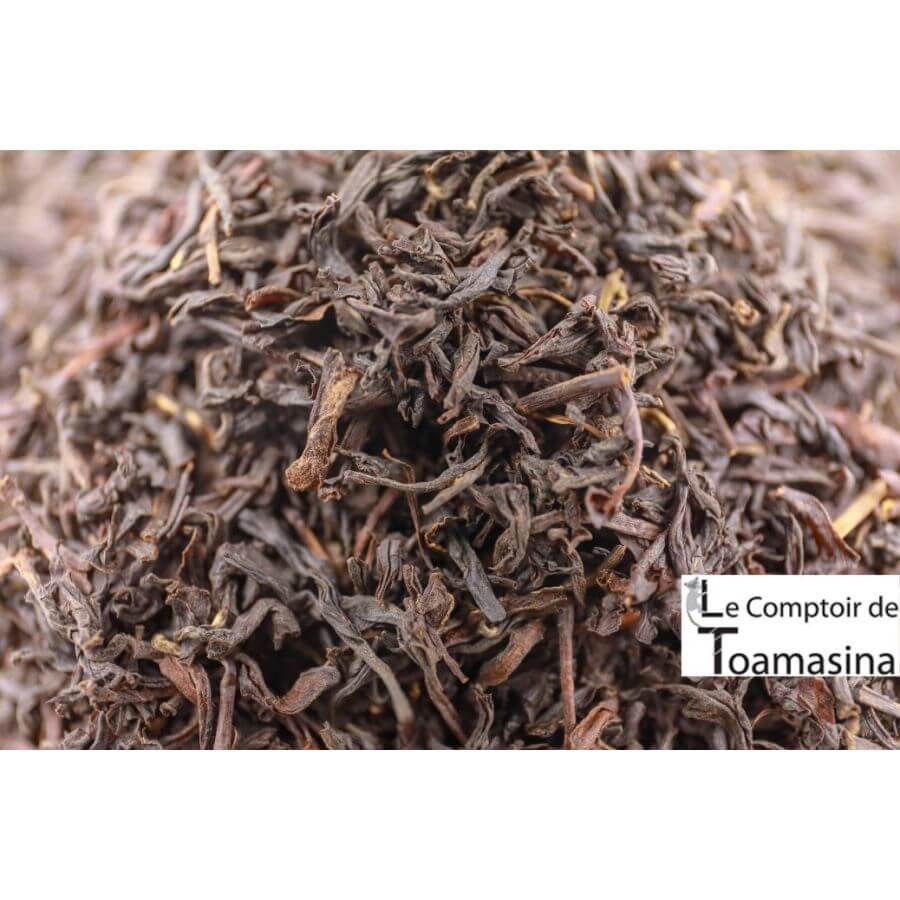
Grown in northeastern India, Assam black tea is the quintessential tea of character. Its broken leaves yield a dark amber liquor that is powerful and enveloping, carried by malty notes and a hint of honey—the signature of Assam tea gardens. It is the ultimate wake-up tea: robust and bold, it perfectly handles a splash of milk in the English style.
-
Black tea strength: 9/10
-
Main notes: malty, honey, toasted cereals
-
Best enjoyed: in the morning, at breakfast
-
The highlight: ideal with milk, breakfast tea style
Buy quality Assam black tea online at Le Comptoir de Toamasina. We select for you a tea with a consistent leaf, offering a full-bodied, round, and well-balanced cup without aggressive bitterness. Assam is the largest tea-growing region in the world: it is what gives the famous English Breakfast blends their strength.
Prefer something more delicate? Discover the champagne of teas, our Darjeeling black tea.
Assam Black Tea
Camellia Sinensis var. Assamica
"The full-bodied giant of Assam — the tea that broke the Chinese monopoly and gave birth to the entire modern Indian tea industry."
Assam Terroir
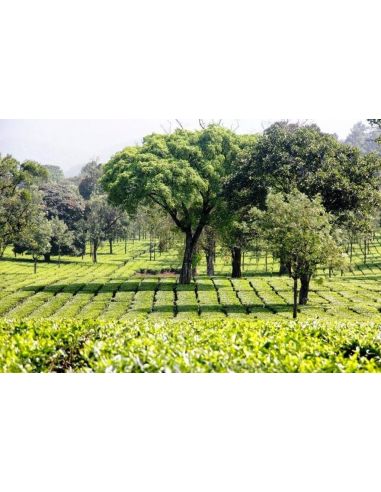
Hot and humid alluvial plains, the largest contiguous tea-producing region in the world.
Historical Discovery
A wild tea discovered by the Singpho, classified in 1834 and sold for the first time in London in 1839.
Full-bodied and Malty
The breakfast tea par excellence — powerful, robust, with that unmistakable roasted malt signature.
Here is our new reference in full-bodied black tea: Assam tea now replaces our Kerala tea in our selection. Assam is the largest contiguous tea-producing region in the world — a botanical and historical giant that literally changed the global tea map. Where Darjeeling focuses on floral finesse, Assam fully embraces power: a full-bodied, dense, malty, and robust infusion, far from the aromatic lightness of Chinese teas.
Its botanical variety, Camellia sinensis var. assamica, is a vigorous single-stem tree with large, flexible leaves measuring 15 to 30 cm — the opposite of the small Chinese var. sinensis shrub. It is this leaf anatomy that directly explains its richness in catechins and caffeine, and thus its power in the cup.
Comparative Sensory Analysis
Assam vs Kerala vs Ceylon
The new full-bodied standard against our two other Indian black teas
The most full-bodied of the three: Assam pushes malty power and astringency far beyond our usual Indian and Sri Lankan teas. It is THE breakfast tea par excellence — the one that cuts through milk and sugar without ever fading.
Assam · Kerala · Ceylon
The Olfactory Pyramid of Assam Tea
A unique chemical signature among great black teas
Technical Sheet
What You Receive
- Country of OriginIndia (Assam)
- Botanical SpeciesCamellia Sinensis var. Assamica
- IngredientsAssam Black Tea
- Main NotesMalty, full-bodied, and honeyed
- To be enjoyedMorning
- AllergenNone
- Possible TracesNone
- PackagingPouch 80g or 480g
- LogisticsPrepared within 24h - Delivered within 48h
The Assam terroir
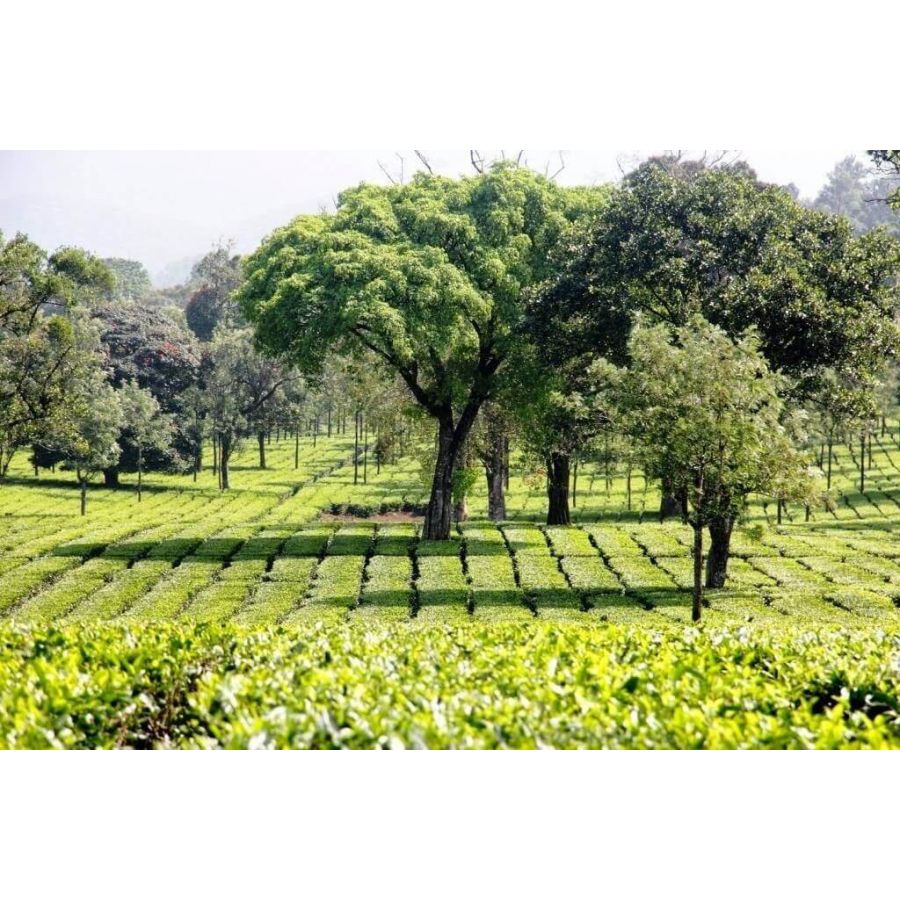
Assam is the largest contiguous tea-producing region in the world. The unique terroir of Assam directly shapes the sensory profile and power of this tea.
- Altitude: low-altitude alluvial plains, between 45 and 60 meters above sea level — a flat topography that facilitates the establishment of large, mechanizable plantations.
- Climate: humid subtropical, marked by three phases: a cool and dry winter (November to February), a hot pre-monsoon spring (March to May), and a tropical, torrential summer monsoon (June to October).
- Temperatures and humidity: in summer, daytime temperatures commonly reach 35°C to 36°C. This extreme heat combined with abundant rainfall creates a greenhouse microclimate, keeping relative humidity between 80% and 90% during active growth.
- Rainfall: 2500 to 3000mm of annual precipitation, with monsoon peaks reaching up to 250 to 300mm per day.
- Soils: deep, acidic, and highly fertile alluvial soils, enriched each year by local alluvium — silty loams rich in organic matter and with excellent permeability.
- Shade trees: due to the low wind speeds caused by the surrounding Himalayan ranges, plantations incorporate leguminous shade trees (Albizia and Erythrina species) to protect the sensitive foliage from sunburn.
History — from the Singpho to the Assam Company
The ancestral Phalap of the Singpho
Long before British colonization, the indigenous tribes of Assam and Arunachal Pradesh — mainly the Singpho and Khamti peoples — consumed and prepared the leaves of wild tea bushes growing in the jungle. They prepared a traditional beverage called Phalap, a bamboo-smoked, aged, and fermented tea, akin to aged Chinese dark teas like Pu-erh.
| Date | Event |
|---|---|
| 1823 | Scottish adventurer Robert Bruce learns of wild tea bushes from Assamese nobleman Maniram Dewan, who connects him with Singpho chief Bessa Gam. Bruce dies in 1824 before he can classify the plant. |
| 1824-1830 | His younger brother Charles Alexander Bruce retrieves seeds and plants from the Singpho chief, establishing the first experimental nurseries in Sadiya. |
| 1834 | The Governor-General of India establishes the Tea Committee to validate the feasibility of commercial tea cultivation in India, aiming to break the Chinese monopoly. |
| 1834 | Dr. Nathaniel Wallich, of the Calcutta Botanical Garden, officially classifies the Assam tea bush as a distinct variety: Camellia sinensis var. assamica. |
| 1836-1838 | Attempts to acclimatize the Chinese sinensis variety in the Assam plains fail completely — the plants die or hybridize under the heat and monsoon rains. C.A. Bruce pivots to exploiting the indigenous assamica variety. |
| January 10, 1839 | The first batch of Assam tea (8 chests) is auctioned in London, meeting with great commercial success thanks to its aromatic strength. The same year, the Assam Company — the world's first joint-stock tea plantation company — is founded. |
Sinensis vs Assamica: two varieties, two worlds
The anatomical structure of the assamica variety leaf directly explains its unique biochemical composition.
| Characteristic | Var. Sinensis (China) | Var. Assamica (Assam) |
|---|---|---|
| Growth form | Multi-stemmed shrub, slow growth | Single-stemmed tree, vigorous growth |
| Leaf dimensions | Small narrow, dark leaves (5-8cm) | Large broad and flexible leaves (15-30cm) |
| Soluble solids content | Moderate, sugars and amino acids | Very high, rich in catechins and caffeine |
| Cup profile | Light, aromatic, floral, and subtle infusion | Full-bodied, dense, malty, robust, astringent, and lively infusion |
The chemistry of Assam catechins
The fresh Assam leaf is distinguished by an exceptionally high concentration of catechins (notably EGCG and EGC) compared to Chinese varieties. During oxidation in the factory, these catechins transform into two major families of compounds: theaflavins, which impart the bright golden color and refreshing briskness on the palate, and thearubigins, higher molecular weight polymers that give the liquor its dark mahogany color, heavy texture, and deep roundness.
Manufacturing processes
The modern Assam industry produces two types of black teas — Orthodox and CTC — while an artisanal sector perpetuates the ancestral tribal manufacture of Phalap.
The Orthodox process
Aims to maintain leaf integrity. Withering for 12 to 18h (humidity 76% → 60-62%), circular rolling that releases oils without destroying the leaf blade, controlled oxidation at 25-30°C for a few hours, firing at 80-90°C, then sorting by grades. Favors the development of complex aromas and preserves the golden buds.
The CTC (Crush, Tear, Curl) process
Invented in 1931 by William McKercher at the Borbam Tea Estate. The leaves pass between two engraved metal cylinders that shear, tear, and curl the leaf in a single operation, breaking all cell walls. The flash oxidation that follows produces a very dark, robust, and astringent infusion — ideal for binding milk and proteins, perfect for masala chai.
The Singpho tribal tradition (Phalap)
Wood-fire roasting (Mohkáng) to stop oxidation, smoke-drying on a suspended mat (Phey) for 24h, manual crushing on a bamboo mat (Daam), packing into green bamboo tubes (Ndum) placed in embers, then maturing for 3 to 10 years in a family granary (Kharang). The result: a golden to amber liquor, with notes of smoked pine bark, sweet caramel, honey, and dried fruits.
Harvest seasons (flushes)
The physiology of the Assam tea bush varies over the seasons, producing harvests with very distinct biochemical and taste profiles.
| Flush | Period | Sensory profile |
|---|---|---|
| First Flush | Late March to May | Pale yellow to light amber liquor. Fresh, floral, light notes, brisk astringency — ideally plain, without milk. |
| Second Flush | June | The crown jewel of Assam. Deep orange-copper liquor, very rich in golden buds (golden tips). Round, powerful, velvety taste, caramelized barley malt, warm honey, and ripe fruits. |
| Monsoon Flush | July to September | Very dark red-brown liquor, robust cup, bitter and astringent. It is the essential CTC base for masala chai — its power cuts through milk and sugar without fading. |
| Autumn Flush | October to November | A milder fourth harvest that closes the season, before winter dormancy. |
Decoding Assam tea grades
Understanding grades means understanding what you are really buying. Here is the complete nomenclature, from top to bottom.
| Grade (whole leaves) | Profile |
|---|---|
| SFTGFOP (Special Finest Tippy Golden Flowery Orange Pekoe) | The supreme grade. Exceptional proportion of downy golden buds. Cup of great roundness, extremely smooth, without any bitterness. |
| FTGFOP (Fine Tippy Golden Flowery Orange Pekoe) | Long, uniform leaves, many golden needles. Perfect balance between malty power and fruity sweetness. |
| TGFOP (Tippy Golden Flowery Orange Pekoe) | The classic premium grade from top Assam gardens. Nice presence of golden tips, robust body, clean malty aftertaste. |
| GFOP / FOP / OP | From the briskest (GFOP) to the woodiest and clearest (OP), without golden buds — the slowest infusion, beautifully fine. |
Broken leaves and fannings
FBOP (broken, some tips): quick infusion, fleshy and slightly honeyed liquor. BOP (standard broken): dense, dark, tannic infusion — ideal for mornings. FOF (fannings): small debris with golden particles, fast extraction for quality tea bags. For CTC: grains range from PEK (largest, moderate bitterness) to PD/FD (fine dust, instant extraction, very black liquor) — the latter are highly prized in Indian street stalls for their maximum yield.
The volatile chemistry of aroma
The aroma of Assam tea is the product of complex interactions of volatile organic compounds generated during the enzymatic breakdown of lipids and amino acids during withering and oxidation.
| Compound | Perceived aroma | Role in Assam |
|---|---|---|
| Isovaleraldehyde | Roasted malt, warm cereal | Creates the characteristic malt aroma of Assam |
| Phenylacetaldehyde | Warm honey, beeswax | Provides sweet, syrupy base notes |
| Linalool | Fresh floral, citrus | Airy top note to balance the heaviness |
| Geraniol | Fresh rose, lemony | Elegant floral touch, especially in Second Flush |
| Phenylethyl alcohol | Rose water, sweet honey | Enhances honeyed sweetness aromas |
| Nonanal | Woody green, zest | Nuances of damp wood and undergrowth |
| Benzaldehyde | Bitter almond, prune | Stone fruit and nutty notes |
Directions for use and steeping instructions
To optimally extract the tannins and volatile oils of an Assam tea, use soft, lightly mineralized water — excess calcium and magnesium block the extraction of thearubigins and cause a dull film on the surface. Always scald the teapot and cups before serving.
Classic Western steeping (whole orthodox leaves)
- Dosage: 3g of leaves (about 1.5 teaspoons) for 200ml of water.
- Temperature: 95°C to 100°C, rolling boil water.
- Steeping time: 4 to 5 minutes, covered vessel.
- Consumption: plain to appreciate the complexity of the buds, or with a drop of whole milk to mellow the briskness.
CTC / breakfast tea bags steeping
- Dosage: 2 to 3g of CTC tea (about 1 teaspoon) for 200ml of water.
- Temperature: 100°C, rolling boil required to loosen the tight grains.
- Steeping time: 2 to 3 minutes maximum — beyond that, massive extraction of bitter and harsh tannins.
- Consumption: pairs perfectly with a splash of whole milk and cane sugar.
Traditional Masala Chai recipe (decoction method)
Assam monsoon CTC tea is the historical base ingredient of this Indian preparation.
Ingredients: 100ml cold water, 100ml whole milk, 3g (1 teaspoon) Assam CTC tea, 1 crushed green cardamom pod, 1 thin slice fresh ginger, 1 small piece cinnamon stick, 1 or 2 cloves.
Preparation: mix water, milk, tea, and spices in a heavy-bottomed saucepan. Bring to a boil over medium heat. Once boiling, lower the heat and gently simmer for 3 to 4 minutes — this simmering allows the milk proteins to emulsify with the powerful Assam tannins and bind the spice oils. Strain and sweeten generously with cane sugar.
Gong Fu Cha (for exceptional teas rich in buds)
Dosage: 7g for 150ml of water at 95-100°C. Steeping plan: first steep 20 to 30 seconds, then increase by 5 to 10 seconds for each subsequent steep (35s, 45s, 55s...). Up to 6 to 8 successive steeps — the first reveal warm, smoky coniferous notes, the later ones develop sweet notes of acacia honey, caramelized sugar, and prune.
Cold Brew
For a sweet, thirst-quenching iced tea without bitterness: place 10 to 12g of orthodox leaves in 1 liter of cold water, let sit in the refrigerator for 8 to 12 hours. The low temperature slows the extraction of bitter tannins while releasing amino acids and natural sugars. Filter and serve chilled over ice.
Frequently Asked Questions
Why is Assam replacing Kerala in your selection?
What is the difference between Orthodox and CTC tea?
Which flush to choose?
Should I add milk?
"The giant of Assam — malty, full-bodied, honeyed, the tea that changed world tea history."
Order my Assam Black TeaCamellia Sinensis var. Assamica · Assam, India · Arnaud Sion Selection
- Native country
- India
- BOTANICAL SPECIES
- Camellia Sinensis
- INGREDIENTS
- Indian Black Tea Kerala OP
- AROMATIC POWER
- 8/10
- ALLERGEN
- Absence
- POSSIBLE TRACES OF ALLERGENS
- None
- PACKAGING
- Bag
- Preparation / Delivery
- Preparation within 24 hours - Delivery within 48 hours