
Your cart
There are no more items in your cart
Key takeaways
- A Tahitian vanilla cultivar: Haapape is one of the two varieties of Vanilla x tahitensis grown on a large scale in French Polynesia.
- A genetic giant: tetraploid (64 chromosomes compared to 32 for Bourbon), it owes its extraordinary size to the so-called "gigas" effect.
- XXL pods: 18 to 22 cm, about 12 g each, twice as wide as a classic Bourbon.
- A gourmand profile: prune, dark cocoa, speculoos, star anise, and tonka bean, rounder than the Tahiti cultivar.
- Concentrated power: a single Haapape pod equals the fragrance of about three standard Bourbon vanilla pods.
When people talk about Tahitian vanilla, they often think they are talking about a single vanilla. In reality, two major cultivars share the plantations of Polynesia, and they are as different as two grape varieties from the same vineyard. There is the Tahiti cultivar, fine and floral, and there is Haapape, its giant and gourmand version. It is this latter one I want to talk about, as it is probably the most spectacular, the fleshiest, and the most generous pod in the entire vanilla universe.
What is the Haapape cultivar?
Haapape is a cultivar of Vanilla x tahitensis, the hybrid vanilla born from crossing planifolia vanilla with wild odorata vanilla in Mayan gardens. Like all Tahitian vanilla, it shares this prestigious ancestry. But it holds a secret of its own, written in its cells. It is nicknamed the black gold of the Pacific, and its name honors an ancient district on the north coast of Tahiti.
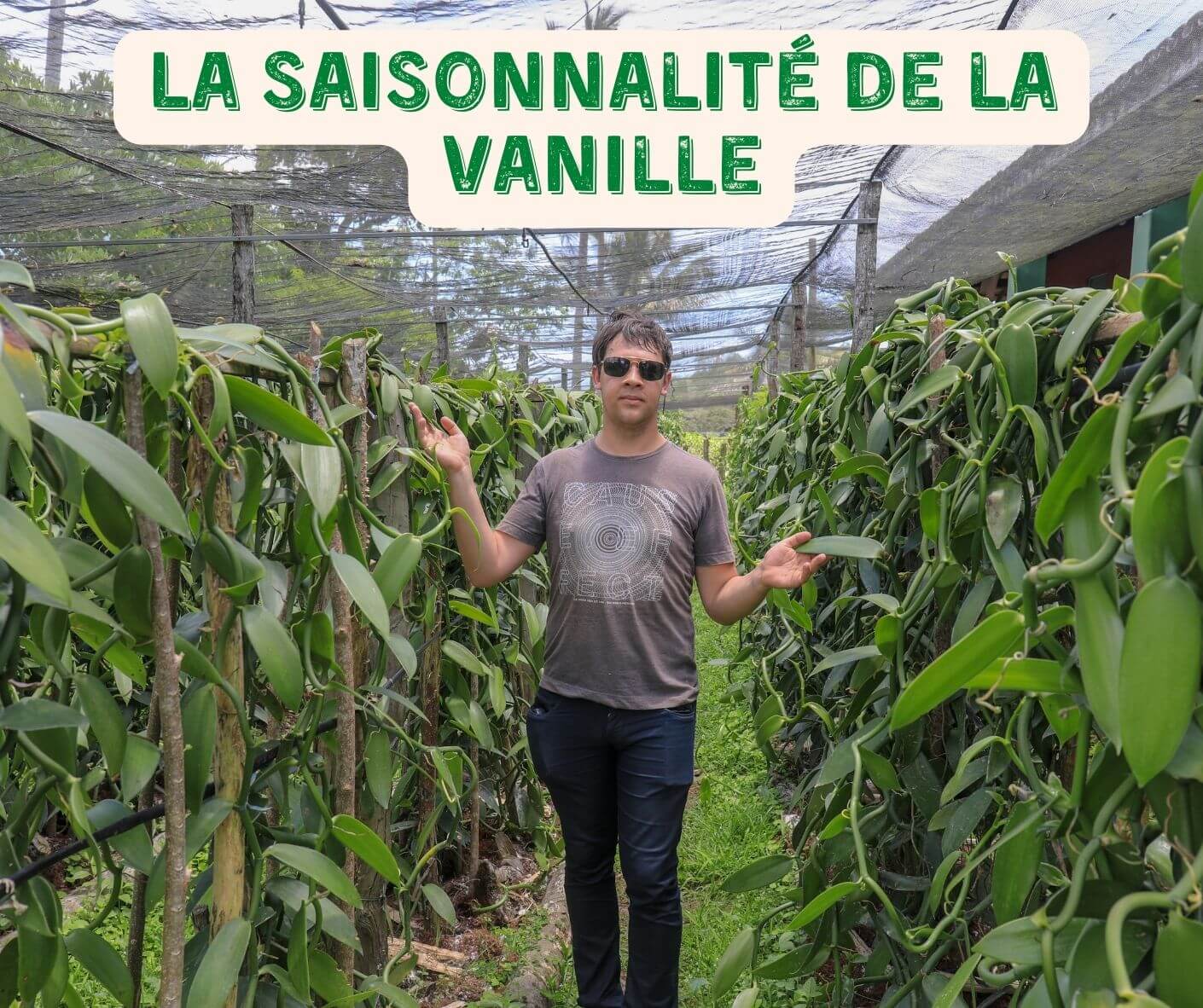
It is a robust climbing vine with thick stems and long, dark green leaves. Planters often prefer it to the Tahiti cultivar because its vine is more vigorous, more productive, and its large white flowers are significantly easier to pollinate by hand.
Why are its pods so large?
Here lies the core of its identity, and it is pure genetics. Most vanillas, including Bourbon, are diploid: their cells contain 32 chromosomes. Haapape, on the other hand, is tetraploid: its cells contain 64, or double the amount. This doubling of the chromosomal makeup causes what botanists call the gigas effect, a natural gigantism that increases cell volume and, consequently, the size of the entire plant.
The result is visible to the naked eye. Stronger vines, leaves marked by a characteristic central groove that allows it to be recognized at a glance in the fields, and above all, monumental pods. Where the Tahiti cultivar yields short, thin pods, Haapape produces pods of 18 to 22 centimeters, weighing an average of 12 grams. A kilo of Haapape contains only about 85 pods, they are that heavy and fleshy.
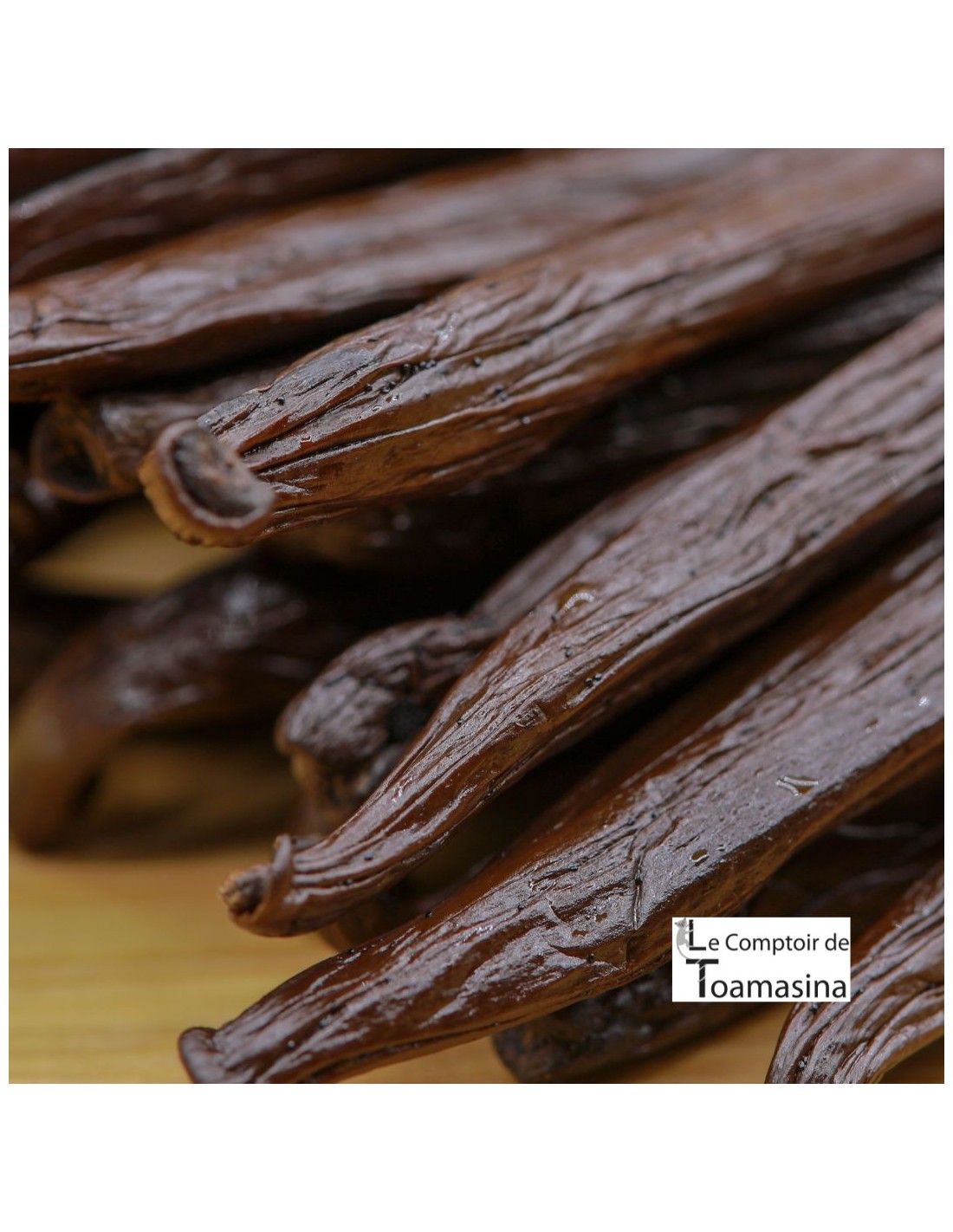
The giant pods of Haapape, XXL size, twice as wide as a Bourbon.
What is its aromatic profile?
While the Tahiti cultivar plays the card of floral finesse, Haapape plays the card of warm indulgence. As soon as you open a pod, you are struck by powerful, round notes of prune, dark cocoa, almost melted chocolate, and velvety vanilla. Then unfold warm nuances of gingerbread, speculoos, star anise, licorice, sweet caramel, and tonka bean. It is an enveloping vanilla, perfect for those who find the classic Tahiti too ethereal.
Haapape cultivar olfactory pyramid
Top NotesPrune, cherry, marzipan (bitter almond)
Heart NotesStar anise, floral orchid, gingerbread, speculoos
Base NotesDark chocolate, caramel, tonka bean, licorice, precious wood
What does the chemistry of this vanilla say?
Its vanillin content is low, around 0.8% of dry weight, far from the 2.2% of Madagascar vanilla. But it would be a mistake to conclude that it lacks power. Its strength lies elsewhere: anisyl derivatives alone represent about 70% of its volatile compounds, compared to barely 7% in planifolia. Anisyl alcohol gives it its floral and anisic notes, anisaldehyde carries the olfactory impact, and a touch of heliotropin accentuates the floral register. Its high fat fraction explains its fleshy and oily appearance. Finally, like all Tahitian vanilla, Haapape contains no coumarin, unlike pompona, making it a prestigious food product with no restrictions.
How does it differ from the Tahiti cultivar and Bourbon?
This is the whole point of knowing these three vanillas well, which cater to three different desires.
| Criterion | Haapape | Tahiti Cultivar | Bourbon (Madagascar) |
|---|---|---|---|
| Chromosomes | 64 (tetraploid) | 32 (diploid) | 32 (diploid) |
| Pod | XXL, 18 to 22 cm, 12 g | Short and thin | Long and thin |
| Leaf | Pronounced central groove | Flat and smooth | Flat |
| Profile | Prune, cocoa, speculoos, anise | Very floral and anisic | Caramel, cream, chocolate |
| Heat Resistance | Fragile (use gentle heat) | Fragile | Excellent |
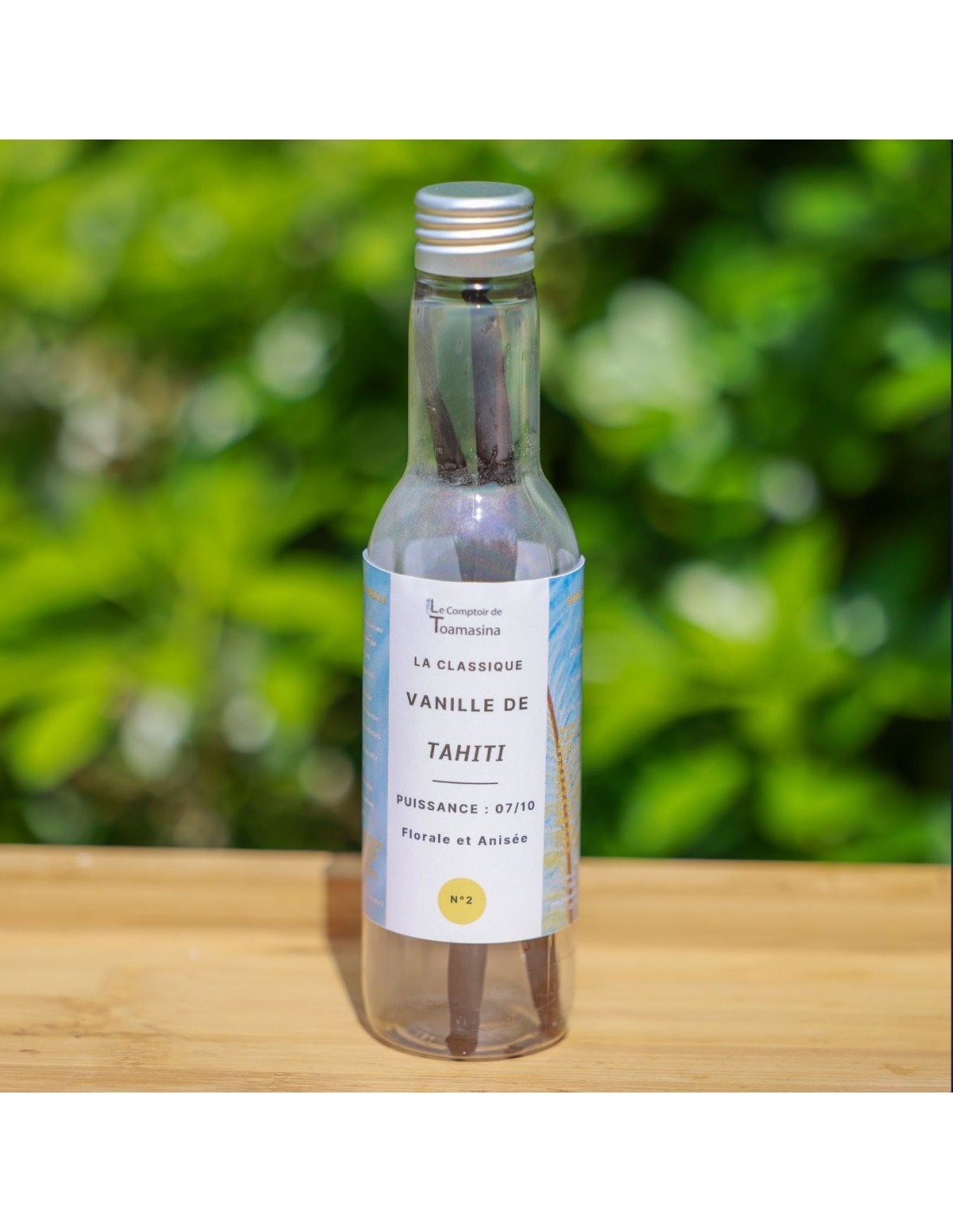
Cured Haapape pods: an exceptional oil content and vanilla caviar.
One number sums up Haapape's generosity: thanks to its dimensions and its richness in pulp, a single one of its pods is equivalent in fragrance to about three standard Bourbon vanilla pods. It is a vanilla of abundance.
How is it prepared and cured?
Like all Tahitian vanilla, Haapape is never scalded in hot water. Its indehiscent pod, which does not open, fully ripens on the vine for about nine months after the hand-pollination of the flowers. It is harvested pod by pod as soon as its tip turns yellow-brown. Then comes the cold preparation: washing, alternating drying in the mild morning sun and sweating under blankets in the afternoon, manual massaging of each pod at least fifteen times to distribute the pulp, and finally curing in lined wooden trunks for four to nine months, which develops its chocolatey aromas. After several years of storage, a frost of vanillin crystals may even form on its surface, a sign of optimal concentration.
How to use it in cooking?
Haapape is more versatile than the Tahiti cultivar. Its gourmand roundness allows it to express itself just as well in milk or cream infusions for a crème anglaise, a flan, rice pudding, or a ganache, as in cold preparations like panna cottas, poached fruit syrups, and sorbets. In savory dishes, its anise and licorice notes elevate a white fish carpaccio or pan-seared scallops. A chef's tip, however: split the pod and scrape its seeds with your finger rather than a knife, as the blade tears off bitter fibers. And keep its empty pod to flavor sugar or milk.
Arnaud's Opinion
Haapape is my recommendation for those who want to discover Tahitian vanilla without being thrown off by its overly "perfume-like" side. Its generosity of prune and cocoa wins everyone over. It is also proof, right before our eyes, that nature is still inventing. A simple duplication of chromosomes was enough to create this giant pod from the same vanilla. When I hold a Haapape, I am holding a genetic accident turned into a gastronomic treasure.
Two field stories that say it all about Haapape
First, its name. Haapape pays tribute to a former district on the north coast of Tahiti, present-day Mahina. A legend tells that a king, Vaituarii, choked to death on a burning hot piece of breadfruit. As a sign of mourning, the word "vai," meaning water, became a sacred taboo. The district of Haavai was then renamed Haapape, with "pape" also designating water. A name born of a royal mourning.
A second story tells of the Polynesians' attachment to this treasure. Jeanne Chane, an iconic figure in the Tahitian vanilla trade and heiress to a line of curers, was once approached by a foreign delegation begging her to come and establish Tahitian vanilla elsewhere, promising her royal treatment. She proudly refused, saying she would betray neither her family nor her island. That is also Tahitian vanilla: a terroir to be protected, not merely a seed to be exported.
Discover our Tahitian vanilla
Experience the gourmand power of Tahitian vanilla, selected pod by pod, and explore the entire universe of world vanillas at our shop.
View Tahitian VanillaFrequently Asked Questions
Is Haapape a different species from Tahitian vanilla?
No, it is one of its cultivars. Haapape is a variety of Vanilla x tahitensis, just like the Tahiti cultivar. They share the same sequence genetics, but Haapape is tetraploid, which explains its giant size.
How can you recognize a Haapape plant in the fields?
By its leaves, which all have a very pronounced central groove or furrow, absent in the Tahiti cultivar, which has flat, smooth leaves.
How many Bourbon pods does one Haapape pod replace?
Thanks to its XXL size and its richness in pulp, a single Haapape pod is aromatically equivalent to about three standard-sized Bourbon vanilla pods.
Why isn't it scalded in hot water?
Because its pod is indehiscent: it does not open and ripens fully on the vine. Scalding, which is used to stop the maturation of Bourbon, is therefore unnecessary and would destroy its fragile anisic aromas.
Does it contain coumarin?
No, like all Tahitian vanilla. Haapape does not contain it, unlike pompona (Vanilla pompona), and can be used without any culinary restrictions.