Your cart
There are no more items in your cart
Key Takeaways
- Three molecules define saffron: Safranal (aroma), Crocin (color), and Picrocrocin (flavor and bitterness).
- The ISO TS3632-2 Standard regulates global quality, setting precise molecular thresholds and capping moisture at 12%.
- There are 4 Grades, ranging from Grade 1 (purest, most powerful) down to Grade 4 (industrial use).
- Always buy threads (pistils): Saffron powder is impossible to evaluate visually and is frequently adulterated with turmeric.
- Iran is the king of saffron, producing roughly 90% of the global supply.
Why Few Shops Tell You the Science of Saffron
Saffron is the most expensive spice on Earth. Yet, the general public knows very little about the chemistry of this "smart flower." Iranians say that saffron cannot be faked because its true quality is written in its molecules. I created this guide to reveal the secrets most sellers keep hidden.
The 3 Magic Molecules of Saffron
These three organic compounds determine the official worldwide classification of saffron quality.
1. Safranal
The compound responsible for saffron's unique fragrance. While important for the nose, it varies less drastically between pure grades.
2. Crocin
The molecule providing the immense coloring power (golden yellow to deep red). Higher crocin means a richer, brighter tint in your food.
3. Picrocrocin
Provides the unmistakable bitter and metallic flavor. Along with crocin, it is the primary indicator of premium-grade saffron.
The International Standard.
ISO TS3632-2 strictly regulates the saffron trade. Top-tier saffron must never exceed 12% moisture to guarantee you are paying for spice, not water.
ISO TS3632-2 strictly regulates the saffron trade. Top-tier saffron must never exceed 12% moisture to guarantee you are paying for spice, not water.
The 4 Official Saffron Grades
Based on the ISO standard, here is how saffron is officially graded:
Grade 1 — Pure Excellence
- Safranal
- ≥ 120 mg/g
- Picrocrocin
- ≥ 70 mg/g
- Crocin
- ≥ 190 mg/g
- Culinary Profile
- Intense flavor and deep red-orange color. The choice of Michelin-starred chefs.
Grade 2 — Great Value
- Safranal
- ≥ 90 mg/g
- Picrocrocin
- ≥ 55 mg/g
- Crocin
- ≥ 150 mg/g
- Culinary Profile
- Perfect for daily cooking with a strong flavor and beautiful color.
Grade 3 — The Budget Option
- Safranal
- ≥ 70 mg/g
- Picrocrocin
- ≥ 40 mg/g
- Crocin
- ≥ 110 mg/g
- Culinary Profile
- Mild flavor, lacking the explosive coloring power of upper grades.
Grade 4 — Industrial Use
- Safranal
- ≥ 50 mg/g
- Picrocrocin
- ≥ 30 mg/g
- Crocin
- ≥ 80 mg/g
- Culinary Profile
- The cheapest, weakest flavor, heavily used in commercial spice mixes.
How to Visually Inspect Saffron
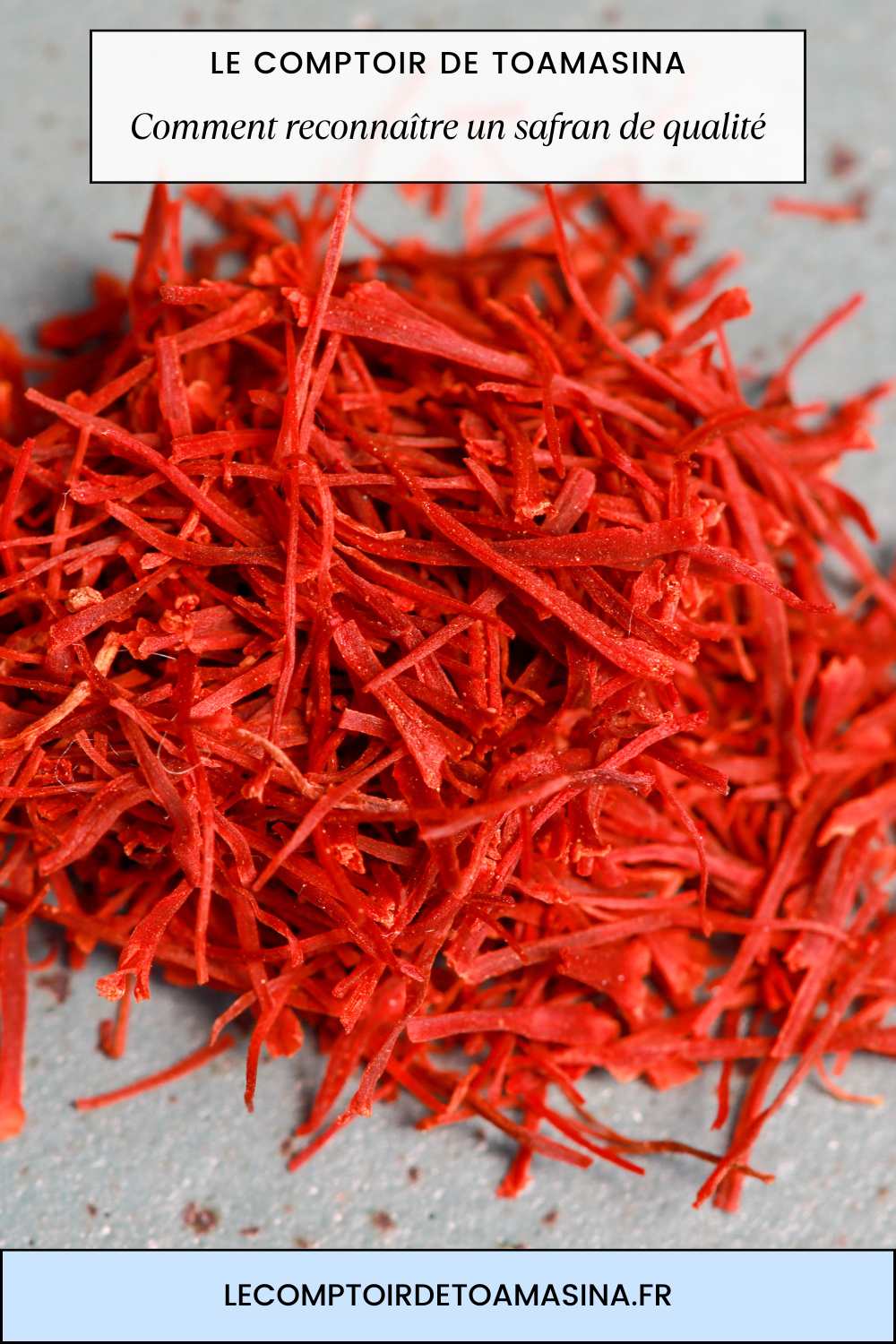
Premium saffron has a deep, vibrant blood-red color. If you see yellow or pale orange ends (the floral style), the quality has been diluted to add cheap weight.

Grade 1 Iranian Saffron threads hand-selected by Comptoir de Toamasina: pure crimson red with no yellow waste to maximize flavor and color.
▶
Watch my full masterclass on "How to Identify Grade 1 Saffron" on our YouTube channel.
Who Produces Saffron in the World?
| Rank | Country | Global Share |
|---|---|---|
| 1 | Iran | ~ 90% of the world |
| 2 | Afghanistan | Rapidly growing |
| 3 | Spain | Historical, but declining output |
| 4 | India (Kashmir) | Highly priced, local consumption |
| 5 | Greece | Rising high quality |
Taste True Grade 1 Saffron
Discover our rigorously lab-tested and hand-selected Iranian Saffron for ultimate culinary pleasure.
FAQ — Saffron Quality
What molecules indicate quality?
Safranal (aroma), Crocin (color), and Picrocrocin (flavor/bitterness).
Should I buy saffron powder or threads?
Always buy threads (pistils). Saffron powder is heavily faked with turmeric or brick dust, and you cannot visually verify its quality.
How do I use saffron in cooking?
The secret is infusion. Steep the threads in warm milk, broth, or water (around 45°C/110°F) for several hours—or overnight—before adding the liquid to your dish.