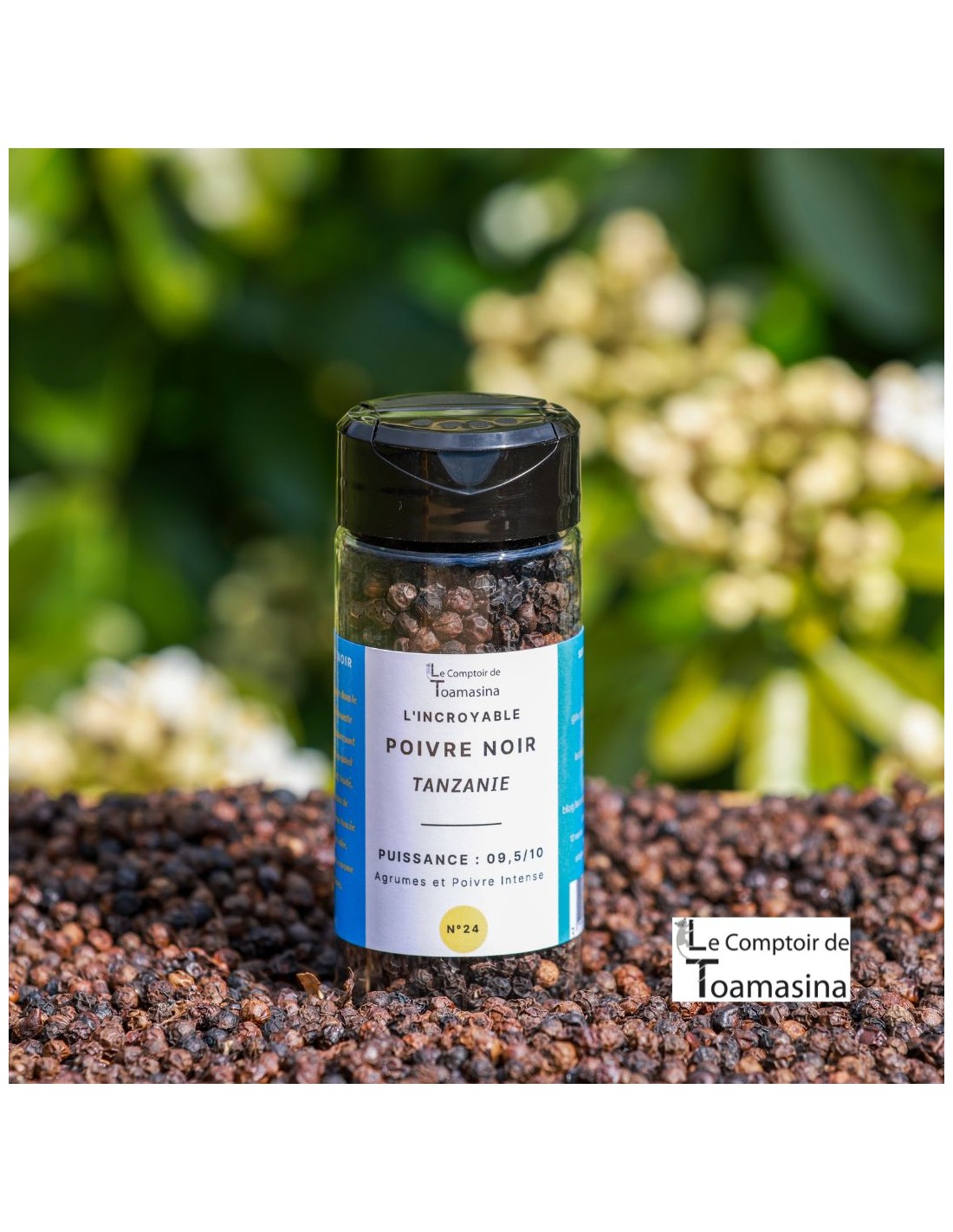
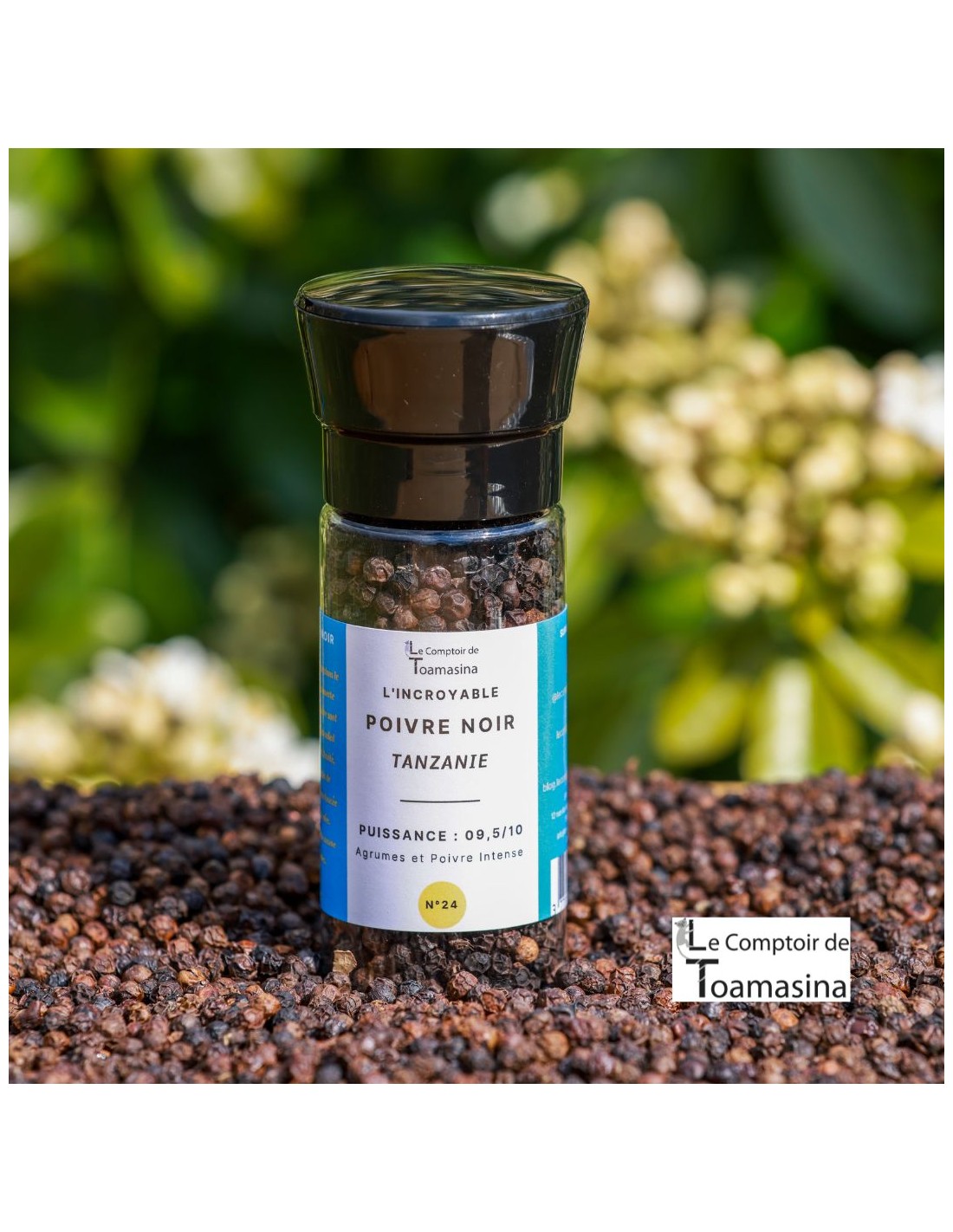
Tanzania black pepper

Tanzania black pepper

It is one of the few peppers cultivated in the southern hemisphere.

Tanzania offers you a powerful and lively pepper with a touch of freshness.

We discover a pepper with citrus notes that goes wonderfully with red meat, seafood, fish and marinades.

  • Pepper power: 9/10
  • Scent: Citrus and intense pepper
  • Use: Red Meat, Vegetables and Grill

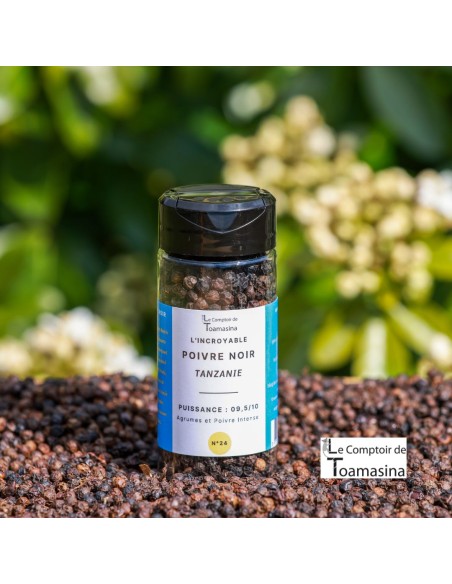
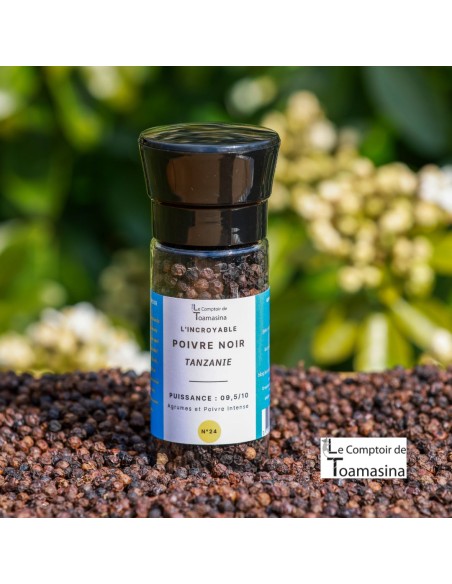
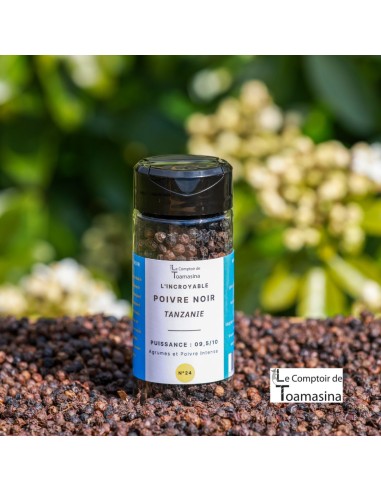
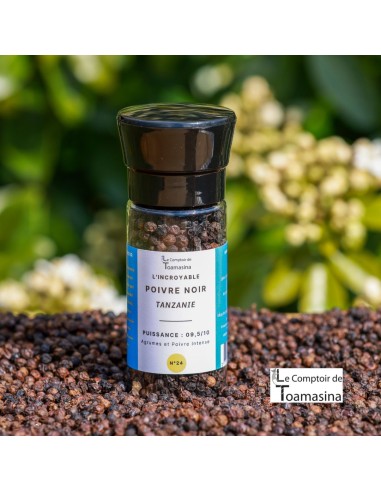
Le Comptoir de Toamasina offers you black pepper from Tanzania in a bottle, pepper mill and refill of 200g and one kilo. Discover a pepper that goes off the beaten track.

Packaging
PNT01
€4.33


Tanzanian Black Pepper
(Kilindi)

"Buy Tanzanian black pepper, Arnaud Sion selection. It is one of the rare peppers cultivated in the southern hemisphere. Tanzania offers you a powerful and lively pepper with a touch of freshness."

Intense Heat

Considered one of the spiciest in the world (9.5/10). A heat that unfolds progressively.

Citrus Notes

A unique touch of citrus that accompanies its power, ideal for grilling and red meats.

Exceptional Quality

Selected density of 550g to 600g per liter. Grown in the southern hemisphere and sun-dried.

We discover a pepper with citrus notes that pairs wonderfully with red meat, seafood, fish, and marinades.

Le Comptoir de Toamasina offers Tanzanian black pepper in a jar, pepper mill, and 200g and 1kg refills. Discover a pepper that goes off the beaten path.

"Tanzanian Black Pepper is an extraordinary spice that awakens the senses and adds a touch of spice to your dishes. Originally from the coastal region of Zanzibar, this pepper is famous for its intense flavor and captivating aroma."

I have never seen such a spicy pepper in my life with a citrus touch; it is incredible. For me, it is the best black pepper and especially the rarest black pepper in the world because it offers two things I love: incredible, strong heat and a touch of citrus. It is also one of the rare peppers to be grown in the southern hemisphere.

Pilipili Manga, "The Stranger's Pepper"

In Swahili, pepper is called Pilipili Manga, literally "the pepper of Arabia" or "from abroad." It is one of the very rare Piper nigrum grown in the southern hemisphere and on the African continent—about 1,000 km below the equator.

What you will see in this video

Arnaud reveals the secrets of perfectly roasting Tanzanian black pepper.

Comparative Sensory Analysis

Tanzania vs São Tomé vs Kerala

The aromatic signature of three great Piper nigrum terroirs

Woody · Cocoa (β-caryophyllene)
Citrus · Zest (limonene)
Resinous · Spicy (sabinene)
Spicy (Piperine)
Tanzania (ours)
São Tomé and Príncipe
Kerala (India)

The Swahili flavor wheel: the olfactory attack is immediately lively, explosive, and fresh (citrus, lime, lemongrass). The heart rounds out with notes of toasted bread, wild cocoa, bay leaf, and musk. The heat on the palate is progressive, never brutal like a chili pepper—it builds to a crescendo without overwhelming the taste buds.

Tanzania · São Tomé · Kerala

Technical Sheet

What You Receive

  • Country of OriginTanzania
  • Botanical SpeciesPiper nigrum
  • IngredientsTanzanian Black Pepper
  • Aromatic Power9.5/10
  • AllergenNone
  • Possible TracesNone
  • PackagingJar, Mill, and Pouch
  • LogisticsPrepared within 24h - Delivered within 48h

Discover the Intensity of Tanzanian Black Pepper

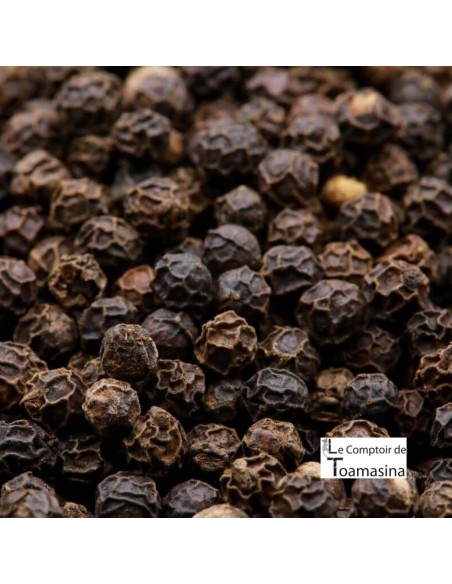
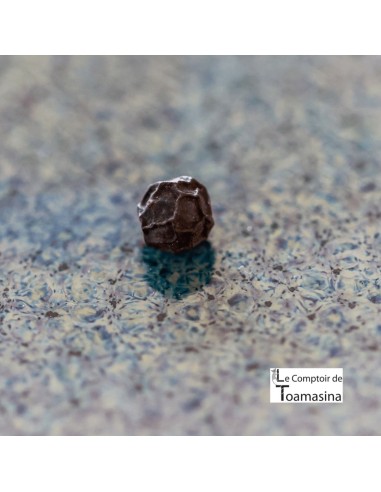
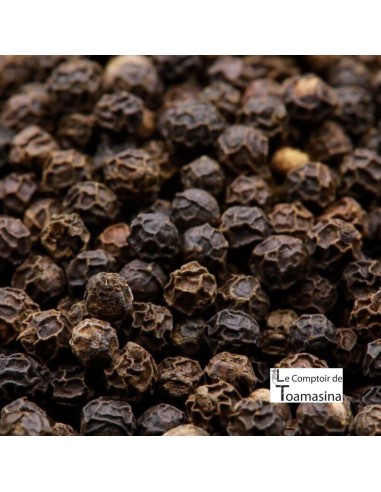
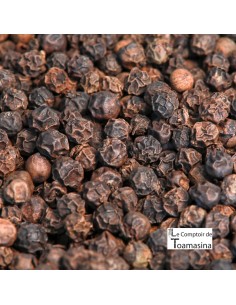
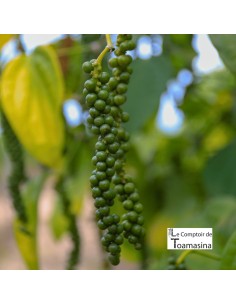
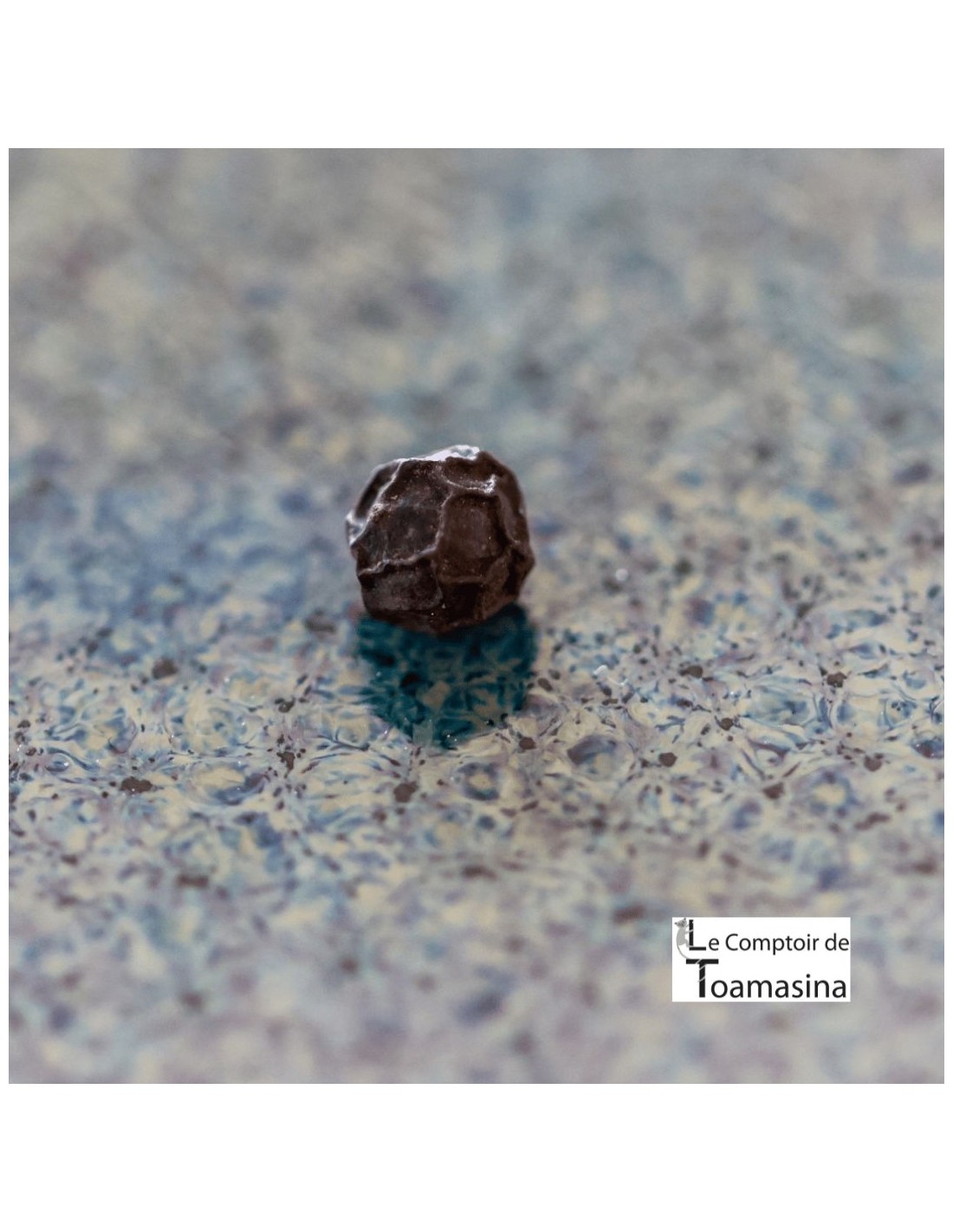
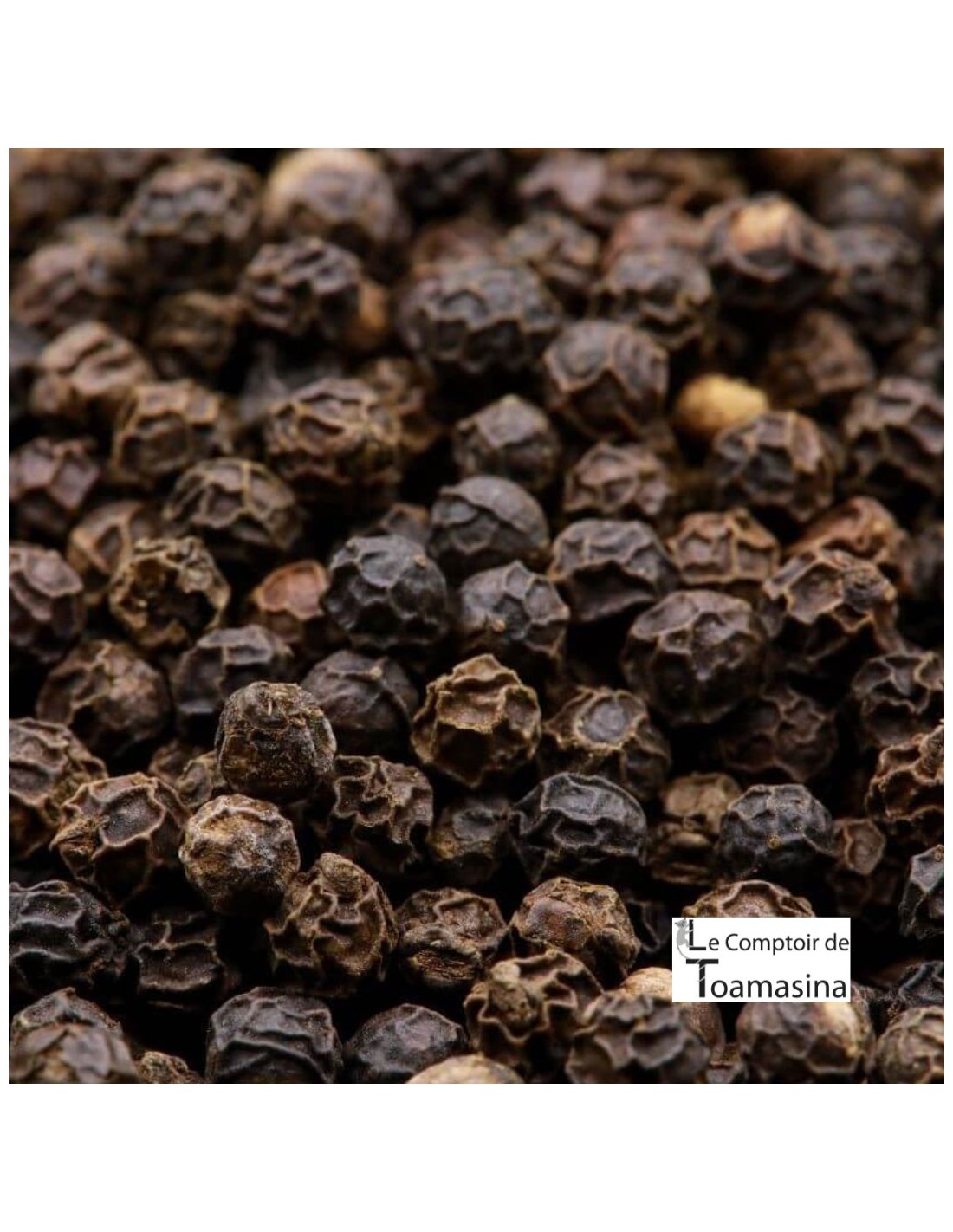
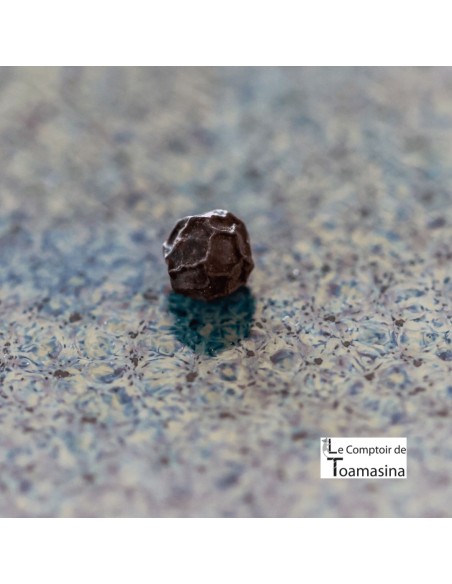
Dive into the world of flavors with Tanzanian Black Pepper, a powerful and little-known variety that enhances meats and all dishes with its unique character. If you travel to Tanzania, you can discover pepper plantations in the Tanga region (Kilindi district) as well as on the Zanzibar archipelago. At harvest, the bunches are picked, sorted, and then the pepper is sun-dried. How can you tell it is sun-dried pepper? It was in Brazil that I discovered the 3 types of drying: a sun-dried black pepper will have a beautiful wrinkled, non-smooth appearance.

I can say this pepper is rare because I have never seen a pepper with citrus notes and such an incredible heat. I like to say that the rare black pepper from Tanzania is unique. It is ideal for grilling and vegetables, offering a perfect balance between intense aromas and a lively, fresh nose. At Le Comptoir de Toamasina, we offer this Tanzanian treasure for cooking, available in selected peppercorns, presented in elegant jars or refillable pepper mills, ensuring the best price.

We do not yet sell Organic Tanzanian Black Pepper, but we are currently working on an organic pepper project from Zanzibar.

Zanzibar, the Spice Archipelago

As early as the 8th century, Persian merchants navigated the Indian Ocean and settled in Zanzibar. In 1107, the first mosque in the southern hemisphere was built on the island of Unguja. In 1498, Vasco da Gama sailed around Africa and visited Zanzibar; the Portuguese introduced the first black pepper vines there. In 1840, Sultan Seyyid Said transferred the capital of his empire from Muscat to Stone Town and made the archipelago the world's leading producer of cloves.

Under British administration from 1890, the cultivation of black pepper (Pilipili Manga) developed on a large scale to diversify agriculture. Zanzibar gained its independence in 1963 and united with Tanganyika in 1964 to form the United Republic of Tanzania. The spice sector, fully liberalized in 2000, is today driven by cooperatives of small-scale producers aiming for the premium and organic markets.

What is the taste of Tanzanian pepper

Tanzanian Black Pepper is a symphony of flavors. A journey for the senses that is unique. In my opinion, it is better than a Penja black pepper. Its nickname found on the web is Kilindi pepper. It is a piper nigrum, the most intense black pepper.

Characteristics of Tanzanian Black Pepper

  • Powerful Aroma: Tanzanian black pepper is highly concentrated in piperine, which gives it its heat. Piperine is contained in the pericarp of black pepper. Its fragrance is extraordinary and very intense.
  • Subtle Citrus Notes: on the nose, it is immediately powerful, lively, but fresh, with nuances of citrus and lemon.
  • Incredible Heat: with a rating of 9.5, it is the spiciest pepper we offer, rivaling even the famous Sarawak black pepper.

The terroirs of Tanzanian pepper

Pemba Island, the "Green Island"

It is Pemba Island that provides the bulk of the quality production from the Zanzibar archipelago. The pepper vines do not grow in monoculture: they climb along living stakes in the heart of real "spice forests," in the shade of century-old clove trees, Ceylon cinnamon trees, nutmeg trees, and coconut palms, sometimes sharing their stakes with vanilla vines. This mixed plant cover protects the soil and maintains an ideal humid greenhouse microclimate.

The Kilindi district and the Morogoro mountains

On the mainland, cultivation takes place in the Eastern Arc Mountains, straddling the Tanga (Kilindi district) and Morogoro regions, on loamy soils rich in organic matter. To prevent gullying on steep slopes, farmers practice contour farming and mulching—techniques that double moisture retention and reduce erosion.

How to Use Tanzanian Pepper in Cooking

Tanzanian Black Pepper is an essential spice for creative chefs. Tanzanian pepper is ideal for red meats. I can even tell you it's an ideal pepper for flavoring summer grills. Its black peppercorns release a pungent flavor rated at 9.5 on the heat scale, making it one of the strongest peppers available, surpassing even Sarawak black pepper.

How much Tanzanian Black Pepper to use in your recipes? Depending on the dish, between 1g and 1.5g, or about 2 twists of the mill, is a good average for daily cooking spiced up by this pepper.

It is important to note that Tanzanian Black Pepper can be used crushed or ground. To intensify its aromatic profile, it is advisable to roast it lightly before crushing. I suggest using crushed pepper for hot dishes and ground pepper for cold preparations, such as vinaigrettes or marinades. The ideal is to crush the pepper right after roasting it.

  • For a simple and tasty recipe, try grilled sea bream by sprinkling the fillets with a teaspoon of crushed Tanzanian Black Pepper. This spice adds a woody and fruity touch to the fish.
  • For meat lovers, prepare a pepper sauce by adding crushed grains of Tanzanian Black Pepper to your homemade sauce.
  • To accompany roasted potatoes, roast and crush a teaspoon of Tanzanian Black Pepper, then sprinkle over the potatoes before putting them in the oven.
  • For a perfect steak, add a twist of the mill of Tanzanian Black Pepper at the end of cooking for a touch of heat and spice.
  • And for a surprising twist, incorporate it into a chocolate fondant for an explosion of flavors, citrus, and a heat that will take your taste buds on a journey.

Chef's Secrets: Perfect Roasting of Tanzanian Black Pepper

Roasting is a key step in releasing the full bouquet of aromas from Tanzanian Black Pepper. This ancestral culinary technique reveals the richness of its flavors and intensifies its aromatic strength. You will discover it in my video above.

How to Roast Tanzanian Black Pepper

  1. Place your pan on medium heat.
  2. If preparing meat, add oil so it absorbs the pepper's aromas (otherwise, omit the oil).
  3. Scatter 3g of peppercorns in the hot pan for four people, making sure they do not touch.
  4. Stir regularly to ensure an even roast.
  5. When the peppercorns begin to pop, remove them after one to two minutes, drain them on paper towels.
  6. Then crush the pepper and sprinkle it on your dish before serving.

Chef's Tip: maintain a constant temperature in the pan for even roasting. It is the Maillard reaction that is responsible for the golden coloring and the amplification of flavors.

The impact of an organic and fair trade pepper

Social cooperatives like 1001 Organic work in ultra-short supply chains with small farms in Zanzibar and Pemba, eliminating middlemen and paying farmers fixed rates above the world market price. Profits are reinvested in solar drying infrastructure, the purchase of agronomic tools, and European organic certification.

A study by Sokoine University (2017) measured the real impact: while the yield of certified organic producers is lower, their net income is multiplied by more than 2.6 thanks to premium niche market prices—and their food security rate climbs from 30% to 43%.

How to store Tanzanian black pepper

  • Keep the peppercorn whole: never store ground pepper in advance, it loses its volatile citrus oils in a few days.
  • Light protection: store in an opaque glass jar or an airtight kraft pouch.
  • Dry and cool: humidity is the sworn enemy of whole pepper, keep away from steam from pots.
  • Shelf life: 2 to 3 years as whole peppercorns, but ideally consume within 6 to 12 months after opening for the brightest citrus notes.

Frequently Asked Questions

Where exactly does Tanzanian black pepper come from?
From two terroirs: the Zanzibar archipelago (mainly Pemba Island) and the mainland, in the Kilindi district (Tanga region) and the Morogoro mountains.
Why is Tanzanian pepper so spicy?
Producers harvest at near-maturity, which maximizes the concentration of piperine and essential oils.
What is the difference with Sarawak pepper?
Both rival in strength, but the Tanzanian stands out with its highly pronounced citrus and lemongrass notes.
How can I store this pepper as long as possible?
As whole peppercorns, in an opaque and airtight container, protected from light and humidity — up to 2-3 years.

"The treasure of the southern hemisphere — a fiery heat enveloped in notes of lime and wild cocoa."

Order My Tanzanian Black Pepper

Piper nigrum · Zanzibar & Kilindi, Tanzania · Arnaud Sion Selection

Native country
Tanzanie
BOTANICAL SPECIES
Piper nigrum
INGREDIENTS
Black Pepper from Tanzanie
AROMATIC POWER
9,5/10
ALLERGEN
Absence
POSSIBLE TRACES OF ALLERGENS
None
PACKAGING
Bottle, Mill and Bag
Preparation / Delivery
Preparation within 24 hours - Delivery within 48 hours
No reviews

Customers who bought this product also bought: