Whole Nutmeg
Whole Nutmeg
Whole Nutmeg
Whole Nutmeg
Whole Nutmeg
Whole Nutmeg
Noix de Muscade
Noix de Muscade
Whole Nutmeg
Whole Nutmeg
Whole Nutmeg
Whole Nutmeg
Whole Nutmeg
Whole Nutmeg
Noix de Muscade
Noix de Muscade

Whole Nutmeg

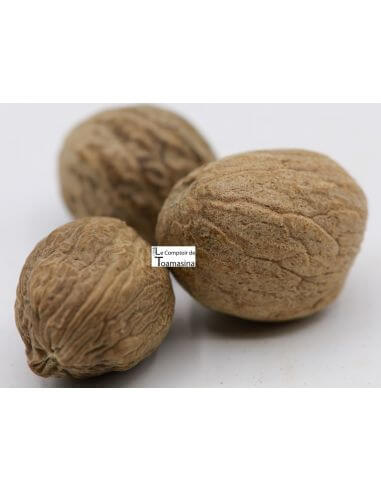
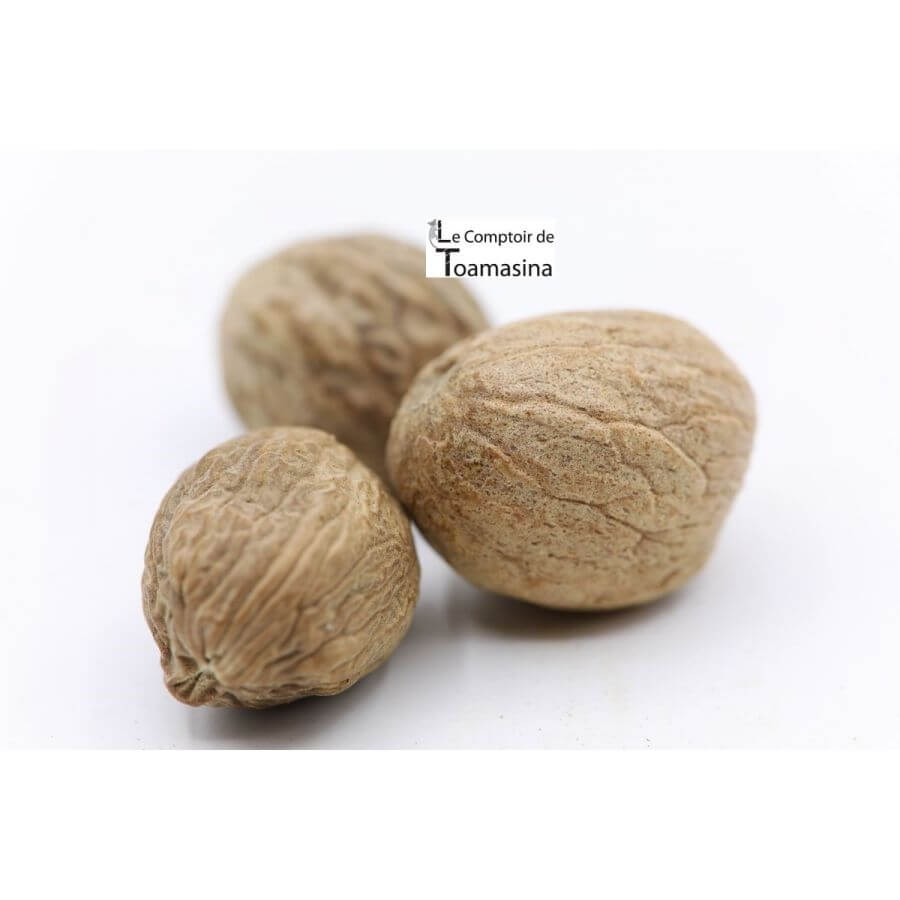
Nutmeg is used in dishes to flavor white or red meats, soups, béchamels, potato gratins, season traditional mash and dishes based on potatoes, vegetables and even certain cocktails

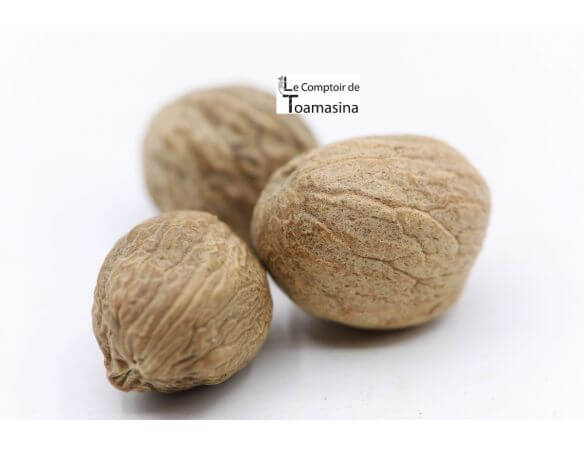
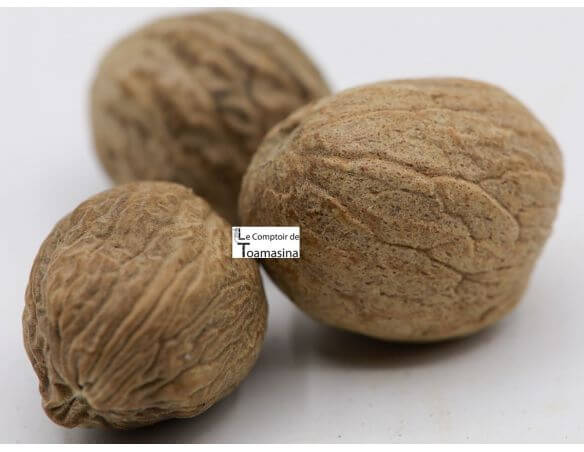
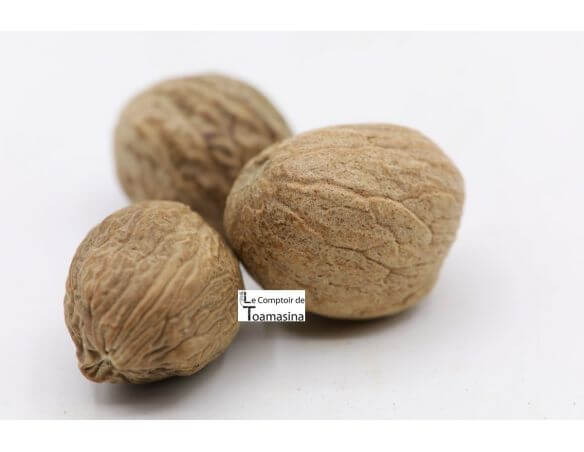
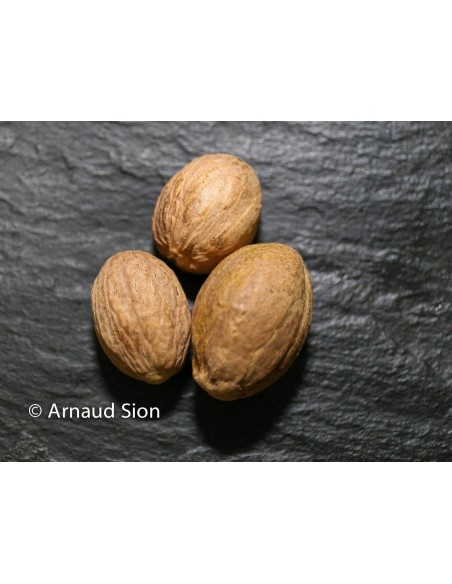
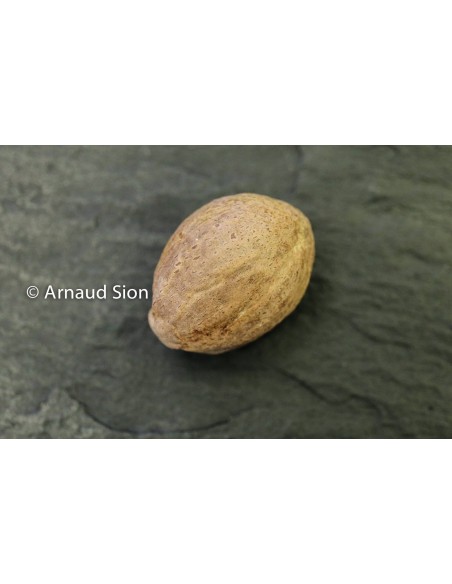
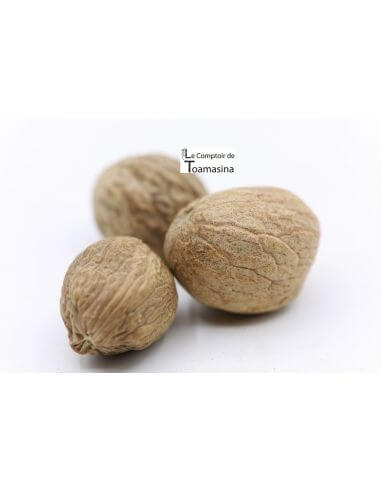
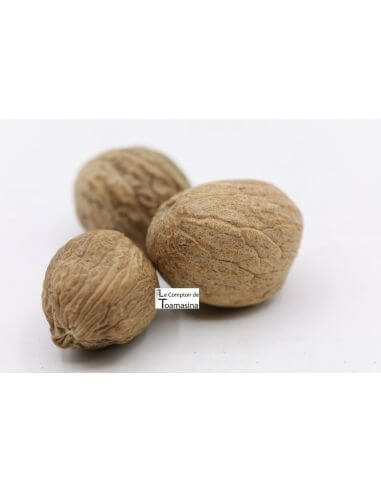
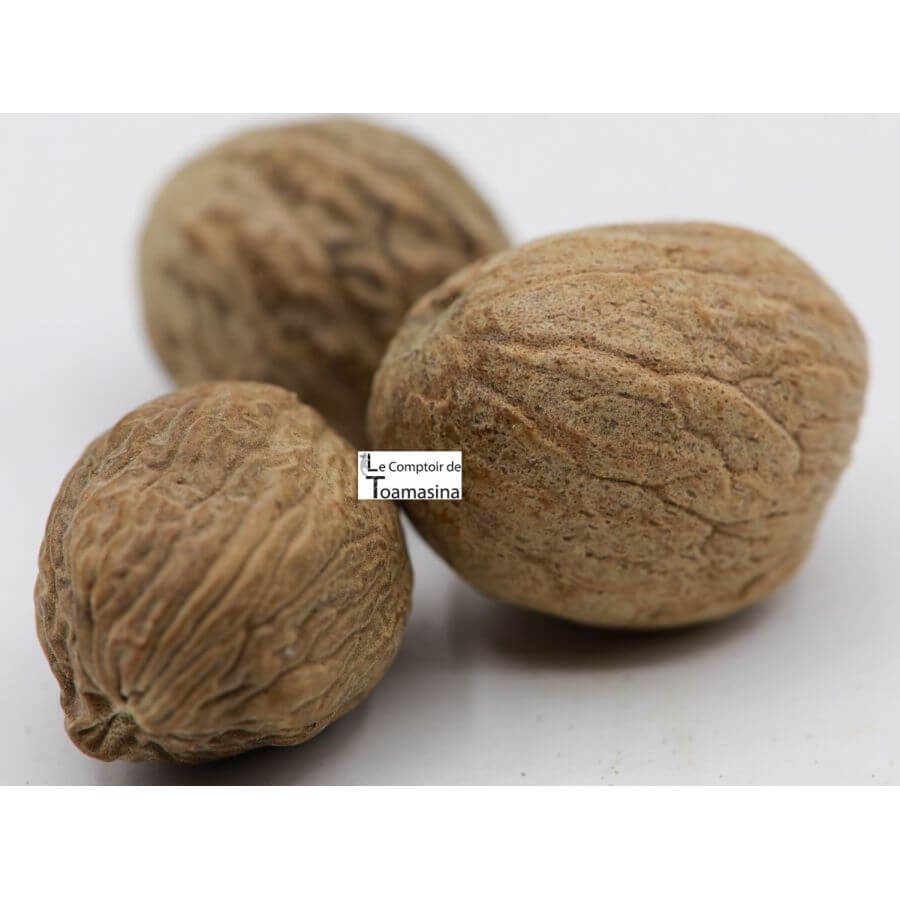
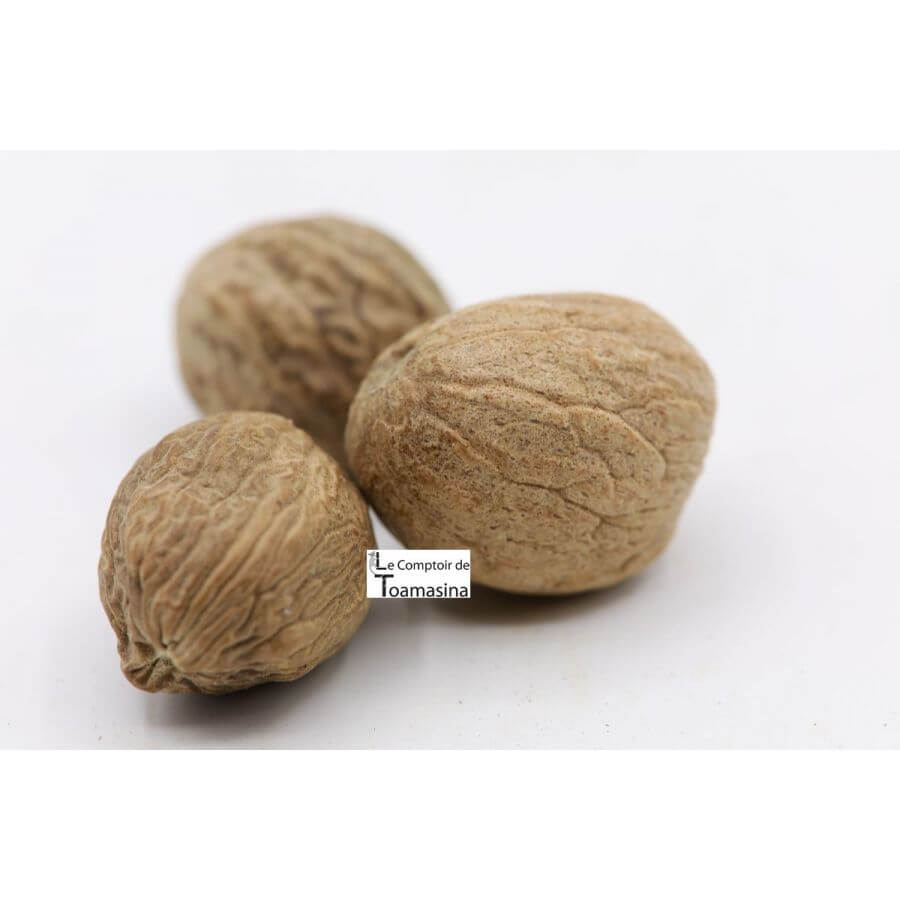
Bottle of 3 nutmeg.

  • Power of spices: 9/10
  • Main notes: The characteristic notes of nutmeg
  • Use: Gratins, potatoes, quiches and sauces
  • Origin: Brazil and Indonesia

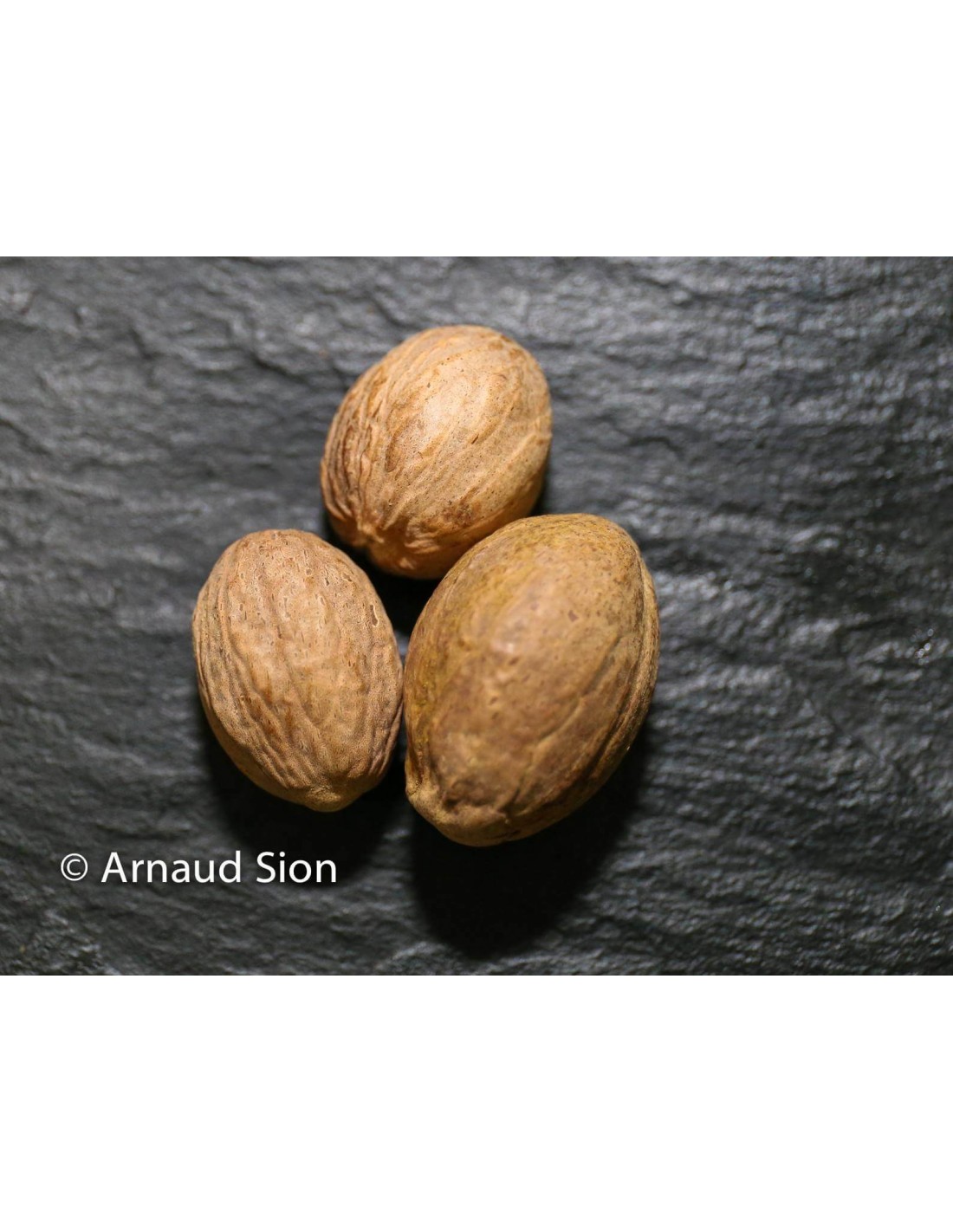
Nutmeg from the best plantations. Arnaud Sion selects for you the best nutmeg with an intense and deep flavor. This is where you will buy the best nutmeg at the best price.

NOX3
€2.50


Whole Nutmeg

"Le Comptoir de Toamasina offers you to buy nutmeg from Indonesia's Banda Islands, famous for centuries. But we also offer, a few months of the year, nutmeg from Brazil, Rio Grande do Sul and Bahia."

Indonesia & Brazil Myristica fragrans Intense Flavor

Warm Flavor

An intense aromatic profile with small sweet, bitter and resinous notes, a guarantee of a high-quality spice.

Premium Origin

Carefully selected in Indonesia and Brazil to offer you excellence throughout the year.

Essential in cooking

The secret touch for purées, potato gratins, béchamels, but also your gingerbreads.

Nutmeg is a huge classic, one of the founding spices of our Western culinary repertoire. Used freshly grated, it instantly awakens white meats, enhances winter soups, and gives a real béchamel sauce or potato gratin its full dimension.

Our nutmeg has a warm, woody and intense flavor. There are subtly sweet, slightly bitter and resinous notes on the finish — it is by this complex profile that a very high quality of nutmeg is recognized. By buying it whole rather than powdered, you ensure that these volatile essential oils are kept intact until the moment of cooking.

What is nutmeg?

Botanically speaking, nutmeg is the albumen of the seed of the fruit of the nutmeg tree (Myristica fragrans). This tropical tree of the Myristicaceae family can reach up to 15 meters in height. Today, this spice is found in tropical latitudes, from Indonesia to Brazil via India.

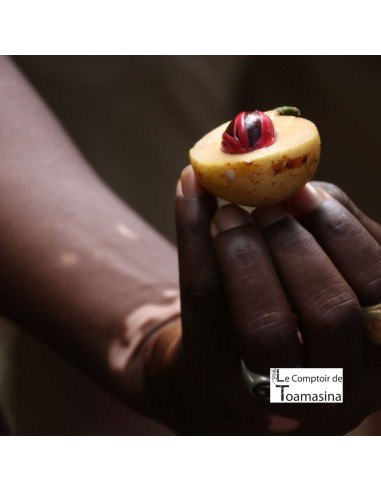
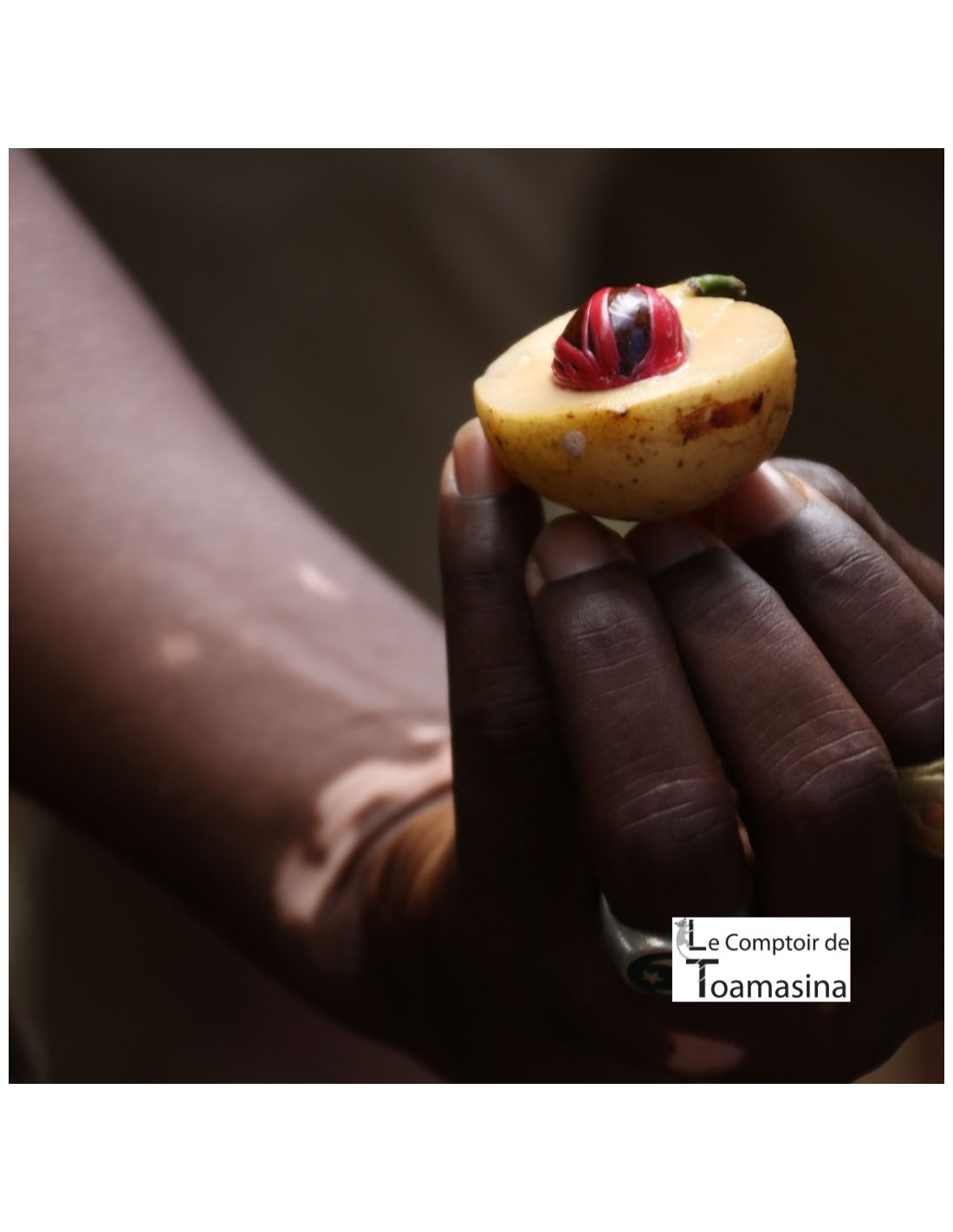
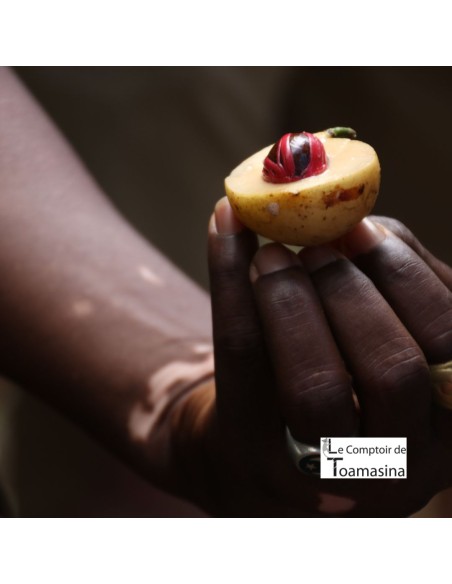
The nutmeg tree is a fascinating tree: it is the only tree in the world to produce two distinct spices from a single fruit: nutmeg (the seed inside) and mace (the bright red aril that surrounds it).

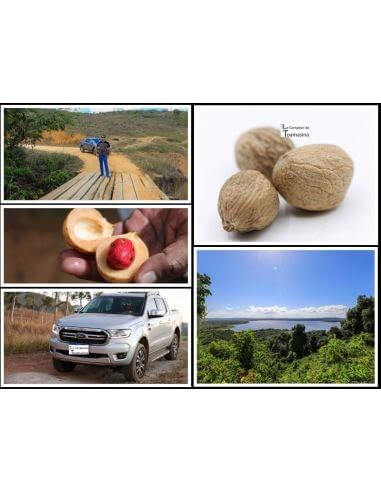
When you visit a plantation, it is the powerful ambient smell that strikes you first. There you will discover small green fruits similar to lemons. When ripe, this fruit turns yellow and spontaneously splits in two, releasing a hard shell wrapped in a bright red net: this is the mace. Once the shell is broken, the famous nut is obtained, which will have to be dried for about two months.

Mace: the unknown brother of nutmeg

The orange-red envelope that surrounds the nut is called mace (or nutmeg flower). It is a highly prized spice for its subtle and elegant taste, reminiscent of a cross between cinnamon, black pepper and nutmeg. Having become rare and often more expensive than the nut itself, mace is particularly good for fine savory dishes and fish.

The spice that was worth Manhattan

In the Middle Ages and during the Elizabethan era, nutmeg was one of the most precious spices in Europe, selling at astronomical prices for its culinary and supposedly medicinal virtues. The Dutch of the Dutch East India Company (VOC) took bloody control of the Banda Islands in the 17th century to secure an absolute global monopoly on nutmeg.

The English, for their part, clung to a tiny island in the archipelago, the island of Run. In 1667, the Treaty of Breda sealed a famous geopolitical exchange: the Dutch ceded their distant American colony of New Amsterdam — the future Manhattan (New York) — to the English, in exchange for full sovereignty over the island of Run and total exclusivity over nutmeg.

It was finally Pierre Poivre, a famous French botanist, who managed in the 18th century to steal nutmeg plants to acclimatize them in Mauritius, thus definitively breaking the Dutch monopoly.

Our expedition to Brazil

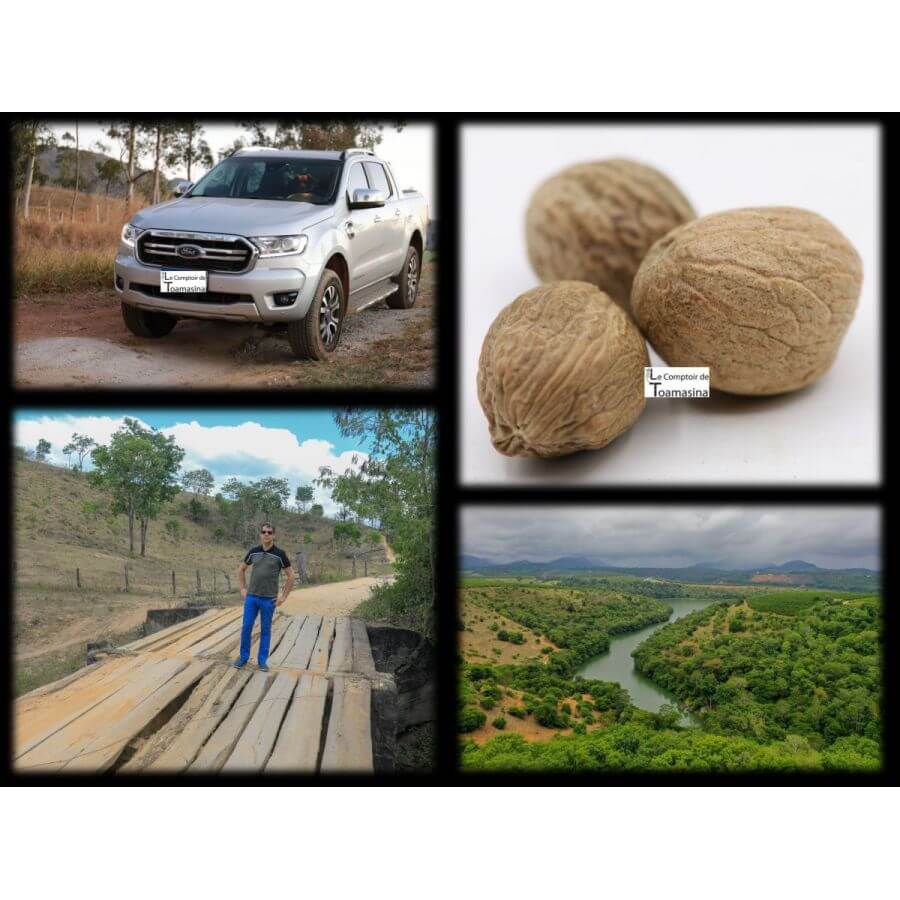
During an expedition in November 2019, we explored the nutmeg plantations in southern Bahia, Brazil. Although local production is still modest compared to the Indonesian giant, the climatic conditions and the extremely fertile soil of Bahia offer an ideal environment for this crop — a wonderful aromatic potential that we have chosen to offer you.

Technical Sheet

What You Receive

  • OriginIndonesia (Banda Islands) and Brazil (Bahia) depending on the season
  • Botanical speciesMyristica fragrans
  • FormatWhole nuts (to be grated)
  • Aromatic notesWarm, woody, sweet and slightly resinous
  • UsesBéchamel, purées, gratins, eggs, pastries
  • AllergensAbsence
  • StorageAway from light and moisture
  • LogisticsPrepared within 24h - Delivered within 48h

How to use nutmeg in cooking?

Buying whole nutmeg is the first step to successful dishes. Here are the golden rules to get the most out of it.

  • Grate at the last minute: This is essential. Grating the nut just before use guarantees maximum aromatic freshness. The essential oils of nutmeg are highly volatile once the nut is reduced to powder.
  • Dosage: A small pinch is often enough to flavor a whole dish. Nutmeg is powerful; too much risks saturating the palate and masking the other ingredients.
  • At the end of cooking: For hot dishes (like mashed potatoes), add the nutmeg off the heat or just before serving so as not to "cook" its delicate aroma.

Storage: Whole nuts keep for years without losing their strength, unlike powder which loses its flavor in a few months. Simply keep them in a glass jar, away from heat and light.

8 Essential Ideas & Recipes

Here are 8 classic and creative ways to use your freshly grated nutmeg in your everyday cooking.

1. The Perfect Béchamel Sauce

This is the king of pairings. After binding your butter, flour and milk (seasoned with salt and white pepper), off the heat, grate the equivalent of 3 or 4 back-and-forths of whole nutmeg. This transforms an ordinary sauce into a deep and warm sauce, ready for your lasagnas or croque-monsieurs.

2. The Real Gratin Dauphinois

Interleave your potato slices with a mixture of heavy cream and milk. Between each layer, add a very light pinch of salt, crushed garlic and a veil of fresh nutmeg. The heat of the oven will infuse the potato with these woody aromas.

3. Comforting Mashed Potatoes

The secret of exceptional mashed potatoes: lots of butter, a dash of hot milk, and grated nutmeg at the very last second before serving.

4. French Onion Soup Gratin

A great French classic. Add a tiny hint of nutmeg to your beef broth before pouring it over the caramelized onions. Nutmeg enhances the sweetness of the onion and pairs beautifully with melted cheese.

5. Old-fashioned Rice Pudding

Cook your short-grain rice in sweetened whole milk with a vanilla bean. Just before serving, very lightly sprinkle each ramekin with fresh nutmeg. The vanilla/milk/nutmeg combination is the height of winter comfort.

6. Homemade Gingerbread

Nutmeg is one of the pillars of the famous "four-spice" blend (along with cinnamon, cloves and ginger). Its resinous and peppery side perfectly balances the strong sugar of the honey in the dough.

7. Evening Spiced Hot Milk

Gently heat 250ml of whole milk without letting it boil. Off the heat, add half a teaspoon of honey, a pinch of ground cinnamon and a drop of vanilla extract. Grate a pinch of fresh nutmeg directly over the cup. Stir and enjoy hot to promote peaceful sleep.

8. Homemade "Pumpkin Pie Spice"

Create your own autumn blend: 1 tbsp ground cinnamon, 2 tsp ground ginger, 1/2 tsp ground cloves, and 1/2 tsp freshly grated nutmeg. Use this mix for your pumpkin pies, butternut squash soups, or your "Pumpkin Spice Lattes".

Cultivation and harvesting: the cycle of the nutmeg tree

Botany & CultivationDetails
Plant typeDioecious plant. Cross-pollination is necessary. About 10% of male trees must be kept in a plantation to fertilize the female trees that will produce the fruit.
Ideal climateHot and very humid, with an annual rainfall of 1500 to 3000 mm, well distributed and without prolonged drought.
Age of first harvestThe tree begins to produce at around 4 years old in Brazil (Bahia) and rather 6 years old in Indonesia.
Yield of a mature treeUp to 1750 fruits per year. This equates to about 6 kg of nutmeg and 4 kg of mace per tree.
Composition of the nutOn average: 33% fat (the "nutmeg butter"), 27% starch, 9% water, and 5.5% pure essential oils.

Frequently Asked Questions

Why is the whole nut superior to powder?
Nutmeg contains highly volatile essential oils. As soon as it is reduced to powder, these oils evaporate quickly. Grating the whole nut at the last minute guarantees unparalleled power and aromatic complexity.
How to store my nutmegs?
In an airtight glass jar, away from moisture, heat, and direct sunlight. In this way, they will keep for several years.
What are the best culinary pairings?
It works wonders with potatoes (mash, gratin), autumn squashes (pumpkin, butternut), milk-based sauces (béchamel), and winter fruit desserts (apples, pears).

"From the Banda Islands to Bahia — the spice that changed the history of world trade, now in your kitchen."

Order my Nutmeg

Whole nuts · Indonesia / Brazil · Comptoir Selection

Native country
Indonesia
BOTANICAL SPECIES
Myristica fragrans
INGREDIENTS
Nutmeg
AROMATIC POWER
9/10
ALLERGEN
Absence
POSSIBLE TRACES OF ALLERGENS
None
PACKAGING
Bottle
Preparation / Delivery
Preparation within 24 hours - Delivery within 48 hours
No reviews

Customers who bought this product also bought: