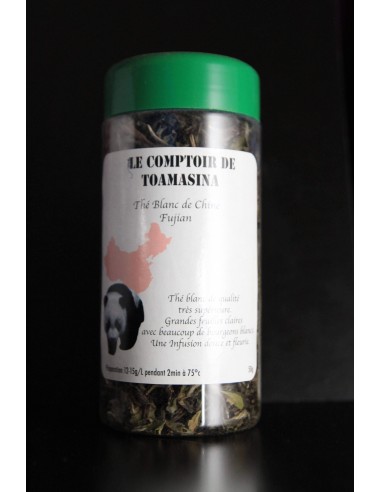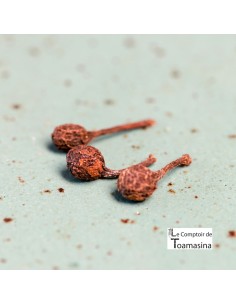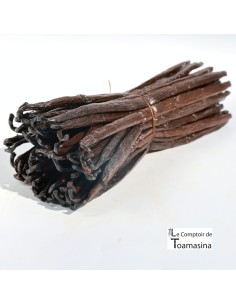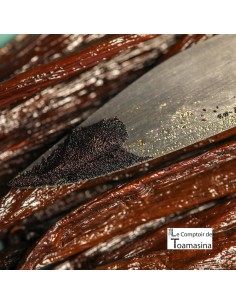
Pai Mu Tan White Tea Special China
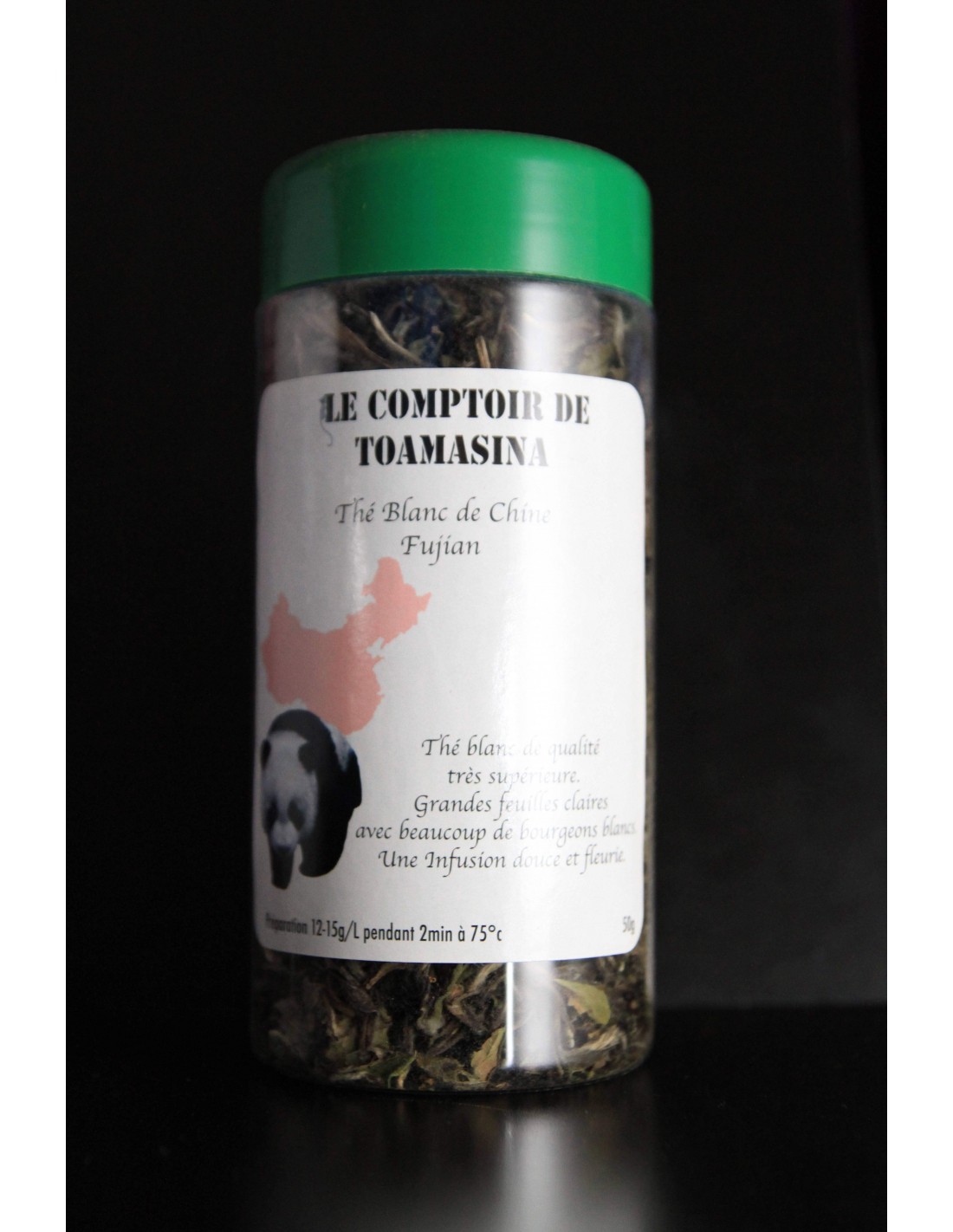
White tea from China with large clear leaves with lots of white buds. A sweet and flowery infusion. Sold in 50g box
- Tea power: 3/10
- Main notes: a flowery tea
- To savor: Afternoon and evening
Buy the highest quality Pai mu Tan bench tea at the best price at Comptoir de Toamasina. It is a precious white tea that comes from the Fujian region of China. China produces the best white tea with notes of white flowers and peaches. A sensory journey and a gourmet escape.
White Tea from China
Pai Mu Tan from Fujian
"Le Comptoir de Toamasina invites you to enter the intoxicating world of Fujian white tea, an incredible sensory experience that will transport you to the misty mountains of China."
Original Purity
Harvested in the mountains of Fujian, this tea undergoes minimalist processing to preserve its integrity.
Delicate Flavor
A soft, floral and fruity taste experience (apricot, honey), without any bitterness.
Versatility
Excellent as a pure infusion, it also enhances your infused rums, cocktails and creative pastries.
At Le Comptoir de Toamasina, we firmly believe that each cup of tea is much more than a simple drink: it is an invitation to travel, a moment of grace and discovery. Our passion embodies our commitment to unearthing the most exquisite treasures across the world. Our absolute favorite for finesse? Fujian White Tea.
Our rigorous selection and our passion for tea are reflected in each of our offers. We offer unique recipes to sublimate this treasure of nature, thus providing unforgettable tasting moments. Whether you opt for a pure infusion or prefer to add a personal touch to it, Fujian White Tea promises an extraordinary taste experience, an enchanted interlude in your daily life.
Beyond its exquisite taste, Fujian White Tea embodies an authentic commitment to tea culture. Carefully cultivated and harvested with love, each leaf is the result of ancestral know-how passed down from generation to generation. We invite you to plunge into the captivating world of Fujian White Tea, to discover its richness and subtlety, and to let yourself be carried away by the history of each leaf. Join us on this taste adventure, order now and let yourself be carried away by the very essence of true white tea from China.
Our view on this tea
White tea is somewhat the opposite of everything we build with our flavored teas: here, no aroma, no added fruit, nothing to hide. It is the most "naked" tea in our entire selection — and this is precisely what makes it a highly demanding exercise. On such an unprocessed tea, the slightest harvesting or drying defect is immediately visible in the cup.
What stands out most in this tea is the contrast between the simplicity of the process (picking, withering, drying) and the extreme requirement it demands. Unlike flavored black and green teas where it is possible to compose with fruits or spices, here we select only one thing: the raw quality of the leaf. This is why we often recommend it as the "test" tea for a curious palate — the one that allows you to understand what the original tea plant really tastes like, without any artifice.
What is White Tea?
White tea, considered one of the jewels of tea culture, is a rare variety that appeals with its delicacy and elegance. This tea is harvested in the first days of spring, just before the leaves of the tea bush fully blossom. At this stage, the young buds are still wrapped in a silky white down, which is the origin of the name "white tea".
- Cultivated with Care: growing white tea is an art that requires patience and precision. Tea plants are often grown at high altitudes, where the cool, misty climate creates ideal conditions for bud development. Growers wait for the perfect time to harvest, which occurs only once or twice a year.
- Manual and Selective Harvest: harvesting white tea is a meticulous practice, carried out exclusively by hand. Only the youngest buds and nascent leaves are selected, guaranteeing superior purity.
- A Minimalist Manufacturing Process: after picking, the leaves are delicately arranged to wither naturally in the sun or in the shade. This withering, which can last up to 72 hours, allows a slight oxidation which will subtly influence the aromatic profile. Unlike other teas, white tea is neither rolled nor broken, thus preserving its integrity and its original shape.
- Precise Drying: the last step is drying. The leaves are carefully dried to stop any further oxidation. The result is a tea of exceptional purity, with floral notes and a delicately honeyed taste.
White tea is therefore much more than a simple infusion; it is the product of ancestral know-how. Its preparation reveals a world of subtle flavors and nuances, inviting a unique and refined sensory experience.
Fujian, historic birthplace of white tea
Fujian province, on the southeastern coast of China, facing Taiwan, is the historic birthplace of white tea — and remains today the reference region for its production, notably around the counties of Fuding and Zhenghe. White tea was born there from a specific variety of tea tree, the Da Bai ("the Great White"), whose thick, long leaves produce the large, downy buds characteristic of this tea.
It is these two great terroirs that give rise to the most famous white teas: the Bai Hao Yin Zhen ("Silver Needles"), consisting exclusively of buds and considered the top of the hierarchy, and the Pai Mu Tan ("White Peony"), our tea, harvested with the terminal bud and the very first leaves. The cool, misty climate of the Fujian mountains is what gives these buds their silvery down and their characteristic sweetness.
Comparative Sensory Analysis
Pai Mu Tan vs Sencha vs Chun Mee
White tea versus plain green teas in the range
The sweetest and least processed: with its extreme delicacy, Pai Mu Tan has almost no astringency, unlike green teas which retain a true vegetal and herbaceous essence. It is the tea closest to the down of the bud itself — almost more a floral and honeyed caress than a classic infusion.
Pai Mu Tan · Sencha · Chun Mee
The Olfactory Pyramid of Pai Mu Tan
How the aromas unfold, from the first impression to the finish
Technical Sheet
What You Receive
- Country of originChina (Fujian)
- Botanical speciesCamellia Sinensis
- IngredientsPai Mu Tan Special White Tea from China (Plain)
- Main NotesA flowery, very sweet tea with notes of apricot and honey
- To be enjoyedThroughout the day, even in the evening
- AllergenAbsence
- Packaging50g Tin / 160g Pouch
- LogisticsPrepared within 24h - Delivered within 48h
What does white tea taste like?
White tea is famous for its delicacy on the palate and its subtle sweetness. Unlike green tea, which can taste herbaceous, white tea offers a sweeter taste experience, often described as less astringent and very floral, with woody and sweet notes. Its flavor palette reveals subtle nuances of fruits and flowers, such as apricot, honeydew, grape, lavender or lychee, which contribute to its highly sophisticated aromatic profile.
How to properly prepare Fujian White Tea
Immerse yourself in the ancestral ritual of brewing Fujian white tea, a jewel of Chinese culture. Our guide accompanies you for an unforgettable sensory experience.
- Ideal water temperature: 70°C to 75°C — this is the crucial point! Water that is too hot or boiling (100°C) will literally "cook" the fragile buds and develop a bitterness that will destroy all the delicacy of the tea.
- Recommended infusion time: 7 to 10 minutes — because its leaves have not been oxidized or rolled, white tea takes much longer to release its subtle aromas into the water. Do not hesitate to be patient.
- Quantity of tea: about 6g per liter, i.e. 2 large tablespoons for a liter of water, or 1 large teaspoon for a 250ml cup. Since Pai Mu Tan leaves are very voluminous, do not hesitate to be generous in volume.
- Service: it is traditionally enjoyed plain. However, a small amount of honey can be added for those who wish to emphasize its natural honeyed notes.
5 Recipes & Mixology with White Tea
The extreme delicacy of Pai Mu Tan white tea allows it to accompany refined and subtle creations.
1. Pai Mu Tan White Tea Infused Rum (Rhum Arrangé)
Ingredients
- 500 ml white agricultural rum
- 2 large tbsp of loose Pai Mu Tan white tea
- 100 g liquid cane sugar
- The zest of an untreated lime
Preparation
- In a very clean glass jar, mix the white rum and the voluminous white tea leaves.
- Add the cane sugar and lime zests. Close tightly.
- Let steep for 1 week to 10 days in a cool, dark place (white tea infuses quickly in alcohol).
- Strain the mixture through a fine sieve to remove the leaves. Serve chilled. The white tea / lime pairing is incredibly refreshing!
2. "Moonlight" Cocktail
Ingredients
- 60 ml white tea infused rum (see previous recipe) or classic white rum
- 30 cl strongly brewed and very well cooled white tea
- 15 ml fresh lime juice
- 15 ml cane syrup
- 1 egg white (for the froth) and ice cubes
Preparation
- In a shaker without ice (Dry Shake), add the rum, cold tea, lime, syrup and egg white. Shake vigorously to froth the egg.
- Open the shaker, add a good handful of ice cubes and shake again for 15 seconds.
- Strain into an elegant coupe. The white froth will remind you of the tea's down!
3. Strawberry and White Tea Pastry Cream Tartlets
Ingredients
- 1 roll of shortcrust pastry, 500 g fresh strawberries
- 500 ml whole milk, 4 egg yolks, 100 g sugar, 40 g cornstarch
- 3 tbsp Pai Mu Tan white tea
Preparation
- Prepare and blind bake your tartlet shells (15 min at 180°C).
- Heat the milk. Off the heat, plunge the white tea in and let steep covered for 15 minutes. Filter the milk.
- Whisk the egg yolks with the sugar and cornstarch. Pour the hot infused milk over the mixture. Return to the heat and thicken. Let cool.
- Fill the tart shells with this floral cream and arrange the fresh strawberries on top.
4. White Tea Plant Vinaigrette
Ingredients
- 15 cl brewed and cooled white tea
- 4 tbsp mild olive oil
- 1 tbsp rice or cider vinegar
- 1 tsp mild honey
- Fleur de sel and ground white pepper
Preparation
- In a bowl, vigorously mix the honey and rice vinegar.
- Add the olive oil while emulsifying, then loosen the sauce by incorporating the cold white tea.
- Salt and pepper. This very floral and light vinaigrette is absolutely divine on a spring raw vegetable salad, cucumber or scallop tartare.
5. White Tea Infused Grilled Pineapple Chicken
Ingredients
- 4 chicken breasts, 4 slices of fresh pineapple
- 15 cl brewed (strong) and cooled white tea
- 2 tbsp soy sauce, 1 tbsp honey
- 1 tsp freshly grated ginger
Preparation
- In a large dish, mix the white tea, soy sauce, honey and ginger to create a liquid marinade.
- Submerge the chicken breasts and let marinate for 1 hour in the fridge. The white tea will tenderize the meat while giving it honeyed notes.
- Grill the chicken on the barbecue or in a pan. At the end of cooking, brown the pineapple slices. Serve together.
Extend the Experience with Le Comptoir
Discover a multitude of ways to sublimate your tea! Our Comptoir shares its passion through books dedicated to spices and tea, but also numerous exclusive recipes available on our ecommerce blog. To go further, join our community on our YouTube channel, where tutorials, tasting tips, and immersive journeys await you.
Frequently Asked Questions
Why is this tea called "white tea"?
What is Pai Mu Tan?
Why should I steep it much longer than a black or green tea?
Can I drink this tea in the evening?
"The purest tea of our selection — the white down of the misty mountains of Fujian, without artifice, for a cup of absolute sweetness."
Order my Fujian White TeaFujian Pai Mu Tan · Floral and Honey Notes · Comptoir Selection
- Native country
- China
- BOTANICAL SPECIES
- Camellia Sinensis
- INGREDIENTS
- Pai Mu Tan Special White Tea from China
- AROMATIC POWER
- 03/10
- ALLERGEN
- Absence
- POSSIBLE TRACES OF ALLERGENS
- None
- PACKAGING
- Bag
- Preparation / Delivery
- Preparation within 24 hours - Delivery within 48 hours