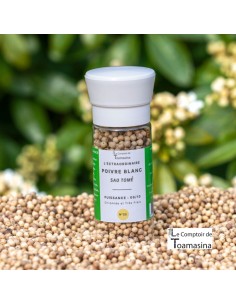
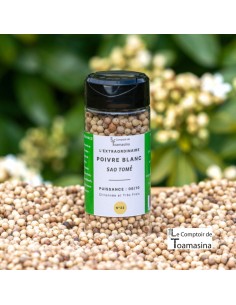
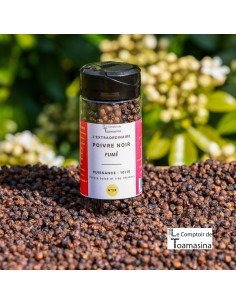
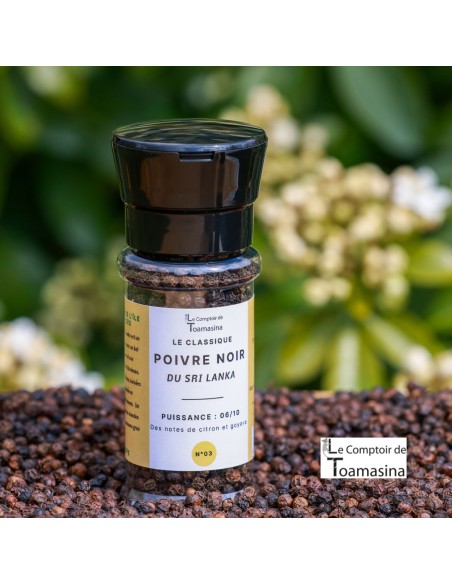
Ceylon Black Pepper - Grinder
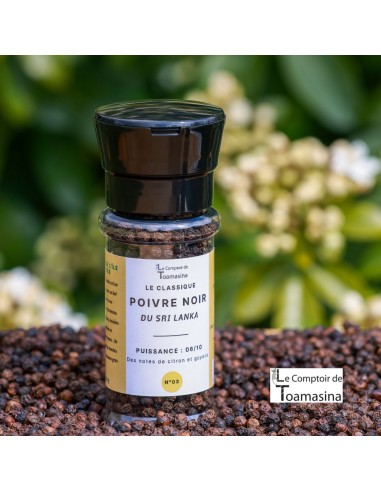
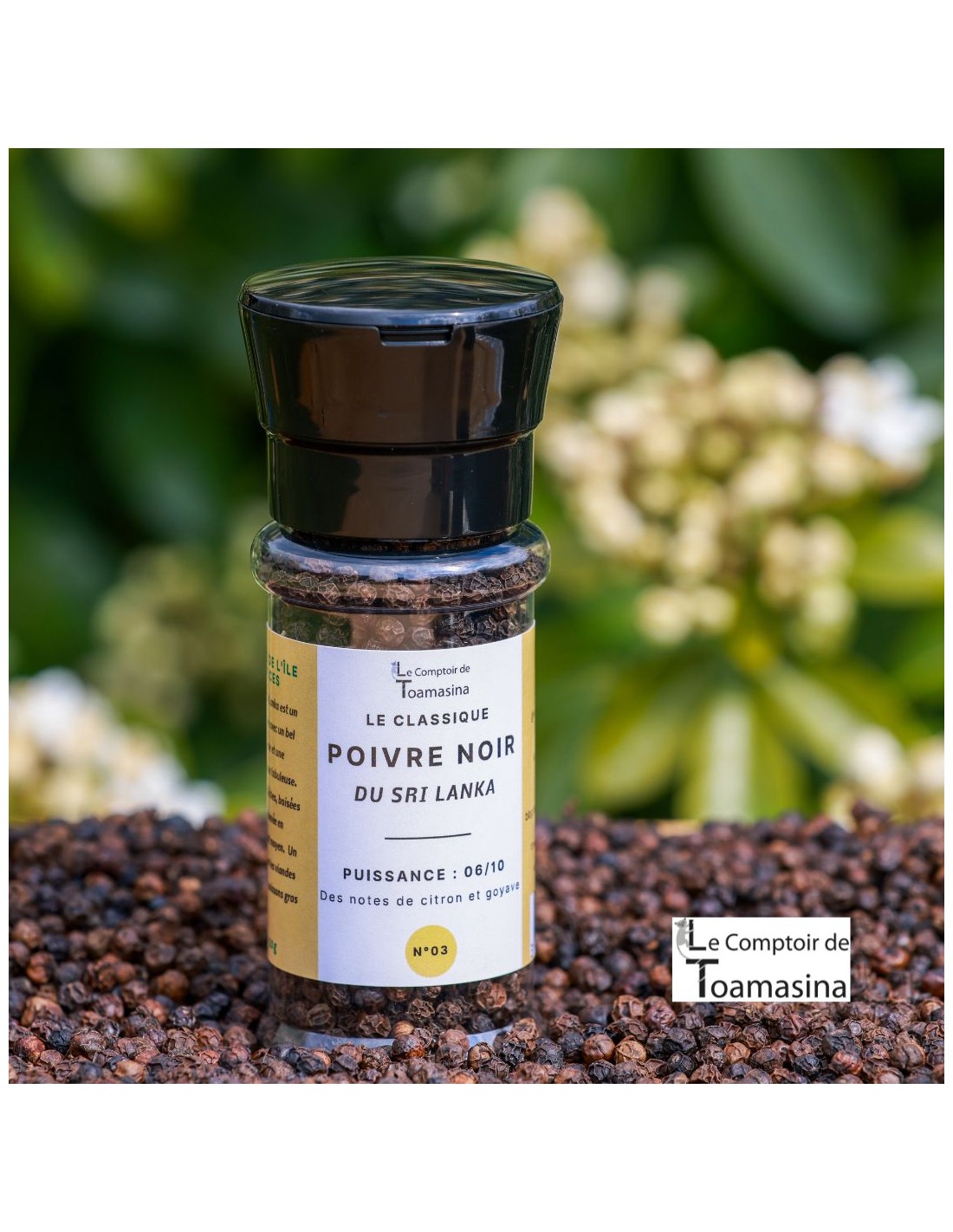
Sri Lankan Black Pepper is an extraordinary pepper with beautiful balance, precision and fabulous aromatic power. It offers fresh, woody notes with a lemony mouthfeel and medium spiciness. An ideal black pepper for white and red meats, oily fish and vegetables.
- Pepper strength: 6/10
- Main notes: Lemon and ripe guava.
- Use: A pepper for red meats and grilled meats.
- Origin: Sri Lanka ex Ceylon island
Comptoir de Toamasina offers Ceylon black pepper in refillable pepper mills. Find our refills for your pepper mill and enjoy an incredible gourmet experience. Discover our rare peppers.
Ceylon Black Pepper
in a Mill (Sri Lanka)
"Sri Lankan black pepper in grains is one of the best peppers in the world. It offers notes of lemon and ripe guava with a particularly sharp taste."
Intense Aroma
Renowned as the most aromatic of peppers, with fruity notes of lemon and guava.
Unique Grain
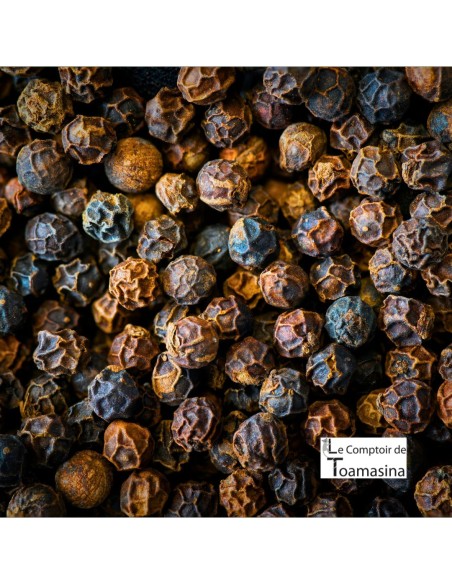
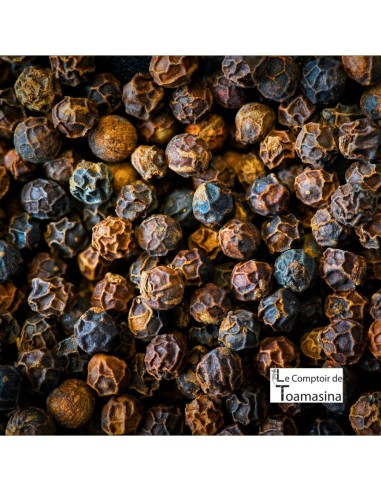
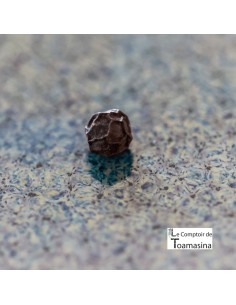
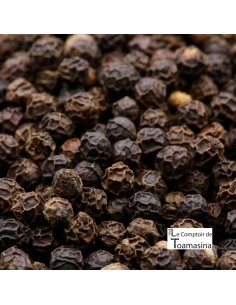
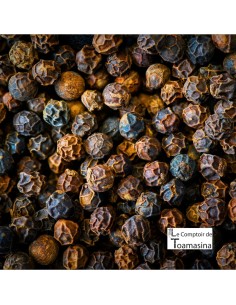
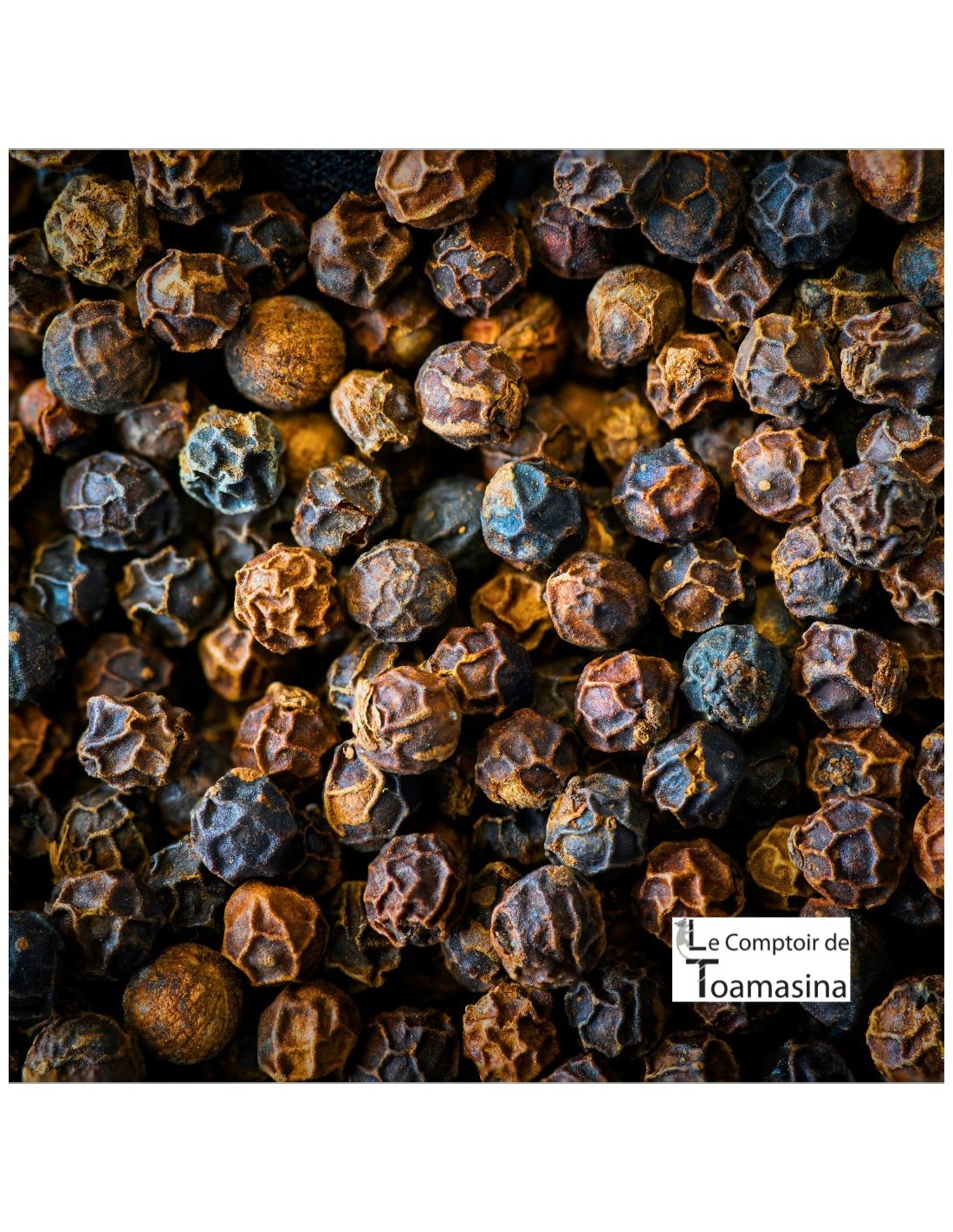
A beautiful wrinkled texture (deep black) evidencing traditional sun drying at maturity.
Versatility
Enhances red meats as well as bold desserts thanks to its delicate spiciness.
Ceylon Black Pepper is harvested grain by grain, and the producer then prepares the pepper in an artisanal way.
This jewel of spices, carefully harvested on the island formerly known as Ceylon, is an invitation to an extraordinary sensory journey. Le Comptoir de Toamasina, your privileged stopover for exceptional spices, is proud to present this Sri Lankan black pepper. Each grain contains a story, that of a generous land and ancestral know-how passed down from generation to generation.
Sri Lankan black pepper is distinguished by its subtle aroma and fruity notes, making it one of the most prized varieties in the world. Its delicate, almost intoxicating scent is the result of an ideal equatorial climate, rich soils, and abundant rainfall, creating perfect conditions for its cultivation. The cultivation methods are incredible; you will discover a Ceylon black pepper with a beautiful wrinkled appearance. When the pericarp is wrinkled, it means it has undergone traditional drying.
Arnaud, the creator of Le Comptoir de Toamasina, was trained in the state of Espirito Santo and in Madagascar in the cultivation and drying of peppercorns. The berries are harvested at different stages of maturity, then sun-dried until they take on this characteristic black hue.
What you will see in this video
Arnaud presents the Sri Lankan black pepper in a mill and its notes of lemon and guava.
Comparative Sensory Analysis
Sri Lanka vs Malabar vs Madagascar
Three major global terroirs of black pepper
The piperine champion: while mainstream black peppers (India, Vietnam) display standard piperine levels between 2.5% and 3.5%, Sri Lankan black pepper has a concentration 2 to 6 times higher, regularly between 6.0% and 7.0%. Its beta-caryophyllene is the dominant sesquiterpene that structures its woody profile, complemented by limonene for zesty freshness.
Sri Lanka · Malabar · Madagascar
Technical Sheet
What You Receive
- Country of OriginSri Lanka (Ceylon)
- Botanical SpeciesPiper nigrum
- IngredientsCeylon Black Pepper
- Aromatic Power6/10
- AllergenNone
- Possible TracesNone
- PackagingRefillable Mill
- LogisticsPrepared within 24h - Delivered within 48h
Buying and Selling Sri Lankan Black Peppercorns
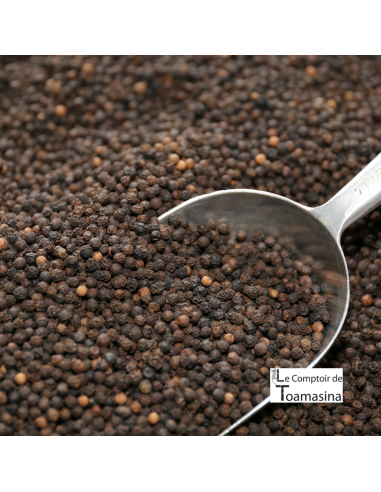
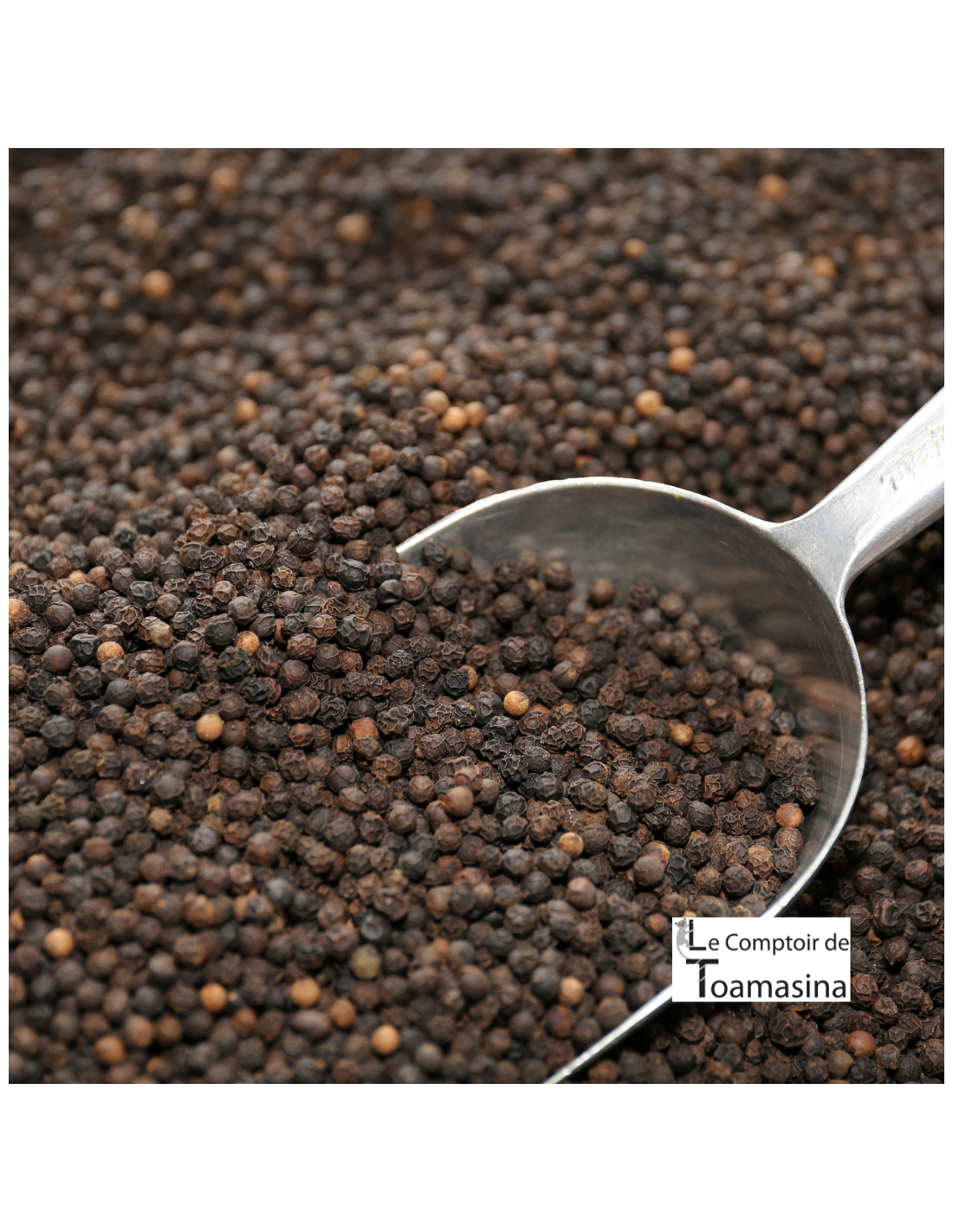
Sri Lankan black pepper, known for its superior quality, yields between 500g and 550g per liter depending on the harvest. It is a must-have for chefs, gourmets, and lovers of Asian flavors. Our shop, an expert in fine spices, offers this exceptional pepper in various packaging options tailored to all needs, with a commitment to quality.
- By the kilo: available at the price of 45 euros per kilo, offering excellent value for money, specially designed for catering professionals.
- Bottle & Mill: for everyday use or a touch of elegance.
- Gift sets: find it in our world pepper box set.
By choosing our Sri Lankan black pepper, you are guaranteed to receive the highest quality peppercorns, featuring a characteristic wrinkled texture.
From Miris to Gammiris: The Linguistic History of Pepper
In Sinhalese, pepper is called Gammiris ("village pepper"), and in Tamil, Milagu. But this name hides a surprising linguistic history: originally, the Sinhalese word Miris exclusively referred to black pepper, the only source of thermal heat in the island's traditional diet. In the 15th century, the Portuguese introduced the South American red chili, initially called Rata-miris ("foreign pepper"). The chili took hold so quickly due to its ease of cultivation that it eventually claimed the word Miris entirely for itself—black pepper was then relegated to "Gam-miris," a name attesting to its historical presence in every family garden.
The Mirisawetiya stupa, one of the most sacred monuments in Anuradhapura (the ancient capital of Sri Lanka), literally means "pepper mound." Legend has it that the Buddhist King Dutugemunu, who always offered the first portion of his meals to the monks, one day ate a dish seasoned with black pepper without making this ritual offering—overcome with remorse, he had this gigantic stupa erected in penance.
What is Ceylon black pepper - Discover the history of a unique pepper
Ceylon black pepper, now known as Sri Lankan black pepper, is a renowned spice that has spanned centuries, leaving an indelible mark on global cuisine. Since Antiquity, black pepper has been the most coveted spice in the world. Ceylon black pepper, in particular, so captivated explorers that they risked their lives to open new maritime trade routes. Its value was such that it served as currency.
Pliny the Elder already complained that the Roman Empire was suffering a massive drain of its gold reserves to India and Ceylon to satisfy the Roman patricians' frenzy for pepper. It was the desire to break the Arab monopoly on trade routes and gain direct access to the black pepper and cinnamon vines of Ceylon that drove Christopher Columbus, Vasco da Gama, and Magellan to set sail, initiating the Age of Discovery.
What Does Ceylon Black Pepper Taste Like?
Ceylon Black Pepper offers a sharp taste that awakens the taste buds. What makes it truly special are its main notes of lemon and ripe guava. These fruity flavors add an extra dimension to its flavor profile. In addition to its distinctive taste, it possesses a bright, fresh, and slightly resinous aroma.
Key Production Regions
Sri Lankan black pepper is mainly grown in the wet and intermediate regions of the island, from the sea up to 1,200-1,500 meters in altitude: Matale, Kandy, Kegalle, Kurunegala, Ratnapura, Badulla, and Moneragala. It is predominantly cultivated by small family farmers (plots of less than 8 hectares) in mixed crops within forest gardens, intercropped with tea or coconut trees, or in home gardens.
Varieties Cultivated in Sri Lanka
Just like vanilla and the pepper vine in Madagascar, every Sri Lankan terroir has its local lineages. It was while traveling in Asia, during a pepper trade show, that I discovered these varieties selected by the island's producers:
Selection of Local Lineages
- IW5, MB12, MW18, MW21: high-performing local lineages, grouped with others in the standardized composite blend PNM 1.
- GK49, KW30, KW31, KW33: regional varieties selected for their adaptation to the micro-terroirs of Kandy and Kegalle.
- TG7, DM7: complementary lineages from the local panel.
- Panniyur-1 (India) and Kuching (Malaysia): imported cultivars present since the 1970s, grown alongside endemic varieties.
HOW TO USE CEYLON BLACK PEPPER
Ceylon Black Pepper is an essential kitchen spice. Here are some tips inspired by Chef Arnaud to use it optimally:
- Quantity: 1 to 2 grams (about 3 twists of the mill) are sufficient for everyday use.
- Hot Dishes: sprinkle a teaspoon of crushed pepper on sea bream fillets or a steak at the end of cooking.
- Sauces & Sides: incorporate it coarsely crushed into a pepper sauce or over roasted potatoes.
- Cold Dishes: use ground pepper for vinaigrettes and salads.
- Desserts: dare a pinch in a chocolate fondant for an explosion of flavors.
WHY AND HOW TO ROAST CEYLON BLACK PEPPER?
Roasting Ceylon Black Pepper is a crucial step to revealing the full richness of its aromas (Maillard reaction).
- Preparation: heat a pan over medium heat (with or without oil).
- Roasting: add 3g of pepper. Stir regularly. When the peppercorns pop like popcorn, remove from the heat.
- Crushing: let cool and crush to release the intense aroma.
Three Iconic Sri Lankan Recipes
- Spicy Sri Lankan Black Pork Curry: the island's most famous pork dish. Its black color and intense flavors come from combining diced pork marinated in Garcinia Cambogia (Goraka) or vinegar, freshly and generously ground black pepper, and Kalu Kudu (a very darkly roasted, almost chocolate-like Ceylon curry powder).
- Black Pepper Beef Curry: tender pieces of beef simmered in a creamy coconut milk sauce where ground black pepper provides the dominant note, balanced by coriander, cumin, and vinegar.
- Black Pepper Chicken Curry: traditionally cooked in a clay pot to concentrate the aromas. The spices are roasted dark brown, and a massive amount of freshly ground pepper is added at the very end of cooking just before putting the lid on, to trap the volatile essential oils.
Master Culinary Pairings
- Warm Spices: Ceylon cinnamon, green cardamom, clove, cumin, turmeric—the foundation of traditional curry powders like Kalu Kudu.
- Herbs & Citrus: curry leaves, lemongrass, lime juice and zest, fresh ginger—to awaken the natural citrus notes of the pepper.
- Rich Proteins: pork, beef, duck, game, as well as the famous Sri Lankan mud crab (Pepper Crab).
- Vegetables & Roots: grilled eggplants, roasted potatoes, caramelized onions.
- Creamy Products: coconut milk, fresh creams, cheese sauces.
Frequently Asked Questions
Why is Sri Lankan black pepper so spicy?
Where does the name "Gammiris" come from?
What are the production regions in Sri Lanka?
How do you roast Ceylon black pepper?
"The world champion of piperine—lemon, ripe guava, and a sharp heat that drove Vasco da Gama and Magellan to sail the seas."
Order My Sri Lankan Black PepperPiper nigrum · Sri Lanka (Ceylon) · Arnaud Sion Selection
- Native country
- Ceylon
- BOTANICAL SPECIES
- Piper Nigrum
- INGREDIENTS
- Ceylon Black Pepper
- AROMATIC POWER
- 07/10
- ALLERGEN
- None
- POSSIBLE TRACES OF ALLERGENS
- None
- PACKAGING
- Grinder
- Preparation / Delivery
- Preparation within 24 hours - Delivery within 48 hours