Chun Mee Green Tea
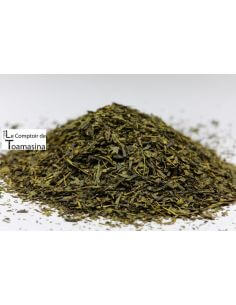
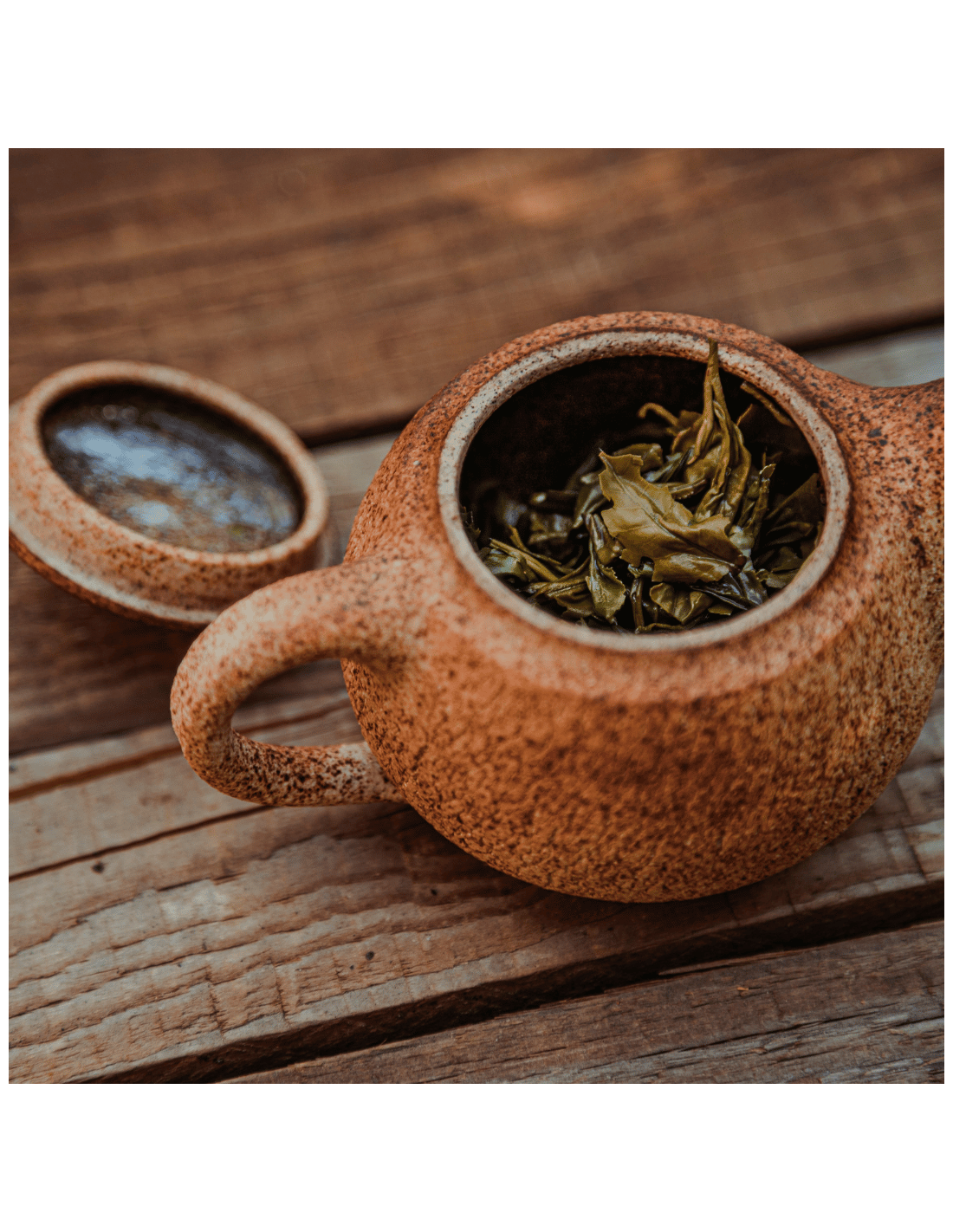
Discover chun mee green tea , an excellent tea with small twisted leaves and a flowery and deliciously refined taste .
Immerse yourself in the world of chun mee green tea , a slightly harsh tea with a hint of bitterness, grown in China.
Succumb to the charm of chun mee tea, a delicate beverage with floral notes and a sweet aroma.
Chun mee green tea , also known as "old man's eyebrow" , transports you to the landscapes of Jiangsu province, China.
Discover the benefits and unique flavor of chun mee green tea, a pure delight for tea lovers.
- Green tea potency: 8/10
- Main notes: harsh and floral
- To savor: Morning and afternoon
At Comptoir de Toamasina purchased your Chun Mee green tea at the best value for money. Discover our packaging in 80g bags and our packaging by the kilo.
Chun Mee Green Tea
珍眉 · The Precious Eyebrow
"Chun Mee green tea, also known as 'old man's eyebrow' due to the shape of its curved leaves, is a Chinese tea with a magnificent aromatic profile."
Precious Eyebrows
Zhen Mei (珍眉): the twisted and curved shape of the leaves recalls the fine curve of eyebrows painted on Chinese porcelain.
Aromatic Profile
A subtle and delicate flavor, slightly tart and toasted, with notes of plum. Ideal for the famous green tea with mint.
Exceptional Tea
Selected by Arnaud for its remarkable quality. A green tea packaged with love, to be consumed within 6 months to preserve its freshness.
Discover Chun Mee green tea, an excellent tea with small twisted leaves and a floral, deliciously refined taste. Immerse yourself in the world of Chun Mee green tea, a slightly tart tea with a hint of bitterness, grown in China. Succumb to the charm of this delicate beverage with floral notes and a sweet aroma, which transports you to the landscapes of Jiangxi province, its historical birthplace.
Its subtle and delicate flavor makes it one of the most appreciated green teas worldwide. Le Comptoir de Toamasina specializes in exceptional teas and offers an exceptional selection of Chun Mee green tea. When buying Chun Mee green tea, you should generally buy the amount you can drink in 6 months—because the "precious eyebrow", as we like to call it, is very fragile.
Arnaud carefully selects the Chun Mee tea leaves and ensures their rich aromatic profile. We use this tea to make the famous mint green tea, as it is an excellent tea for flavored preparations. Its small leaves will make your cup bloom—you will discover a tea very different from Sencha green tea. You can enjoy it hot or cold, integrate it into pastry recipes, ice creams, or even cocktails: its subtle flavor pairs perfectly with other ingredients and brings a touch of originality to your culinary creations.
What you will see in this video
Arnaud introduces you to the details of Chun Mee green tea and how to properly infuse it.
Comparative Sensory Analysis
Chun Mee vs Sencha vs Gunpowder
Three great green teas, three manufacturing schools
Three schools: Japanese Sencha is steamed (40 to 80 seconds), which preserves chlorophyll and gives its umami, marine, and herbaceous profile. Chun Mee is pan-fired in a wok: the very green compounds give way to toasted pyrazines, the sour plum note, and a structured, refreshing astringency. Gunpowder, rolled into tight pellets, is more powerful, metallic, and smoky—but less delicate and less fruity than our precious eyebrow.
Chun Mee · Sencha · Gunpowder
The Olfactory Pyramid of Chun Mee
How the aromas unfold in your cup, from the first impression to the finish
Technical Sheet
What You Receive
- Country of OriginChina
- Botanical SpeciesCamellia Sinensis
- IngredientsChun Mee Green Tea
- Intensity & BitternessMild/Moderate (8/10 in aromatic presence)
- Main NotesTart and floral
- To be enjoyedMorning and afternoon
- AllergenNone
- Possible TracesNone
- PackagingPouch (80g, 160g, 480g) or Tin
- LogisticsPrepared within 24h - Delivered within 48h
Chun Mee — What is Chun Mee green tea
Chun Mee, whose name is written in Chinese as Zhen Mei (珍眉, "Precious Eyebrow") or Chun Mei (春眉, "Spring Eyebrow"), is a green tea produced from unfermented Camellia sinensis leaves. Its name refers to the twisted and curved shape of the dry leaves, which resembles the fine curve of eyebrows painted on Chinese porcelain or portraits of court ladies. These leaves are hand-rolled, creating small leaves with a characteristic light green color. Naturally rich in caffeine, it is recommended to consume it in moderation for those who are sensitive—knowing that its twisted structure physically slows down the release of caffeine compared to broken or flat teas.
Its direct ancestor is Anhui baked green tea, developed in the early 1600s under the Ming Dynasty. Over the generations, hand-rolling and iron pan-firing techniques have been perfected. Historically, Jiangxi province was the exclusive birthplace of Chun Mee, but its production has expanded to Zhejiang (notably Taishun county), Anhui, Sichuan—which produces a Chun Mee with a mild and slightly nutty profile—as well as Taiwan. Today it is also grown in Vietnam, Indonesia, and India. If you want a milder tea, we recommend white tea.
The tea of the Boston Tea Party and George Washington
In the 17th and 18th centuries, Chun Mee was exported to the West under the name "Young Hyson" (from the Amoy dialect Xi Chun, "Splendid Spring"). Standard Hyson was everyday tea; Young Hyson, picked in early spring "before the rains" when the leaves were tender, was the premium quality—and Chun Mee became the finest and tightest selection of this Young Hyson.
Did you know? During the Boston Tea Party in 1773, out of the 342 chests of tea thrown into Boston Harbor, about 70 contained Hyson tea. George Washington himself bought it regularly. This tea is still found in Western literature: Ralph Waldo Emerson's poem Xenophanes (1847) or Charles Lamb's essay Old China (1835). Drinking Chun Mee is drinking three centuries of world trade history.
A high-altitude tea, born in the clouds
Chun Mee is a highland tea. Optimal plantations are located in mountainous areas with persistent cloud cover, high atmospheric humidity, and moderate solar radiation. These conditions slow down leaf development, promoting the accumulation of free amino acids like L-theanine and complex aromatic compounds—while limiting aggressive bitterness. It is this climate that explains the very particular sweetness of the best batches.
Production of Chun Mee green tea from A to Z — Everything you need to know
Here, Arnaud tells you about green tea manufacturing as he observed it during a trip to Yunnan and Zhejiang. It is good to know that green tea will have less theine than black tea. Making Chun Mee requires very strict thermomechanical control to stop enzymatic oxidation while shaping the leaf:
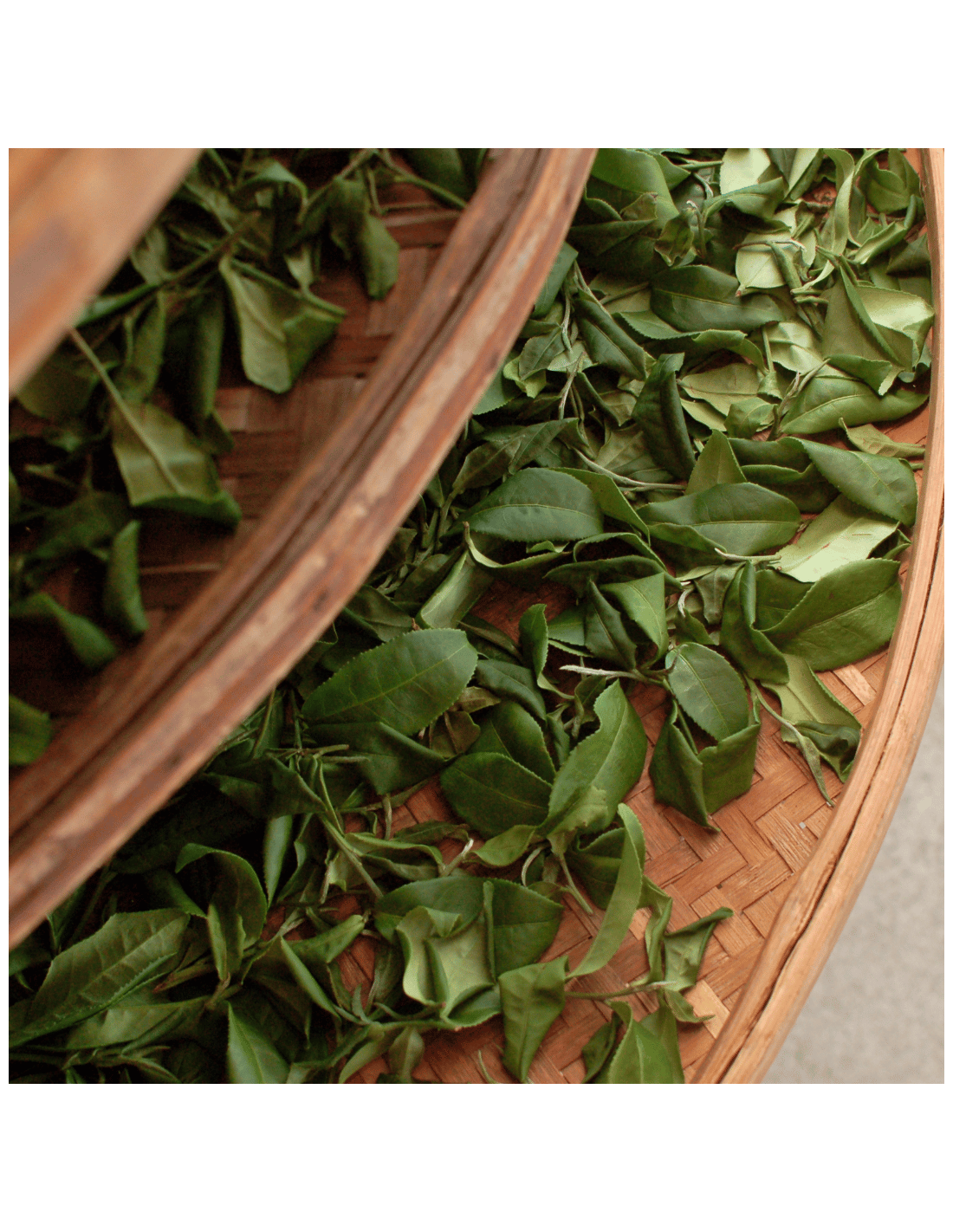
- Harvesting: the best grades are hand-picked in early spring, targeting the tender bud and the first two leaves, before the "Grain Rain" period (Yu-tsien). Freshness is essential and immediate processing of the leaves after harvesting is paramount.
- Withering: the leaves are spread out to reduce their moisture and soften the cell walls, preparing them for rolling.
- Fixation (pan-firing): rapid heating in large metal woks or hot rotating cylinders, to inactivate the polyphenol oxidase (PPO) enzyme and stop all oxidation. This dry heat preserves the green color and generates the precursors for roasted, nutty, and malty aromas. The leaves must be constantly stirred to ensure uniform drying.
- Rolling and shaping: the hot, pliable leaves are pressed and rolled, manually or mechanically, against the hot walls of the wok to give them that curved eyebrow shape—the leaves are reduced to about 30 to 35% of their original size. Temperature and pressure control is critical so as not to burn the leaf while setting the curve.
- Drying: final desiccation at 90-100°C for 30 to 40 minutes, bringing residual moisture below the 5% mark. This gives the leaves their crispy texture, improves the aroma, and ensures excellent stability—ideal for export.
- Sorting: the semi-finished leaves are categorized into different classes by a sorting machine—it is this step that determines the commercial grade of the batch.
- Packaging: the tea is packaged for storage or transport, in kraft bags, cartons, aluminum bags, or any other format.
You can see that to achieve small twisted leaves, there is a fabulous world involved. If you travel to China, be sure to discover Jiangxi province—and for spices, the red Sichuan berries and the green Sichuan berry. Today China has the highest tea production in the world, just like Madagascar with Madagascar vanilla.
Chun Mee grades: learning to read quality
The international Chun Mee market uses a numerical coding system to classify batches according to the regularity of sorting and leaf integrity. This is a valuable reading grid for any buyer: it explains why two "Chun Mees" can offer radically different experiences.
| Grade | Dry leaves | Liquor | Mouth profile |
|---|---|---|---|
| 41022 (premium) | Fine, tightly rolled and curved leaves, jade green, dust and stem-free | Very light yellow-green, bright and clear | Delicate, mild, very little bitterness, persistent plum notes, very strong foaming capacity |
| 4011 | Well-rolled leaves, thin, minimal fragments | Pale yellow, clear | Balanced bitterness and astringency, moderate smoky notes, clean finish |
| 9371 (standard) | Moderately rolled leaves, medium size, dusty green | Yellow-green, bright | Full-bodied, lively, sweet fruity acidity, subtle roasted notes |
| 9367-9370 | Irregular leaves, visible debris and fragments | Dark yellow | Very astringent, rustic, pronounced bitterness, earthy notes |
| 9380 (fannings) | Tea dust and production residues | Dark yellow, turbid | Very fast extraction, very bitter and flat—intended for industrial tea bags |
When science confirms the tea masters
Traditional evaluation relies on the sensory expertise of tea masters. But recent research has managed to objectively predict the commercial grade of a batch with great precision. It is this precise balance that differentiates a great Chun Mee—delicate and refreshing—from a rustic and harsh batch.
What does Chun Mee green tea taste like?
The world of green tea offers an infinite variety of flavors, each resulting from the production process. In general, green tea is known for its light, fresh, and slightly bitter taste. To identify and appreciate the different varieties, you must pay attention to appearance, color, fragrance, and taste.
Chun Mee is an experience that leaps to the taste buds. Its wok-firing process gives it a lively, slightly tart, and slightly toasted flavor. Its perfect balance between the initial flavor and the aftertaste is one of its distinctive features. It presents a golden-green liquor with a subtle fragrance that delights the senses, and a fruity touch of plum unique among green teas.
For those who have already tasted Gunpowder: Chun Mee shares a similar strength and color, but stands out with more delicacy and fruitiness, whereas Gunpowder, rolled into tight pellets, is more powerful, metallic, and smoky. It can be consumed as is, but also pairs well with sugar, honey, or even milk. Did you know? Chun Mee is pronounced "chun mei".
The secret of the foam: why Chun Mee is the king of mint tea
In Maghreb and West African countries, the presence of a thick and stable foam on the surface of the glass is the main quality indicator of a Chun Mee. This foaming capacity is exclusively linked to the concentration of natural saponins and flavonols in the leaf. Premium grades contain significantly more of them. In other words: the beautiful foam of a glass of mint tea never lies about the quality of the leaf.
The 5-step Atay ritual (Morocco & West Africa)
- The initial rinse: place the Chun Mee in the metal teapot (berrad), add boiling water, swirl quickly then discard the water. This removes surface dust and reduces bitterness.
- Extracting the soul: pour fresh boiling water, let steep for one minute without stirring, then pour this amber liquor into a separate glass. This is the "spirit" of the tea—keep it safe.
- The decoction: fill the teapot with boiling water, place it directly over a high flame, and pour back the reserved "soul".
- Adding the aromatics: add a large handful of fresh spearmint (naânâ) and sugar. Absolute rule: the mint leaves must be completely submerged so they do not oxidize.
- Aeration (ragwa): raise the teapot very high above the glasses and pour in a long continuous stream, then pour back and repeat. This aeration generates the ragwa, that dense and stable foam so highly sought after.
The magic of mint: when Chun Mee meets mint, it is an explosion of flavors and freshness. The mint delicately refreshes its herbaceous notes, and the sweetness of the Chun Mee balances the power of the mint. Chun Mee is also the ideal backdrop for scented blends: a Chun Mee delicately flavored with rose, lavender, or vanilla is an experience that every enthusiast should explore.
The perfect infusion of Chun Mee green tea
The dry leaves of Chun Mee are fine, open, and light: they offer a very high surface/volume ratio and are therefore extremely sensitive to water temperature. Warning: to keep the hint of bitterness without being overwhelmed by it, you must infuse for an exact time. The water must be simmering, never boiling—otherwise you will burn the leaf and destroy the tea.
The tasting sheet, down to the degree
- Quantity: 2 to 3 grams of whole leaves for 240 mL of filtered water—avoid hard water.
- Temperature: 75°C to 85°C. Never pour boiling water (100°C) directly onto the leaves: you will burn them and extract massive bitterness.
- Steeping time: 1 minute 30 to 2 minutes—3 minutes maximum.
- Preheat your teaware: pour hot water into the teapot or cup, then empty it. This optimizes the infusion and purifies your equipment.
For a 250 mL cup
- Measure about 3 grams of tea into the infuser.
- Heat the water to about 85°C, before boiling.
- Pour 250 mL of hot water, thoroughly wetting all the leaves.
- Let steep for 1 minute 30 to 2 minutes depending on your preferences—shorter for a delicate flavor.
- Remove the infuser to prevent the tea from becoming too strong, and enjoy.
For a full 900 mL teapot
- Add about 12 grams of leaves to the infuser.
- Pour 900 mL of water heated to about 85°C.
- Let steep for 2 minutes, 3 at most.
- Remove the infuser and serve your guests perfectly prepared tea.
The two professional methods
- Asian method (Gongfu): very high leaf/water ratio—5g for 150 mL in a Gaiwan, water at 80°C, ultra-short successive infusions of 5, 10, 15, then 20 seconds. This is the method that breaks down the aromatic profile, from toasted nut to plum.
- Western method: 2.5 teaspoons for 500 mL of water at 80°C, in a teapot, infusion of 2 to 3 minutes. A paper filter is recommended to retain the fine dust inherent to Chun Mee and obtain a perfectly clear liquor.
How to store Chun Mee green tea?
- Choose the right container: an airtight glass, ceramic, or metal container, clean and dry.
- Away from light: direct sunlight alters aromas—store in a dark cupboard.
- Protect it from air: tea absorbs surrounding odors and moisture. Close the container tightly after each use and keep it away from strong smells.
- Stable temperature: a cool place, without variations.
- Avoid humidity: it is the number one enemy of tea.
- Consume it quickly: preferably within 6 to 12 months after purchase—the precious eyebrow is fragile.
Cooking, cocktails, punch, and infused rum
Cooking, cocktails, punches, and even infused rum hold a wealth of creative opportunities. And what better way to breathe a touch of originality into your preparations than with an exceptional green tea?
- Cooking: infuse Chun Mee leaves in a broth to give a new dimension to your soups, flavor your sauces, integrate its aromas into your marinades for tender meat.
- Cocktails: green tea pairs beautifully with a variety of spirits. Try a green tea Mojito for an unexpected twist.
- Punches: mix infused Chun Mee with fresh fruit juices, fruit pieces, and a touch of rum for a thirst-quenching concoction.
- Infused rum (rhum arrangé): the herbaceous notes of Chun Mee blend harmoniously with rum for a surprising infusion. Feel free to read how to make one on our blog.
Buy Chun Mee green tea by the kilo
For tea lovers, buying by the kilo is the best way to always have this precious beverage on hand—and it is the ideal format for preparing mint tea with the family or for a restaurant. Our Chun Mee tea is carefully selected, meeting strict quality standards.
At Le Comptoir de Toamasina, buy your Chun Mee green tea at an excellent price for the 1kg packaging—and also discover our 80g, 160g, and 480g pouches. Feel free to discover the Wuyuan region and Jiangxi province, the historical lands of this tea, on our blog.
A precious eyebrow in the Comptoir's adventure
Chun Mee is born in the mountainous regions of China, where majestic landscapes and ancient traditions mingle. It was after a trip to China in 2006 that Arnaud fell in love with tea—a love passed down by his maternal grandparents. Today, this Chun Mee is also a gustatory travel companion: associated with citrus, spices, or flowers, it takes on a new dimension with each infusion. Find our infusion videos and our adventures in Brazil on our YouTube channel.
Frequently Asked Questions
How is "Chun Mee" pronounced and what does it mean?
Why should it be consumed within 6 months?
What is the ideal steeping temperature?
Why is foam a sign of quality?
"Three centuries of history in a cup—the precious eyebrow of China, wok-roasted, and undisputed king of mint tea."
Order my Chun Mee Green TeaCamellia Sinensis · China · Arnaud Sion Selection
- Native country
- China
- BOTANICAL SPECIES
- Camellia Sinensis
- INGREDIENTS
- Chun Mee Green Tea
- AROMATIC POWER
- 8/10
- ALLERGEN
- None
- POSSIBLE TRACES OF ALLERGENS
- None
- PACKAGING
- Sachet or Box
- Preparation / Delivery
- Preparation within 24 hours - Delivery within 48 hours