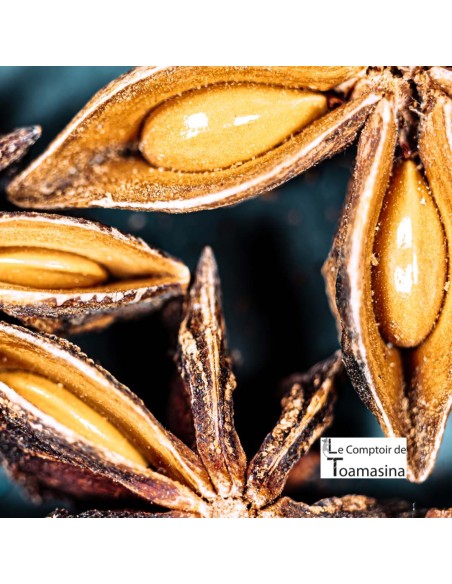
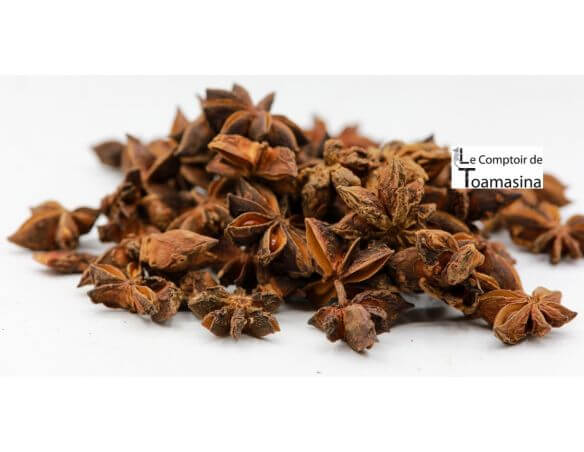
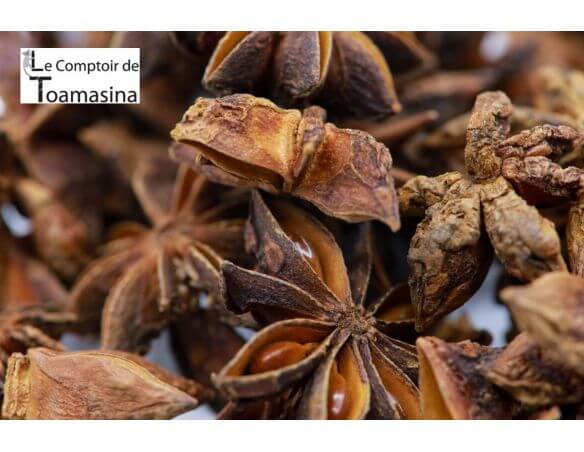
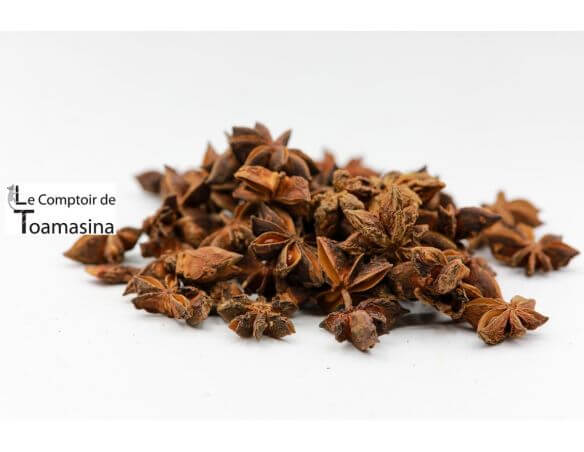
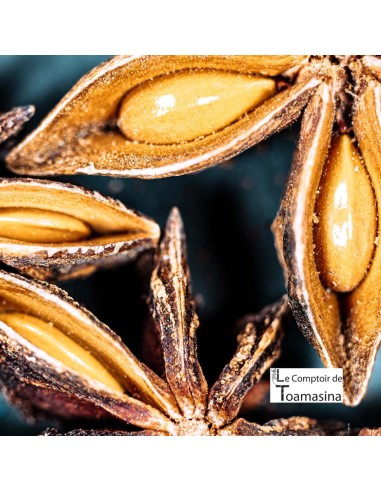
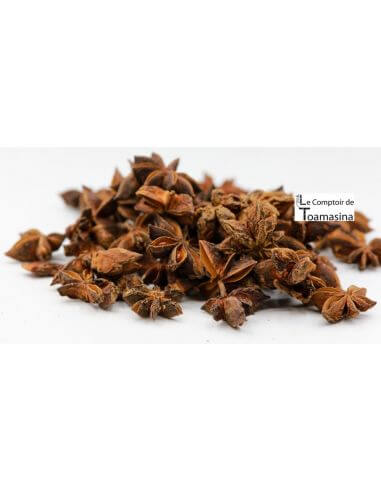
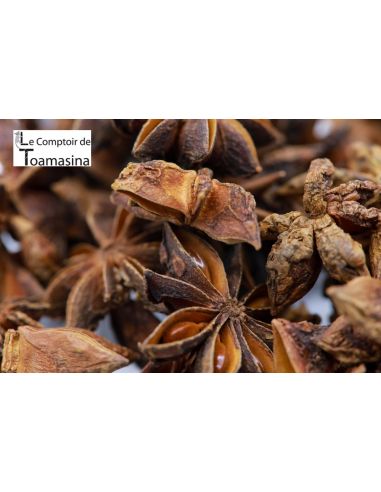
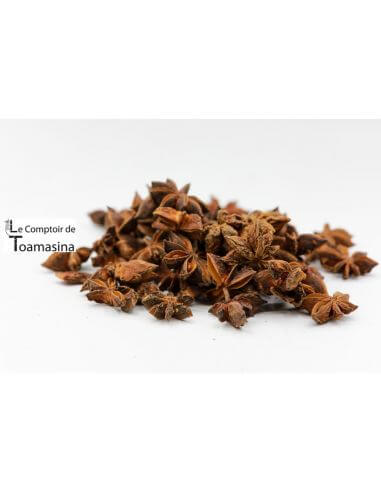
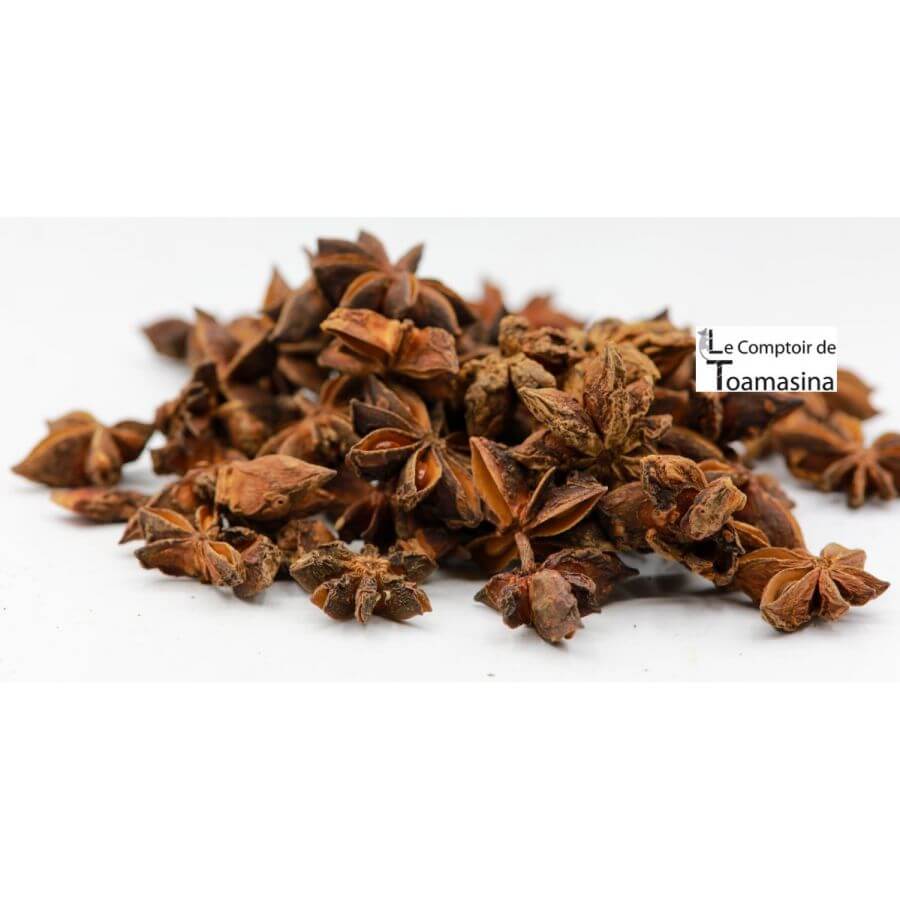
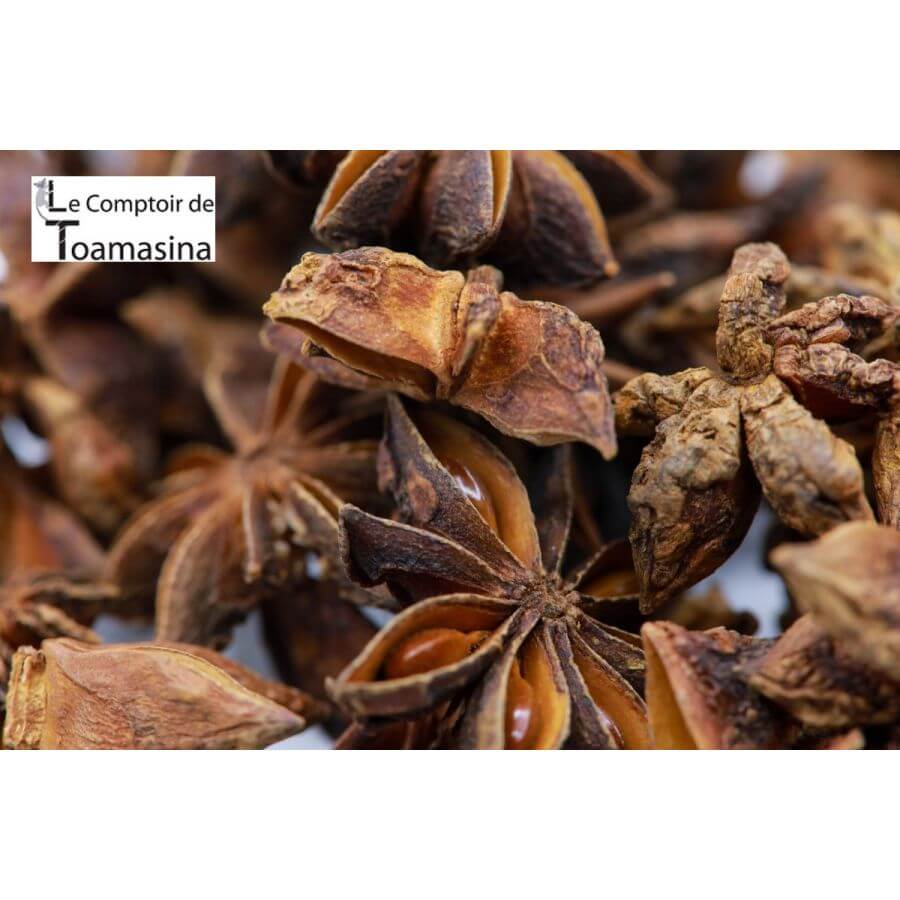
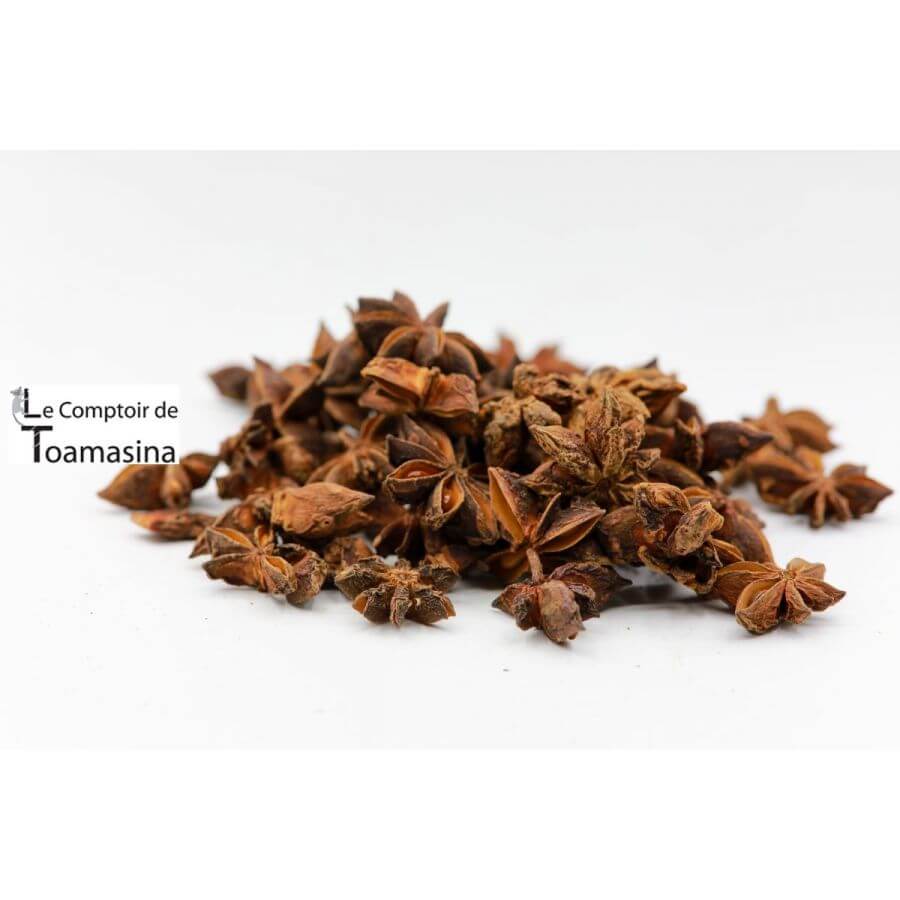
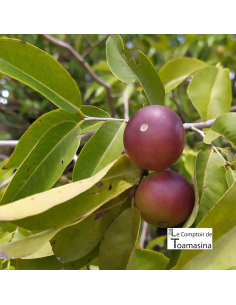
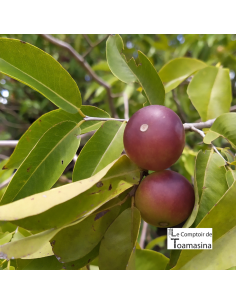
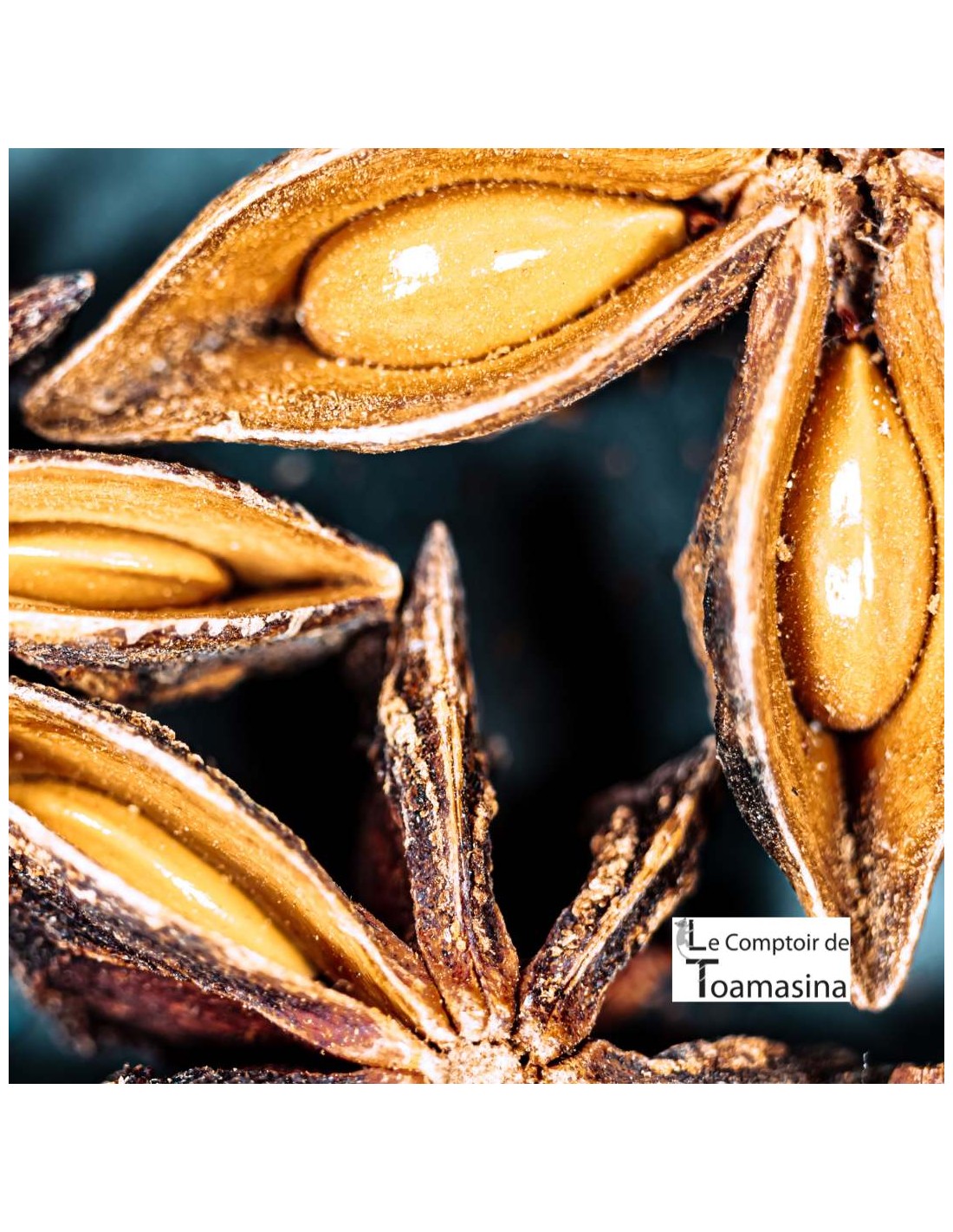
Star anise, the fruit of the Chinese star anise tree, has become one of the most prized spices today. This evergreen shrub, native to China and Vietnam, thrives in mild climates and acidic soils, and can even be grown in southern France, near the Mediterranean. The fruit of the star anise tree, also called star anise because of its star shape, has a taste reminiscent of anise and licorice. Although commonly used in baking and savory dishes, it is especially in herbal teas that star anise is particularly appreciated. Its aniseed taste comes from anethole, an essential oil contained in the fruit, and each star encloses a brown seed, less aromatic than its casing.
Harvested twice a year, in April and October, Arnaud, the creator of Le Comptoir, discovered this during a trip to Vietnam. Star anise is picked green and then sun-dried to take on its beautiful brown color.
A bit of history and botany
Star anise, highly fragrant with aromas of licorice and fennel, perfectly balances its fresh and sweet notes. Coming from the Chinese star anise tree, known under the botanical name Illicium verum, the fruit forms an eight-pointed star. Native to China, star anise is called "Badjiao" in Chinese, meaning "eight horns".
Introduced to Europe by Marco Polo in the 14th century, it was rare and expensive in the Middle Ages — it was not until the Renaissance that it became more widely available.