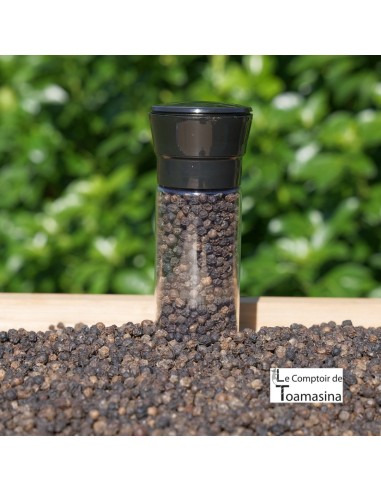
Malabar Black Pepper - Grinder

Malabar Black Pepper - Grinder

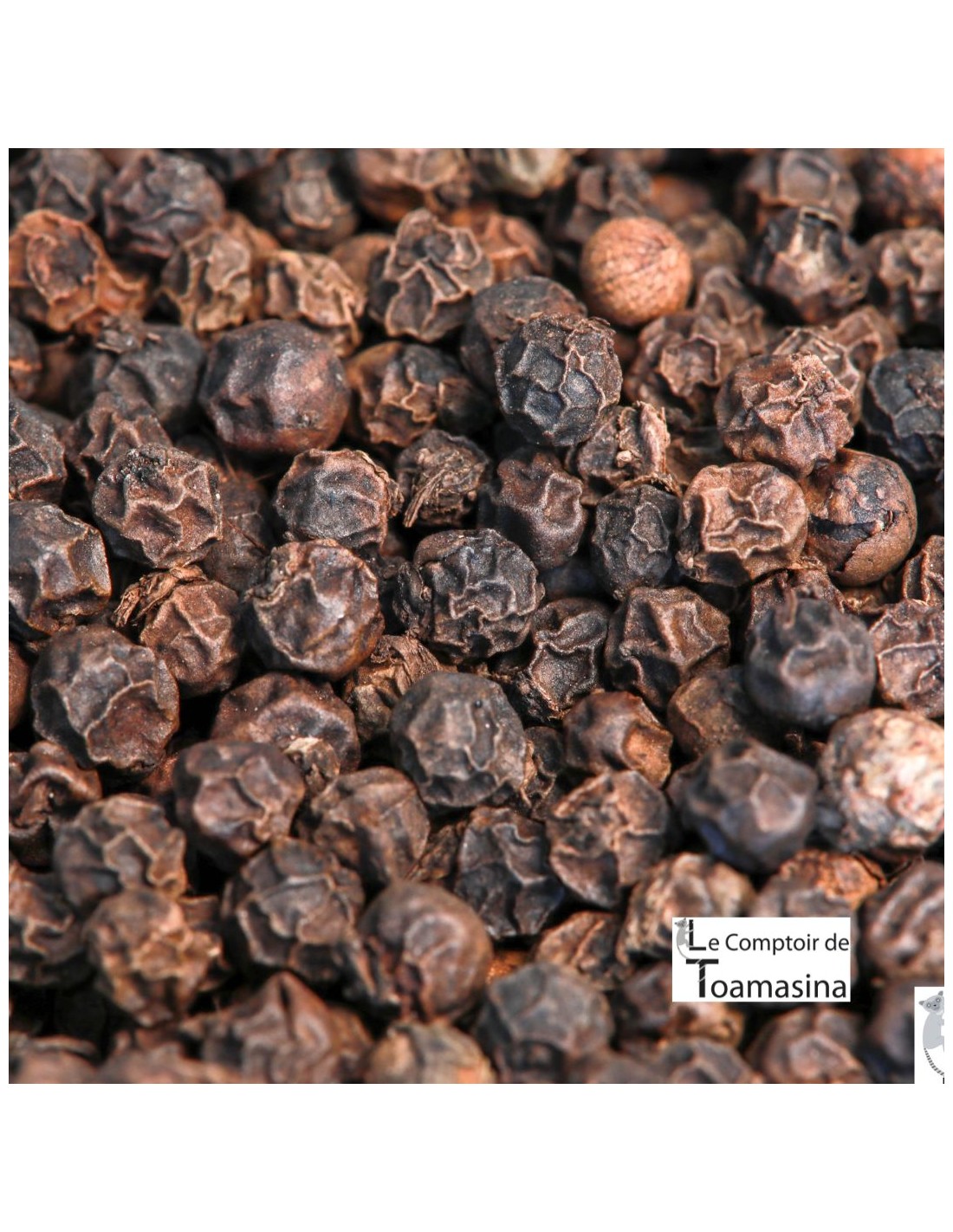
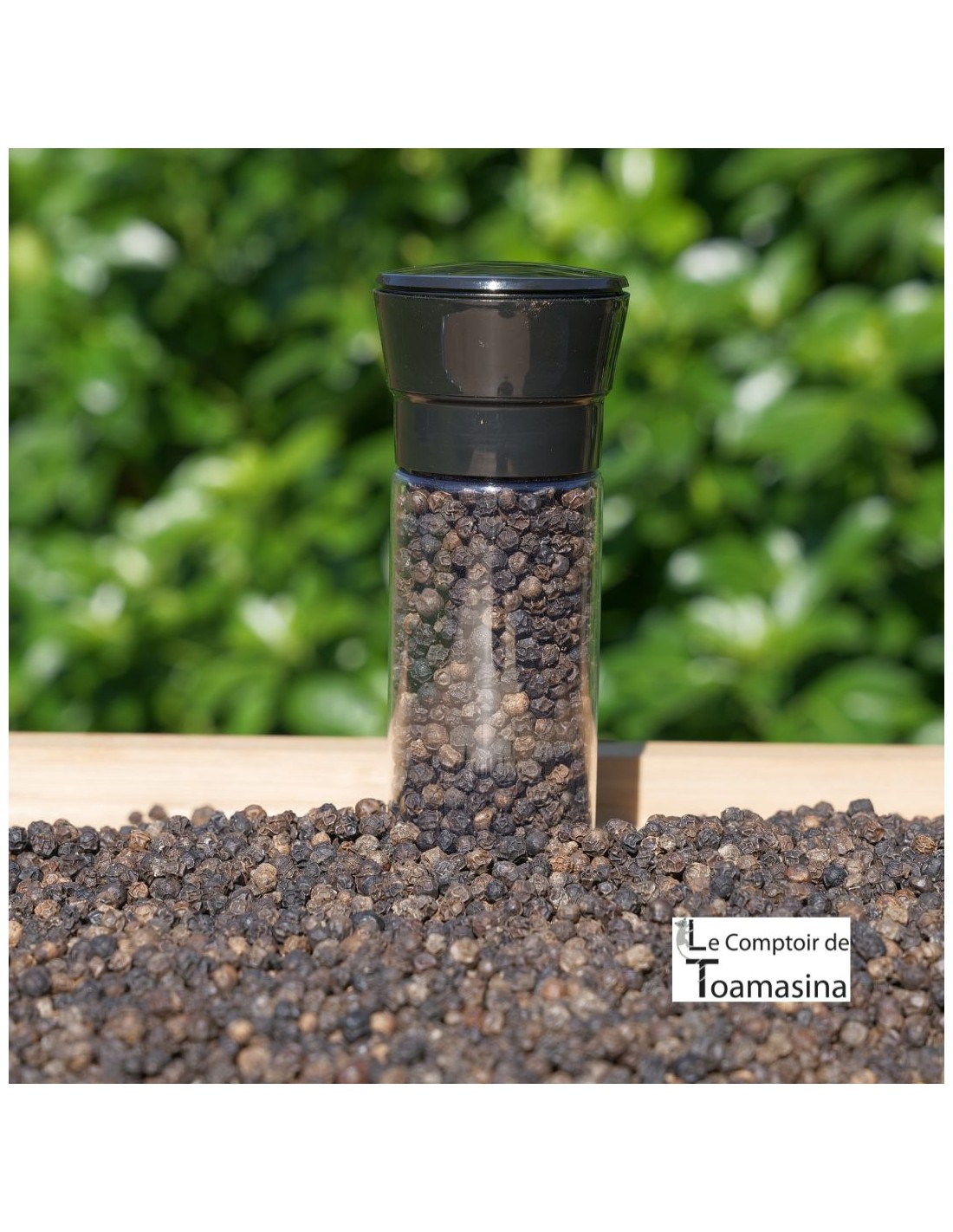
Malabar black pepper is said to have been the first pepper imported to Europe. It's a classic of the pepper world, with a black peppercorn tending towards a pretty brown color. Originating from the Malabar coast, this pepper offers incredible notes. We start with musky, smoky notes and finish with woody, fruity ones. 

  • Pepper strength: 9.5/10
  • Main notes: Woody and fruity
  • Use: Ideal for meats and vegetables
  • Origin: Malabar

In its refillable pepper mill, it's ideal for replacing Kampot black pepper. A pepper we love to discover and rediscover. 

Packaging
PNMM
€5.50


Malabar Black Pepper
in a Refillable Mill

"It is said that Malabar black pepper was the first pepper imported into Europe. It is a great classic of the pepper world with a grain leaning towards a beautiful brown color."

Cradle of Pepper

Originating from the Malabar coast in India, the historic land where pepper cultivation began millennia ago.

Warm Flavor

A pronounced pungency, woody and ripe notes, with a slight acidity and a beautiful length on the palate.

Refillable Mill

The ideal packaging to release on demand the essential oils and freshness of this legendary pepper.

Coming from the Malabar coast, it is a pepper that offers incredible notes. We start with musky, smoky notes and end with woody and fruity notes.

What you will see in this video

Arnaud presents Malabar black pepper, the historic cradle of pepper.

"Malabar black pepper, often called the 'black gold' of spices after vanilla, is a pepper variety that has conquered the world with its captivating aroma and distinctive pungent flavor." In its refillable mill, it is ideal to replace Kampot black pepper. A pepper we love to discover and rediscover.

Today, Malabar black pepper is accessible to gourmets around the world thanks to refillable pepper mills that preserve the freshness and intensity of the spice. By choosing this pepper, you are not only buying a spice, but a piece of history and tradition—each grain carries with it the heritage of a region blessed by nature and the know-how of farmers who cultivate it with passion on a land that is the cradle of pepper. Le Comptoir de Toamasina, a specialist in peppercorns, also invites you to discover Madagascar black pepper, the great table classic.

Comparative Sensory Analysis

Malabar vs Voatsiperifery vs Madagascar

Domesticated pepper versus its wild cousin

Spicy (piperine)
Woody · Resinous
Citrus · Fresh
Smoky · Musky
Malabar (Ours)
Voatsiperifery (wild, Madagascar)
Madagascar Black Pepper

Domesticated vs wild: Malabar contains 5 to 9% piperine for a clean and direct heat, compared to only about 2% for Voatsiperifery, its wild cousin hand-picked in the high Malagasy forest—hence its very mild and discreet heat, favoring a much more complex woody and fragrant profile.

Malabar · Voatsiperifery · Madagascar

Technical Sheet

What You Receive

  • Country of OriginIndia (Kerala)
  • Botanical SpeciesPiper nigrum
  • IngredientsMalabar Black Pepper
  • Aromatic Power9.5/10
  • AllergenNone
  • Possible TracesNone
  • PackagingRefillable Pepper Mill
  • LogisticsPrepared within 24h - Delivered within 48h

What is the flavor of Malabar Black Pepper

The flavor of Malabar black pepper is renowned for its complexity and richness. It is described as highly fragrant, with a pronounced pungency and intense heat. Connoisseurs appreciate its warm and round flavor, as well as its slight touch of freshness at the end of the tasting. It also has woody and ripe notes, with a slight acidity and a long persistence on the palate.

This pepper is a true flavor enhancer, capable of sublimating a wide variety of dishes, whether based on white and red meats, poultry, fish, or even raw or cooked vegetables. Its subtle flavor allows it to be used in all cuisines of the world, almost universally.

Muziris, the port that thrilled Antiquity

The Malabar coast, today the state of Kerala, is the original cradle of black pepper. From Antiquity, the ancient port of Muziris became the epicenter of an immense maritime trade network: Mesopotamian, Egyptian, Greek, Arab, and Roman merchants flocked there to exchange precious metals and glassware for Malabar pepper. The allure of this spice was such that the Romans dedicated entire fleets to it, and pepper was stored in safes alongside gold.

During the siege of Rome in 408 AD, Alaric, king of the Visigoths, demanded a colossal ransom from the city including 5,000 pounds of gold, 4,000 pounds of silver, and 3,000 pounds of black pepper. The arrival of Vasco da Gama in 1498 in Calicut ("for Christ and spices") broke the monopoly of Arab and Venetian merchants, marking the beginning of the European colonial era motivated by the quest for this single vine.

A unique terroir: the Western Ghats

The exceptional organoleptic characteristics of Malabar pepper come from its terroir, located in the heart of the Western Ghats mountain range. The plantations stretch between 200 and 1,000 meters in altitude, on red lateritic soils, rich in organic matter, iron, and calcium—an acidic and draining soil that stimulates the vine's synthesis of essential oils.

The pepper plants are not cultivated intensively on artificial supports: they climb along living stakes, mainly jackfruit and silver oak trees, recreating the original forest ecosystem. In the Nilgiris biosphere reserve, the indigenous Irula and Kurumba peoples cultivate pepper using ancestral organic methods, with traditional natural inputs based on cow products and local plant decoctions. These small producers are certified under a participatory guarantee system and grouped into cooperatives to guarantee fair trade.

Over 75 Indian cultivars

India is home to over 75 cultivars of Piper nigrum, studied notably by the Indian Institute of Spices Research (IISR) in Calicut. Karimunda ("black grain" in Malayalam) is the most widely cultivated traditional cultivar in Kerala, offering a complex profile of sweet wood, eucalyptus, cocoa, and green mango. Kottanadan stands out for its record concentration of oleoresin (15.5%), and Neelamundi for its highly floral and herbaceous profile.

On the hybrid side, Panniyur-1—the world's first pepper hybrid, a cross between two traditional cultivars—has become the gold standard for high-yield hybrids. Sreekara, a clonal selection of Karimunda, stands out for its exceptional volatile essential oil content (7.0%), providing very lemony and woody notes.

How to use Malabar pepper

Malabar black pepper is a versatile spice that can be used in various ways to enhance your dishes. Here are some suggestions for integrating it into your cooking:

  • Meats: it perfectly seasons all meats, whether red, white, or poultry. Add it at the end of cooking to preserve its pungent aroma.
  • Vegetables and vegetarian dishes: sprinkle it on roasted vegetables, squashes, carrots, or mix it into tomato sauces for a woody and fruity flavor.
  • Desserts: dare to be original by combining it with chocolate or red fruits. Its woody character and slight acidity bring a touch of warmth and subtle aroma to sweet preparations.

Quick Ideas

  • Homemade tomato juice: before blending the ingredients, add a twist of Malabar black pepper for a spicy touch.
  • Roasted asparagus: mix it into the sauce before roasting the asparagus for a robust flavor.
  • Baked potatoes: after cooking, sprinkle them with Malabar black pepper for a full-bodied taste.

To fully enjoy the flavors of this pepper, it is advisable to add it just before serving.

The secret of the grain's blackening

The transformation of the green berry picked from the vine into a black, wrinkled peppercorn is not a simple drying process: it is an enzymatic cascade. Once the cell wall is broken at harvest, a copper-containing enzyme (polyphenol oxidase) comes into contact with the berry's phenolic compounds and oxygen in the air, forming highly reactive compounds that spontaneously polymerize into dark melanins—it is this reaction, coupled with sun drying that shrinks the pericarp, that gives the peppercorn its characteristic black color and wrinkled texture.

8 Gourmet Recipes with Malabar Pepper

  • Malabar Black Pepper Chicken: marinate chicken pieces in a sauce made of yogurt, ginger, garlic, and pepper. Grill them.
  • Pan-seared Salmon: season salmon fillets with salt and crushed Malabar Black Pepper. Cook in olive oil.
  • Fresh Fruit Salad: a pinch of freshly ground pepper on a fruit salad brings an unexpected warmth.
  • Gingerbread: integrate ground pepper into the dough for a deep flavor that pairs with honey and cinnamon.
  • Tandoori Chicken: prepare a tandoori marinade with yogurt, lemon, spices, and Malabar pepper.
  • Dark Chocolate Ice Cream: a touch of pepper on dark chocolate ice cream for a bold experience.
  • Grilled Pork Chops: season with pepper, salt, garlic, and rosemary before grilling.
  • Honey Roasted Pears: drizzle pears with honey and sprinkle with pepper before roasting. Serve with vanilla ice cream.

The unusual pairing: beta-caryophyllene and great cheeses

Black pepper owes much of its woody and spicy character to beta-caryophyllene, a molecule it shares with certain aromatic plants. This same terpene also structures the dried fruit and umami aromas of highly aged pressed cooked cheeses—long-aged Parmigiano-Reggiano, old Pecorino Romano, winter Comté. A twist of freshly crushed Malabar pepper mill on a shaving of these cheeses echoes, quite literally, the same aromatic family.

How to store Malabar black pepper

  • Airtight container: store the pepper in an airtight container to protect it from moisture and other elements that could alter its flavor.
  • Cool, dry place: choose a cool, dry place in your kitchen for storage. Avoid areas where it is exposed to direct heat or sunlight.
  • Whole peppercorns: it is better to store pepper as whole peppercorns rather than ground. Whole peppercorns retain their aromas and freshness better.
  • Crush or grind at the last moment: for optimal flavor, grind the pepper just before using it.

Frequently Asked Questions

Why is Malabar considered the cradle of pepper?
It was on this coast of Kerala, around the ancient port of Muziris, that the global black pepper trade began in Antiquity, attracting Roman, Greek, and Arab merchants.
What is the difference between Malabar and Voatsiperifery?
Malabar contains 5 to 9% piperine for a sharp heat. Wild Voatsiperifery has only about 2%.
Why does the peppercorn turn black when drying?
An enzymatic cascade transforms phenolic compounds into dark melanins upon contact with air.
How many pepper cultivars exist in India?
Over 75, including Karimunda, Kottanadan, and the Panniyur-1 hybrid.

"The cradle of pepper—musky, smoky, and woody, a grain that carries the history of Muziris and the Western Ghats."

Order my Malabar Black Pepper mill

Piper nigrum · Malabar Coast, India · Arnaud Sion Selection

Native country
Asia
BOTANICAL SPECIES
Piper Nigrum
INGREDIENTS
Black pepper
AROMATIC POWER
08/10
ALLERGEN
None
POSSIBLE TRACES OF ALLERGENS
None
No reviews

Customers who bought this product also bought: