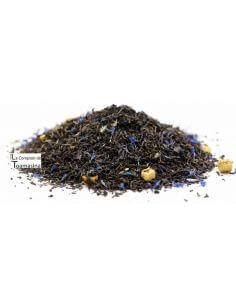
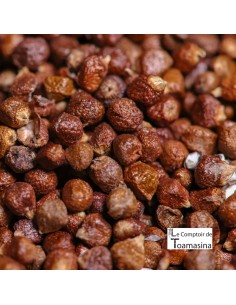
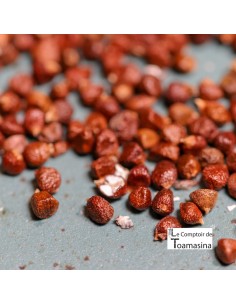
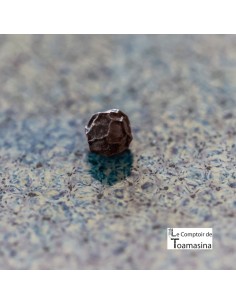
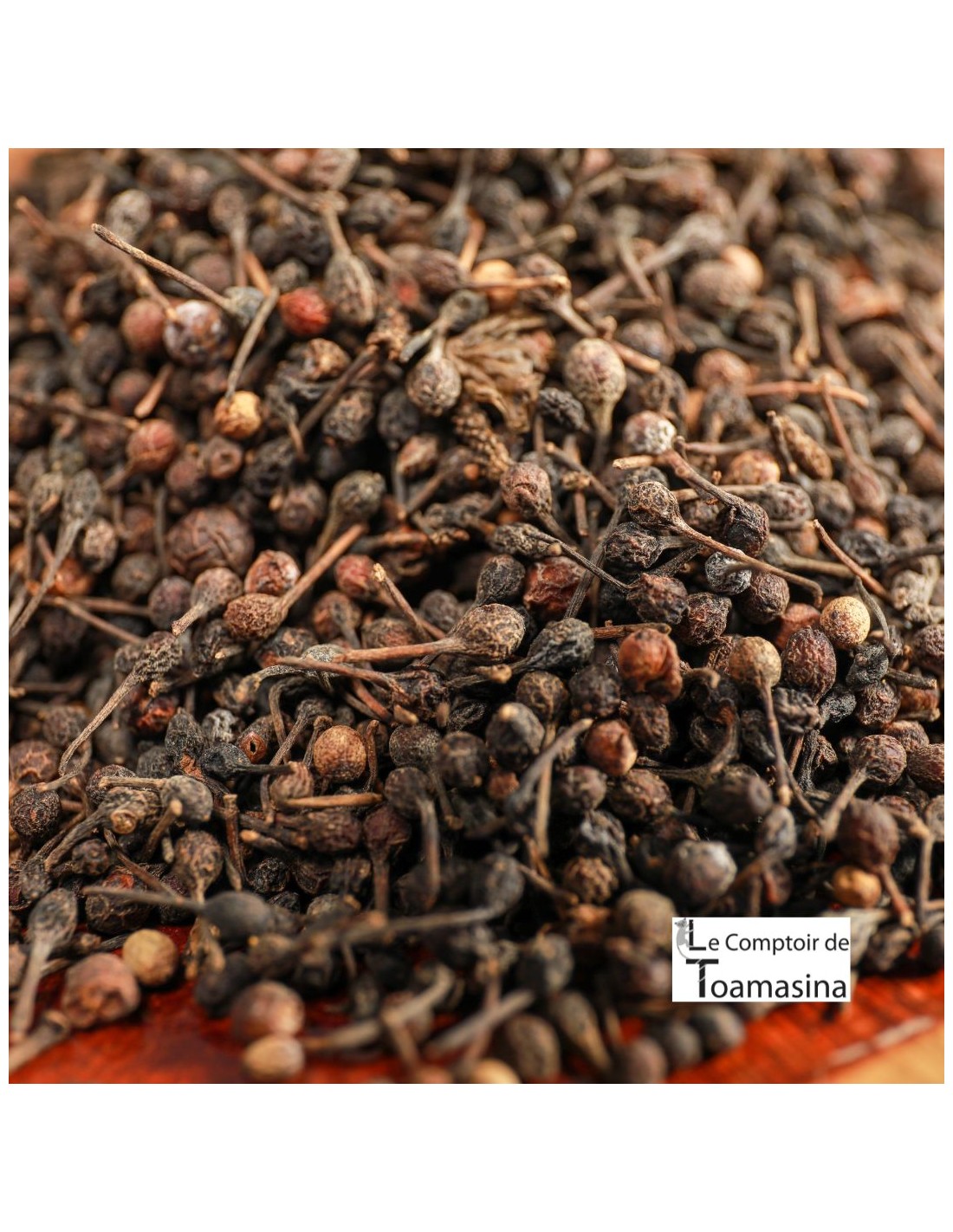
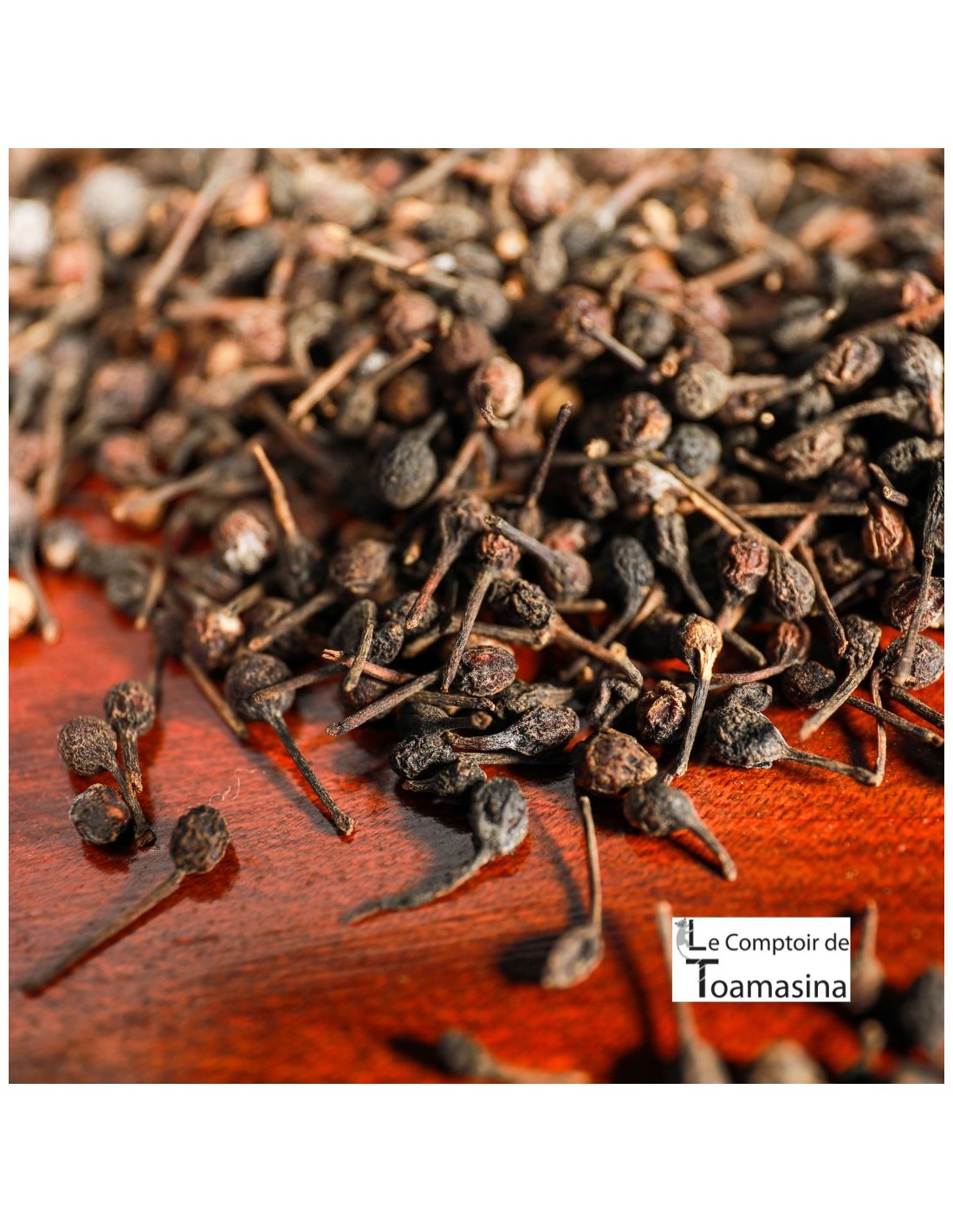
Wild Pepper Voatsiperifery
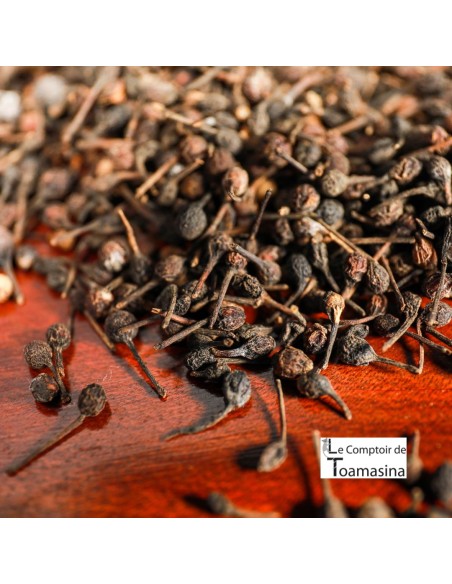
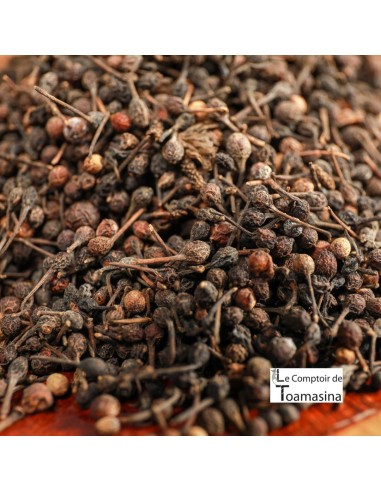
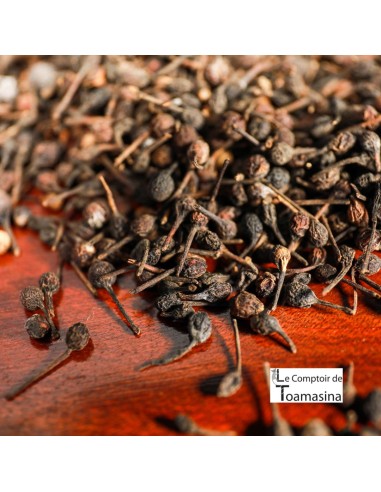
Voatsiperifery Wild Pepper from Madagascar in its traditional freshness packaging. Come buy and discover Voatsiperifery pepper, to the world with fresh and woody notes. An exceptional pepper that can be used anywhere in the kitchen from sweet to savory. We select the best producers who harvest the best peak pepper in Madagascar.
- Pepper power: 10/10
- Main notes: Intense vegetal notes and extreme freshness
- Use: Savory and sweet cooking
- Origin: Madagascar
Buy wild pepper from Madagascar (Voatsiperifery), discover its history, use in cooking and all at the best price per kilo. The pepper we call, tail pepper, crown pepper and Voatsiperifery.
Wild Madagascar Voatsiperifery Pepper
“Allow me to introduce myself, I am Arnaud, founder of Comptoir de Toamasina. Today you are going to discover wild Madagascar pepper, a spice that turns heads and sparks curiosity across the culinary world.”
Why it's a rare pepper
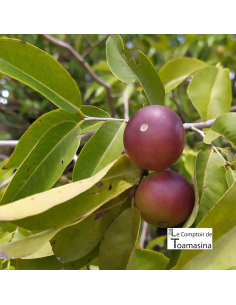
A wild vine, never domesticated, whose fruit forms in the treetops at the heart of Madagascar's humid rainforests.
Unique flavor
Woody, earthy, citrus notes, and a warmth that fills the palate without aggressive heat.
Selected since 2010
Trained in Madagascar, Arnaud selects every lot based on grain caliber, stem quality, and aroma before offering it.
Since 2010, I have been passionate about spices from Madagascar. My first spice was Madagascar Bourbon vanilla, and step by step I expanded my Malagasy range with Madagascar cinnamon, Madagascar pepper, wild black pepper, and cubeb pepper. Over time, I built an exclusive collection of the finest rare peppers and spices I have ever tasted.
Voatsiperifery is the one that turns every head. In Belo Horizonte or São Paulo, when I present it to chefs, they don't even negotiate the price: they just ask for a quantity.
As you can see on my YouTube channel, I only offer hand-picked favorites—spices that make cooking truly creative. So dive into the world of piper borbonense. Also read my article on the different ways to dry pepper.
What you will see in this video
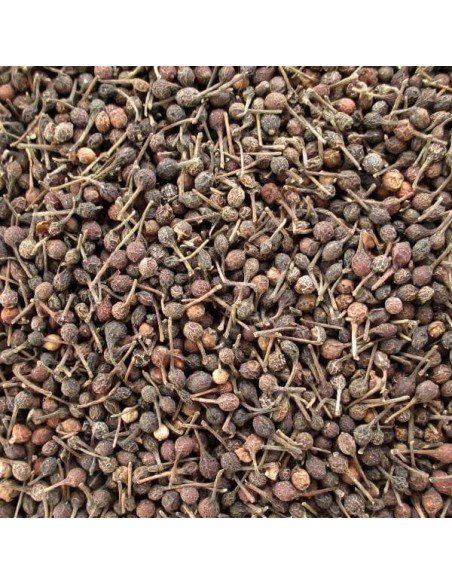
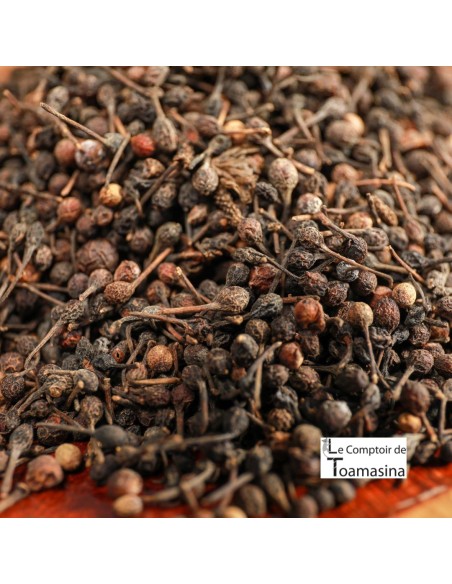
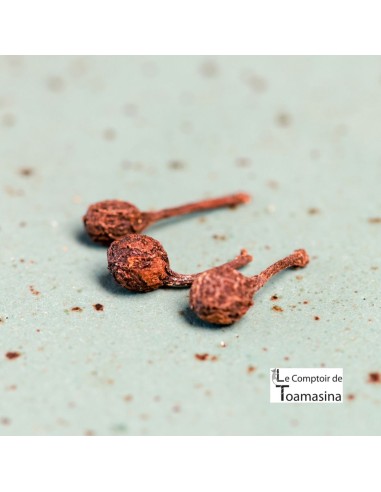
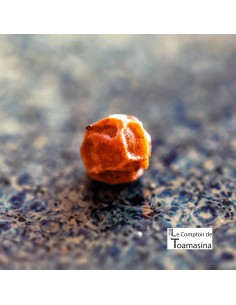
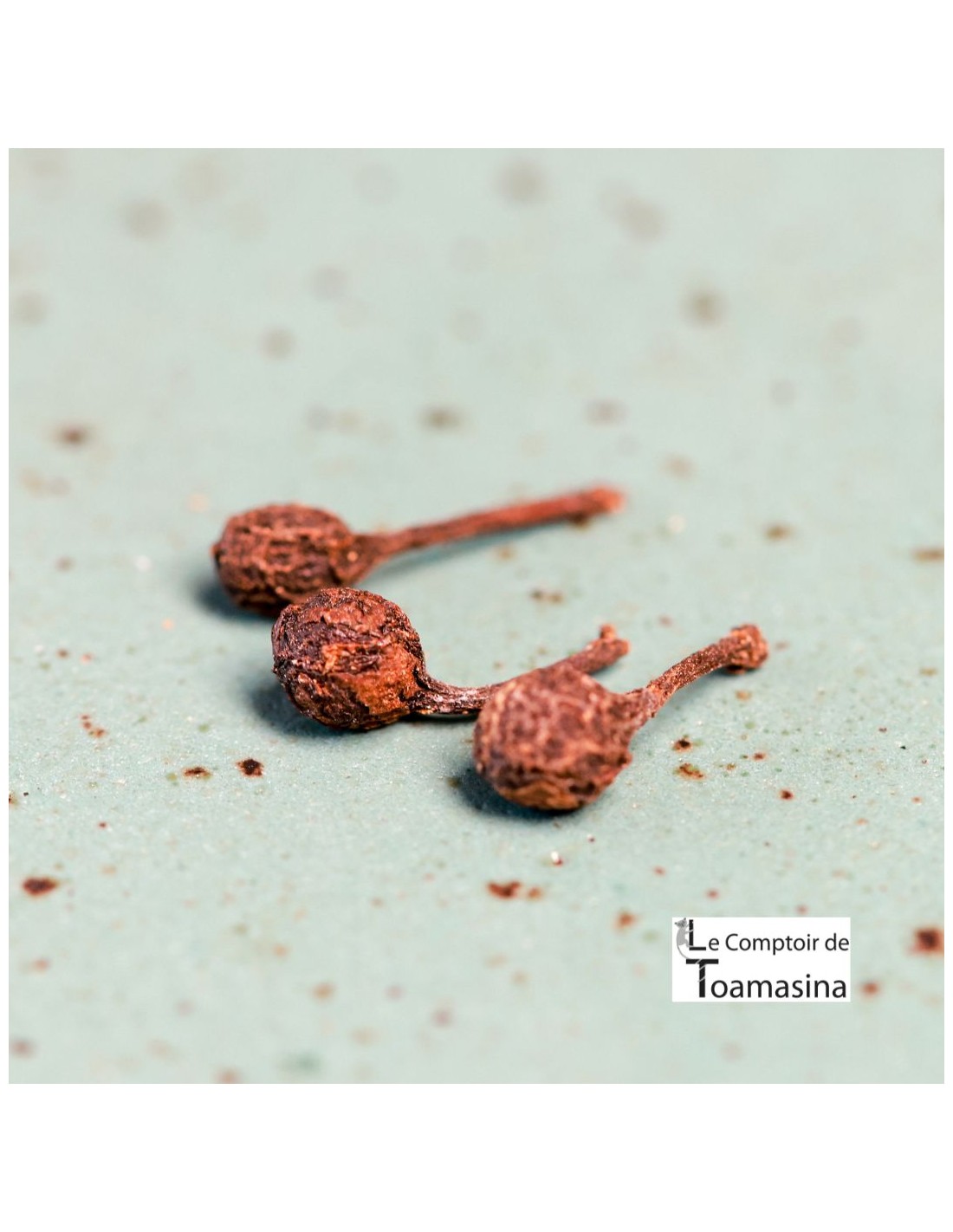
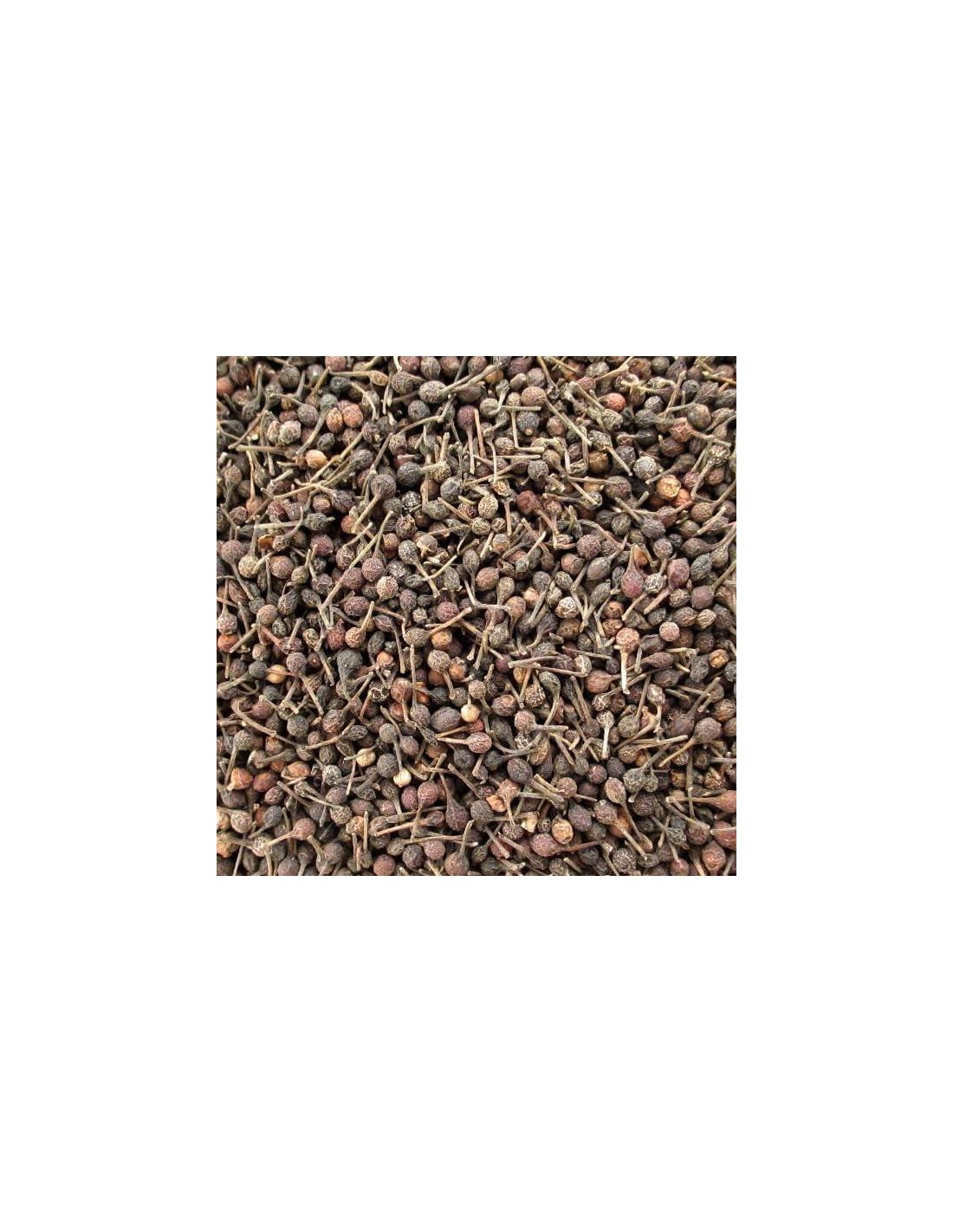
The grain in hand, life-size: its tiny caliber, the small tail stem that acts as its signature, and the subtle color nuances found within a single lot. This is what you need to see once so you never confuse true Voatsiperifery with cubeb pepper again.
My Selection
How I Choose This Pepper
I am not a producer, nor do I pretend to be. I trained in Madagascar starting in 2010, first on vanilla and then on peppers, and that training is what guides my selection today. Concretely, my wild pepper is sourced through a French importer, but I personally select the lot based on strict criteria. Here is what I check first.
- Grain CaliberTrue Voatsiperifery is tiny—barely larger than a pinhead. A large, round grain should immediately raise red flags.
- The StemLong, thin, and still attached to the majority of grains. This is the first indicator of careful harvesting and gentle sorting.
- Lot HomogeneityA high-quality lot contains very little twig debris, leaves, or hollow grains. In Madagascar, you can also find a small grain sold up to 40% cheaper: that is a different product, far less aromatic.
- Cold AromaA grain crushed between your fingers should immediately release woody and citrus notes. If no aroma rises, the lot has sat too long or was poorly dried.
- Food ComplianceThe pepper undergoes debacterization by the importer prior to packaging, as required by regulation. We receive, inspect, and package it ourselves.
Sensory Analysis
Comparative Aromatic Profile
Voatsiperifery · Madagascar Black Pepper · Timut Berry
Note from Arnaud: “Voatsiperifery is pure woody and citrusy goodness, with a soft heat. Madagascar black pepper brings warmth and straightforward heat for daily cooking. Timut berry explodes with citrus and floral notes. Taste the three side by side: it is the best way to understand what a great pepper can do for a dish.”
Overall Analysis of the 3 Peppers
Buy & Sell Wild Black Madagascar Pepper, A Grand Cru
Voatsiperifery pepper is a grand cru from the island of Madagascar. In my shop, the top-selling item remains the 20-pod pack of Madagascar vanilla beans, followed closely by the 150 g resealable pouch of wild pepper. What customers find in it: a small, mild berry with an explosion of flavor in every bite.
If you are seeking the rarest peppercorn, Voatsiperifery is among the rarest Piper species on earth. The vine coils around tree trunks and only fruits high up where light reaches—often 20 meters off the ground, sometimes higher, whereas plantation-grown pepper vines are kept at 4 meters for easy harvesting. The whole difficulty of the product lies in this contrast.
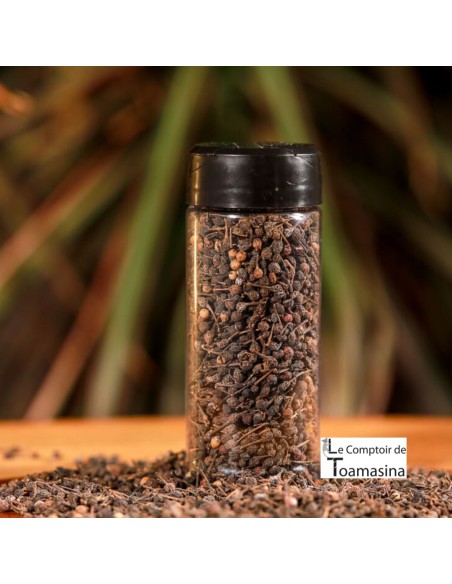
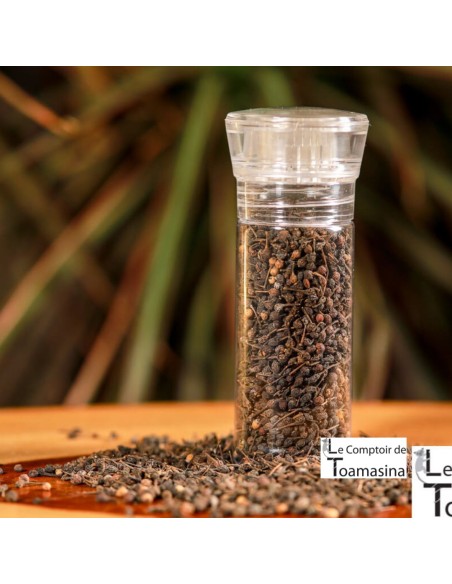
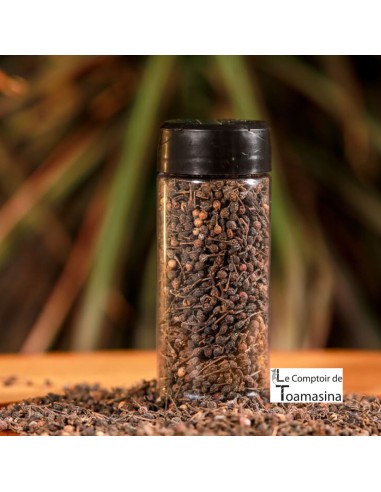
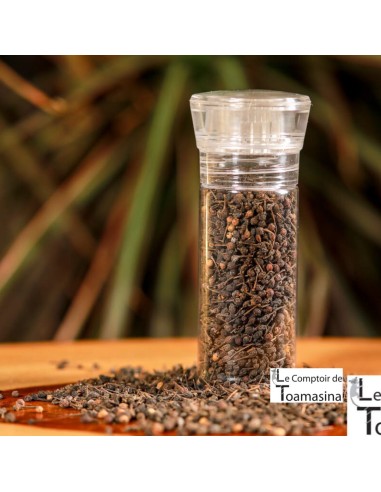
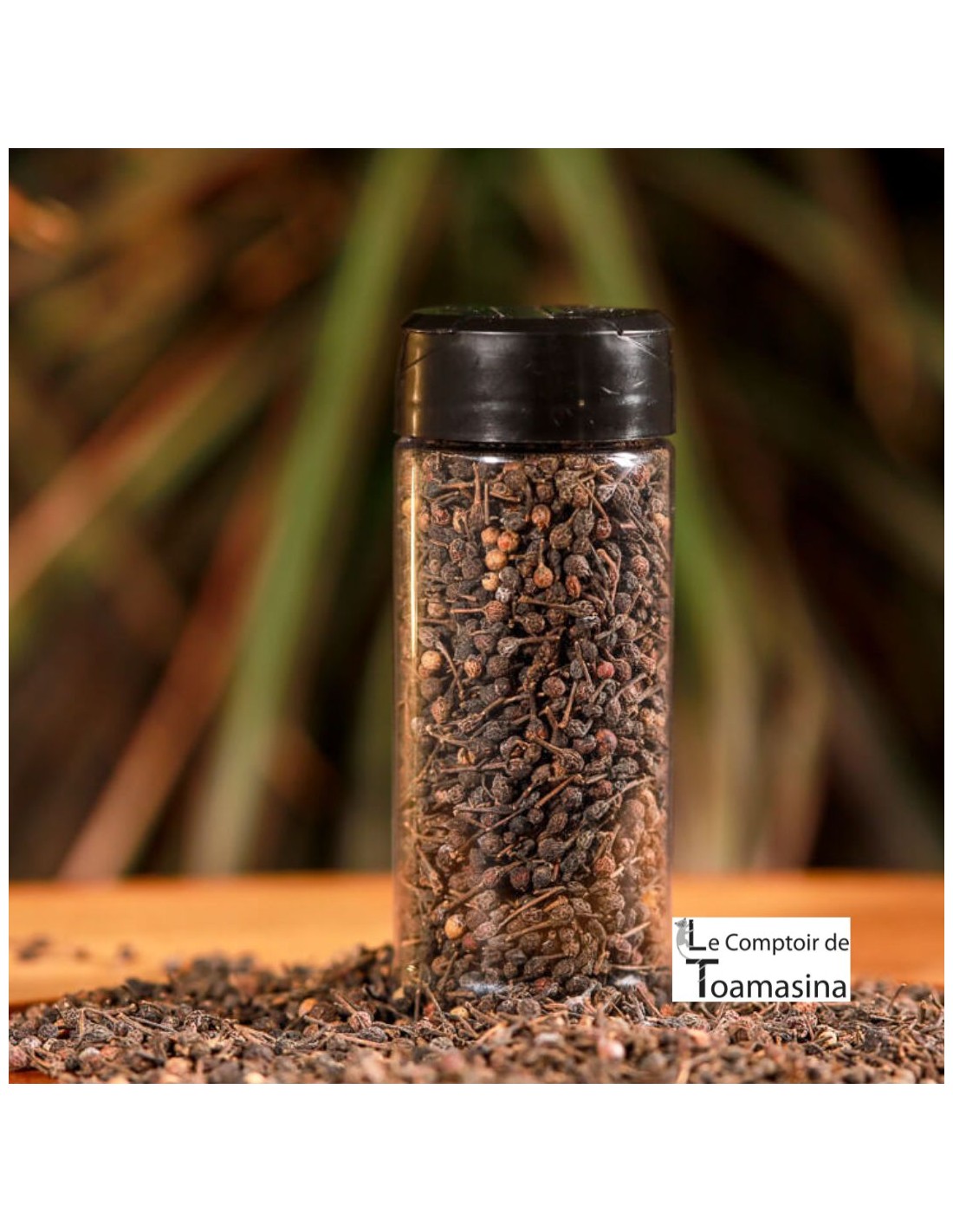
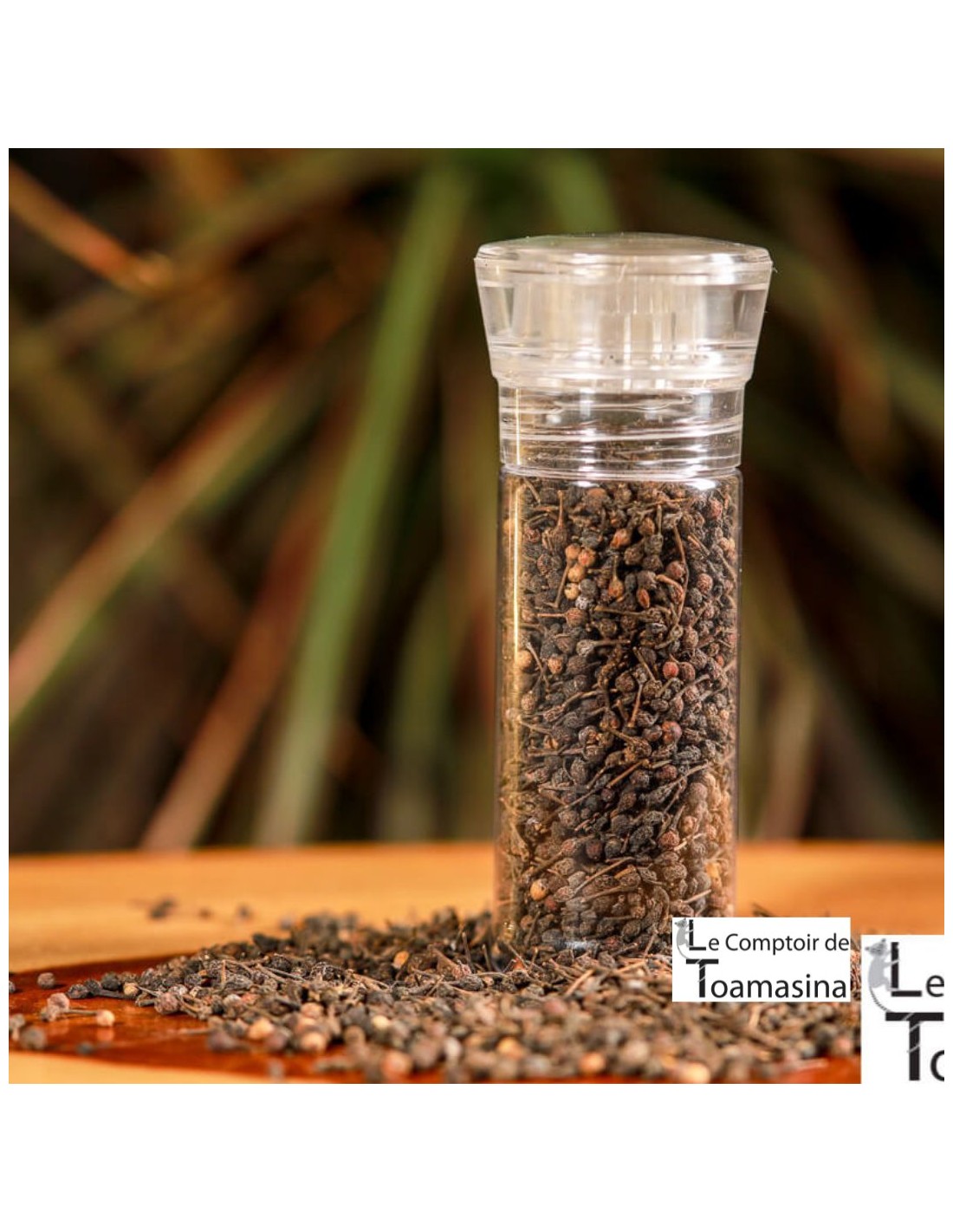
Wild pepper has become a staple in the kitchens of many chefs, gourmets, and lovers of authentic flavors. We offer several packaging sizes to suit every need: in a jar to explore, by the kilo for heavy users and professionals, or in a refillable pepper mill. Explore also our full range of whole peppercorns.
What Is Wild Madagascar Pepper, From History to Cultivation
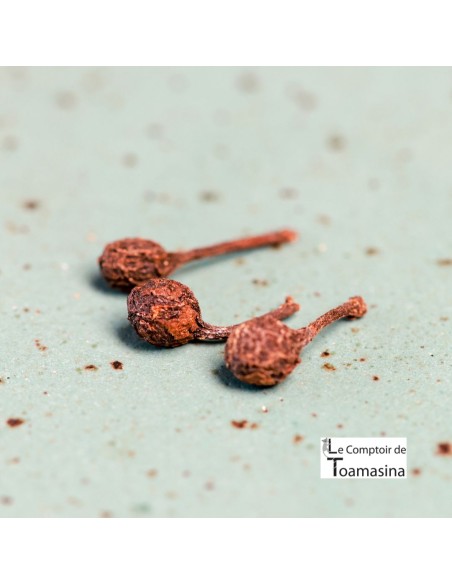
Wild Madagascar pepper is known locally as Voatsiperifery or Tsiperifery. It is a berry native to the island's rainforests, small, round or slightly ovoid, extended by a thin tail stem. The vine climbing up tall trees reaches canopy heights of 20 meters or more. Its name comes from Malagasy: “voa” means fruit, while “tsiperifery” refers to the vine itself.
A point few sellers mention, but worth stating honestly: tsiperifery taxonomy is not definitively settled. The name Piper borbonense is most commonly used in trade, but scientific literature also lists Piper pyrifolium, Piper pachyphyllum, and several Piper spp. In other words, what is sold as “wild Madagascar pepper” likely encompasses several neighboring wild species of the Piperaceae family harvested together. This takes nothing away from the product—it simply explains why two lots can present slightly different profiles.
The Biodiversity Challenge
If you travel to Madagascar, take time to speak with local village communities about this pepper, especially along the road between Tamatave and Antananarivo. They will explain the complexity of a harvest carried out entirely by hand, high off the ground, with no possible mechanization.
The growing popularity of this spice has brought real pressure on the resource. Two practices coexist today: some harvesters climb the host tree, pick the clusters, and leave the vine intact to fruit again the following year; others cut the vine at the base and pull it down to harvest on the ground, which is much faster but kills the plant. It is this second practice that threatens the species.
Research programs have been working for years on sustainable harvest guidelines and vine domestication, without industrial results to date. One thing is certain: tsiperifery needs its forest ecosystem to produce properly. Without forest, there is no yield.
Producing Regions
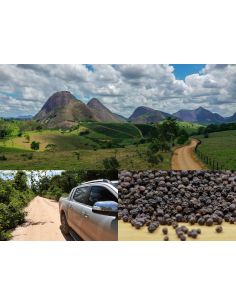
Production is concentrated along the island's eastern coast in dense, humid evergreen forests. The Moramanga–Anosibe An'Ala axis is historically the most productive zone; since the late 2000s, the Fianarantsoa region has also developed. Tsiperifery is also found in smaller quantities in drier western forests. Most of the export volume then passes through the port of Toamasina—the city that gave its name to our house.
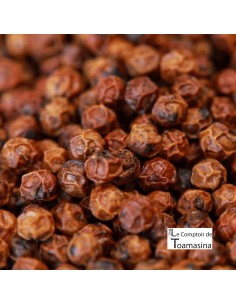
Two fruiting periods mark the year: the first in June–July, the second from September to November, with fruiting vines observable from July to April depending on the region. A berry takes 2 to 4 months to ripen, and berries on a single cluster never ripen all at once. This is precisely why a pouch contains grains of varying shades.
What Does Wild Madagascar Pepper Taste Like
Wild Madagascar pepper offers a singular tasting experience marked by complexity. Its palette is woody, earthy, subtly citrusy—a profile that sets it distinctly apart from common peppers.
Though small, the berries pack remarkable power. The heat unfolds gradually rather than striking suddenly, providing a long, coating finish on the palate. You often read that it is easily confused with cubeb pepper: that is inaccurate. Cubeb has a shorter stem, a noticeably larger grain, and a camphorated, bitter profile that bears no resemblance to Voatsiperifery's citrusy freshness.
Best Culinary Uses for Wild Madagascar Pepper
Here are four culinary applications that highlight this pepper best.
- Red Meats and Game: the most natural pairing. Beef, lamb, or game: its woody notes extend the flavor of the meat rather than masking it.
- Vegetables: its intense flavor brightens up steamed or sautéed vegetables that often taste bland.
- Sauces and Marinades: added crushed, it infuses and rehydrates, taking on a reddish-pink hue before popping delightfully under the tooth.
- Desserts: the most surprising use. A pinch in chocolate mousse or chocolate cake, and the citrus notes awaken the cacao. Try it also on roasted fruits and citrus dishes.
How much to use? Aim for 1 to 2 grams per dish, equivalent to 2 to 3 turns of a pepper mill. Always buy whole peppercorns to grind or crush right before serving: that is where its key aromatics reside.
Why Toast Voatsiperifery Before Using It
Toasting is a step every good cook performs before using this pepper. The principle is simple: dry-heat the berries to trigger Maillard reactions, which release aromas unheated raw grains hold back. The result is spectacular on a pepper as aromatic as this one. Watch the method in the video below.
What you will see in this video
Arnaud first demonstrates the visual difference between cubeb pepper and Voatsiperifery, two tailed peppers frequently confused. He then moves to skillet dry-toasting, finishing with the most critical technique: using a mortar and pestle instead of a pepper mill.
- Identifying true Voatsiperifery: grain caliber, stem length
- Dry-toasting: medium heat, 2 to 5 minutes, continuous stirring
- The cue to stop: berries popping like popcorn
- Why use a mortar over a mill: preventing heat buildup that dulls citrus notes
Step-by-Step Toasting Method
- Place a skillet over medium heat, dry, with no fat or oil: this is what separates true dry-toasting from simple cooking.
- Pour peppercorns in a single layer. Plan about 3 g for four servings.
- Stir continuously so grains heat evenly without burning.
- After 2 to 5 minutes, berries will start popping like popcorn: remove skillet from heat immediately.
- Let cool completely, then crush coarsely in a mortar right before serving.
- If searing meat afterward, add fat to the skillet after removing the pepper, never during.
Recipes Featuring Wild Voatsiperifery Pepper
Here are a few simple ideas: Voatsiperifery works beautifully in both savory and sweet dishes, from shellfish to cocktails.
- Salmon Blanquette with Wild Pepper: stir 2 pinches of coarsely crushed pepper into the sauce near the end of cooking.
- Ratatouille Flans: a light pinch is enough to elevate cooked vegetables.
- Saint-Môret Tiramisu: a small amount blended into the cream for a subtle spiced twist.
- Tomato Tatin Tart: sprinkle a few crushed grains over tomatoes before baking.
- Quails with Mandarin Oranges: a mandarin juice and wild pepper marinade—the citrus match is perfection.
- Duck Breast with Mango: serve with a mango sauce infused with crushed wild pepper.
- Rhubarb Ginger Jam: a pinch of wild pepper to achieve perfect flavor balance.
Detailed Recipes on Our Blog
- Lobster Tails with Citrus Butter and Wild Pepper
- Rice, Avocado, Pomegranate & Tomato Salad with Voatsiperifery Pepper
- Endive & Parmesan Crème Brûlée with Wild Madagascar Pepper
- Spiced Saint Môret Tiramisu with Madagascar Wild Pepper
- Salmon Fillet with Wild Madagascar Pepper
- Shrimp with Wild Madagascar Pepper
Colors of Wild Madagascar Pepper
Beyond its woody and citrus flavors, this pepper comes in three colors representing three stages of ripeness. Black, harvested as full maturity approaches, is the most intense and accounts for over 95% of production: it is what you find in standard pouches, ideal for carpaccio, white meats, and desserts. Red is picked at full ripeness, recognizable by its deep red skin; less hot, it offers remarkable complexity. White is actually red pepper with its outer skin removed: milder, more delicate, with subtle heat and a perfectly round shape without a stem.
Voatsiperifery, Black Pepper, or Timut Berry: Which to Choose for Your Dish
| Culinary Use | Voatsiperifery | Madagascar Black Pepper | Timut Berry |
|---|---|---|---|
| Red Meat & Game | Ideal — wild woody notes | Recommended — straightforward heat | Possible, carpaccio only |
| Fish & Seafood | Excellent — signature pairing | Possible, at end of cooking | Ideal — high citrus profile |
| Steamed Vegetables | Perfect — lifts bland flavors | Effective classic choice | Possible, on green vegetables |
| Chocolate & Fruit Desserts | Excellent — awakens cacao | Possible, in chocolate mousse | Recommended — fruity explosion |
| Sauces & Marinades | Recommended — hydrated grains | Essential base | Less suitable for long-simmered sauces |
| Everyday Cooking | Reserve for special dishes | Ideal for everything | Occasional creative use |
| Cocktails & Infused Rums | Perfect — choice of Arnaud's bar | Too hot and too raw | Recommended — grapefruit notes |
These three peppers are complementary, not interchangeable. Voatsiperifery for signature dishes and special occasions. Madagascar Black Pepper for daily cooking. Timut Berry for sweet-and-savory creations and cocktails. Together, they cover every culinary scenario.
How to Store Your Wild Pepper
Voatsiperifery is an aromatic pepper before it is a hot pepper: its citrus and floral notes evaporate first. A few simple rules preserve them best.
- Always store as whole peppercorns, never pre-ground.
- In an airtight container: amber glass, UV-protective PET, or its original resealable doypack pouch.
- Away from direct light and heat sources—including range hoods and stovetops.
- Avoid refrigeration: moisture condensing upon removal from cold dulls aromas.
- Under these conditions, it retains potency for about three years, fading slowly over time.
- The foolproof test: crush a grain between your fingers. If aroma no longer rises, its vitality has passed.
Best Substitutes for Wild Voatsiperifery Pepper
Let's be honest: no single pepper perfectly replicates this profile. But if you run out, here are three blends that come close. Check out our full guide on how to substitute black pepper.
- Timut Berry & Madagascar Black Pepper: 3 g Timut berry to 3 g Madagascar black pepper. This blend comes closest for woody and citrus aromas.
- Tanzanian Black Pepper & Green Sichuan Pepper: 2 g Tanzanian black pepper to 6 g green Sichuan pepper, if you are looking primarily for fresh heat.
- Long Pepper & Kampot Black Pepper: 3 g long pepper to 4 g Kampot pepper, to capture warm, herbaceous notes.
Frequently Asked Questions
Why is Voatsiperifery pepper so rare?
What does wild Madagascar pepper taste like?
How much should I use in a recipe?
Why should you toast this pepper?
What is the difference between black, red, and white wild pepper?
How does it differ from cubeb pepper?
Where does your wild pepper come from?
Does harvesting threaten the species?
- Native country
- Madagascar
- BOTANICAL SPECIES
- Piper borbonense
- INGREDIENTS
- Wild Pepper Voatsiperifery
- AROMATIC POWER
- 10/10
- ALLERGEN
- Absence
- POSSIBLE TRACES OF ALLERGENS
- None
- PACKAGING
- Bottle, Mill and Bag
- Preparation / Delivery
- Preparation within 24 hours - Delivery within 48 hours